print, etching, engraving
portrait
baroque
etching
old engraving style
portrait reference
history-painting
golden font
engraving
Dimensions: height 314 mm, width 194 mm
Copyright: Rijks Museum: Open Domain
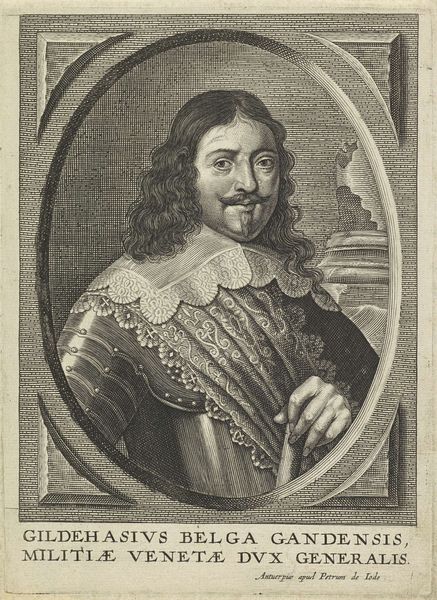
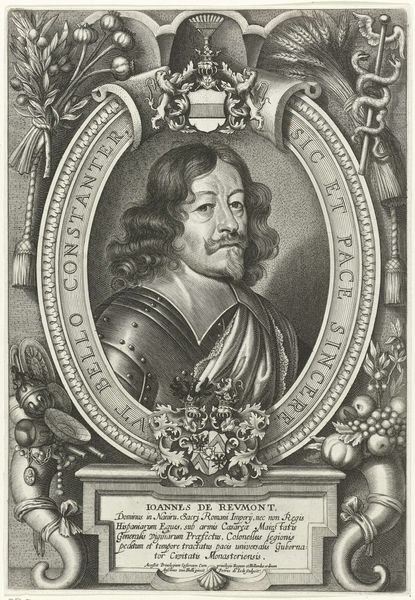
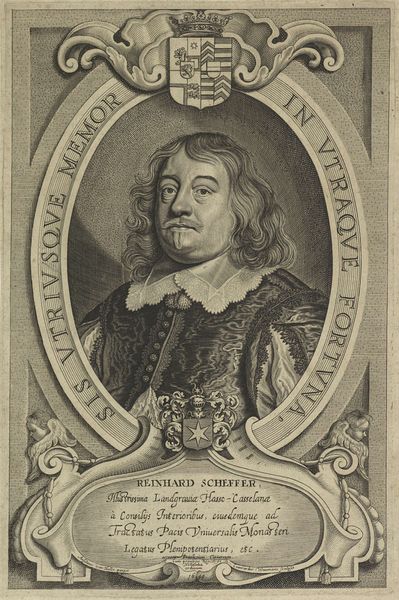
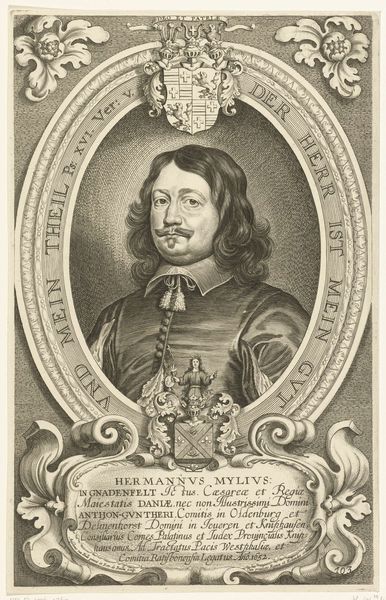
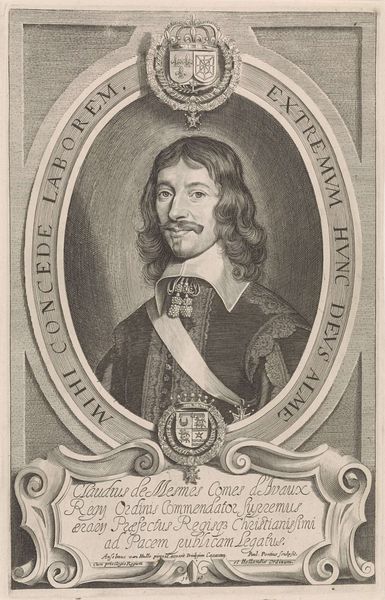
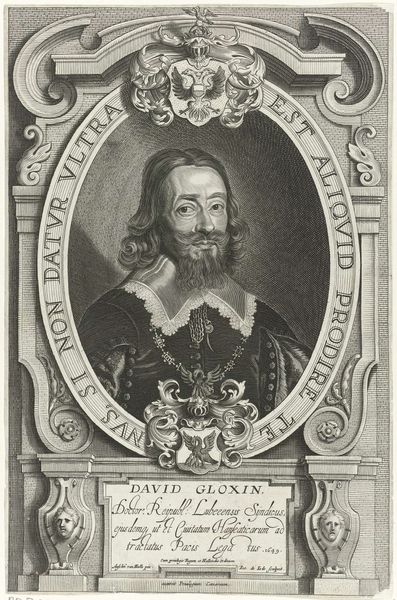
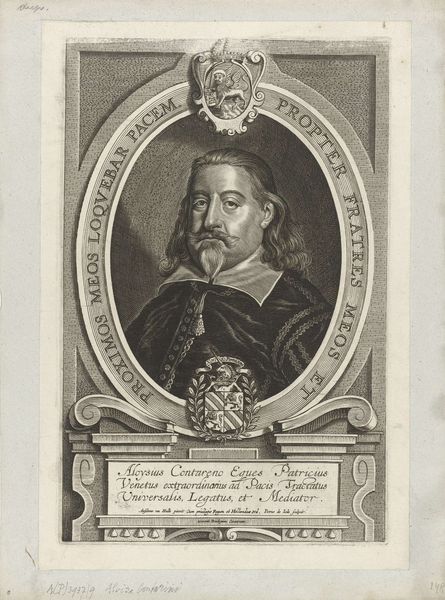
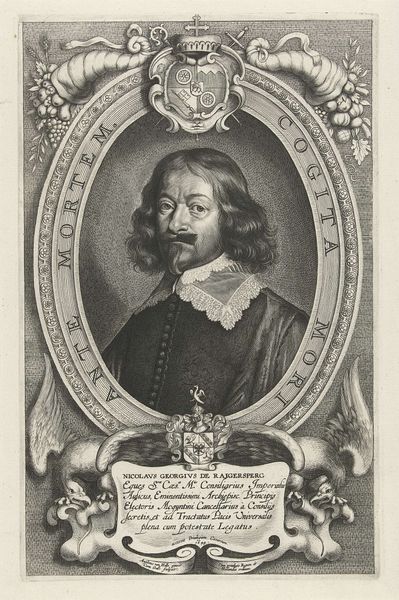
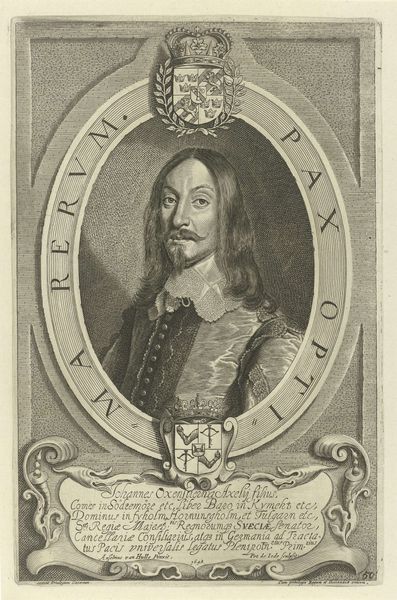
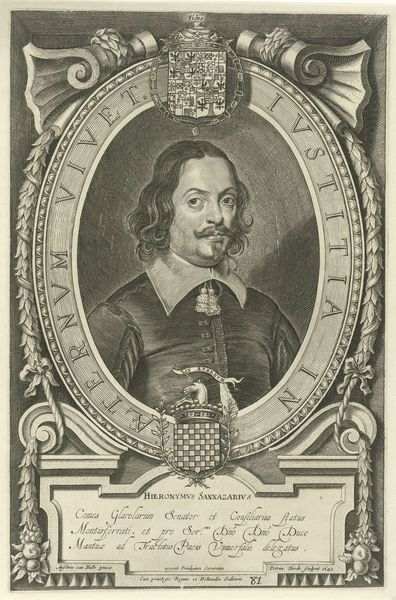
Curator: Pieter de Jode the Younger created this engraving in 1648; it’s titled *Portret van Johan Adler Salvius*. What are your initial thoughts? Editor: Striking formality! The tight lines and ornate frame create a sense of stateliness and a controlled seriousness. Almost severe, wouldn't you say? Curator: Given Salvius' role as a Swedish diplomat during the Thirty Years’ War, the severity you perceive isn’t surprising. Engravings like these often served as propaganda, shaping public perception. Editor: Note how the textures created by the engraving mimic the lush fabrics and the detailed armor he's wearing. The texture seems crucial, as it provides both detail and dynamism within a rather constrained format. Curator: Exactly. The medium itself contributes to the artwork’s message. This engraving reflects Baroque aesthetics but also echoes the political strategies of image-making in 17th century Europe, disseminating power through printed images. Editor: The lettering curving around the central oval reads "Deus sed pacis non est dissensionis." Is that right? A statement that, in essence, “God is for peace, not dissent." A concise piece of period messaging. Curator: Spot on. A fascinating and typical utilization of art in statecraft. The engraving is not just an aesthetic object, but also a piece of communicative machinery of the era. Editor: Yes, and a beautiful intersection of personal image and the political and social moment. It will be difficult for me to forget this artwork. Curator: Indeed. These portraits connect us to the strategies employed for consolidating and projecting authority across time.
Comments
No comments
Be the first to comment and join the conversation on the ultimate creative platform.
 React
React Comment