About this artwork
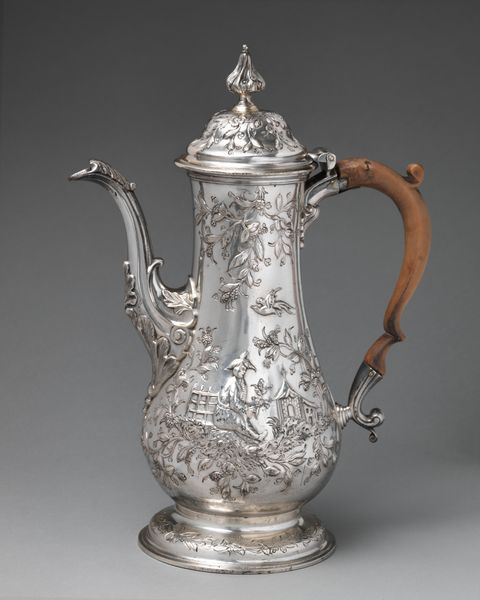
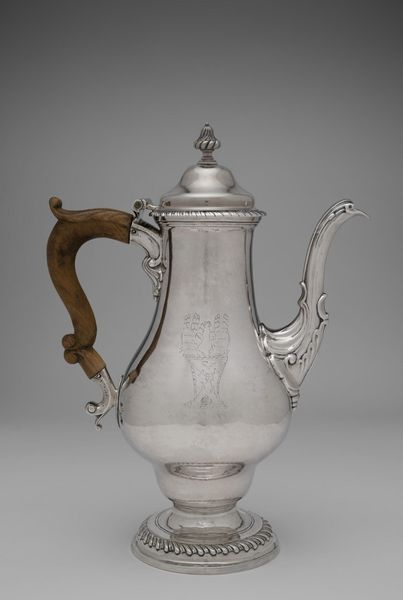
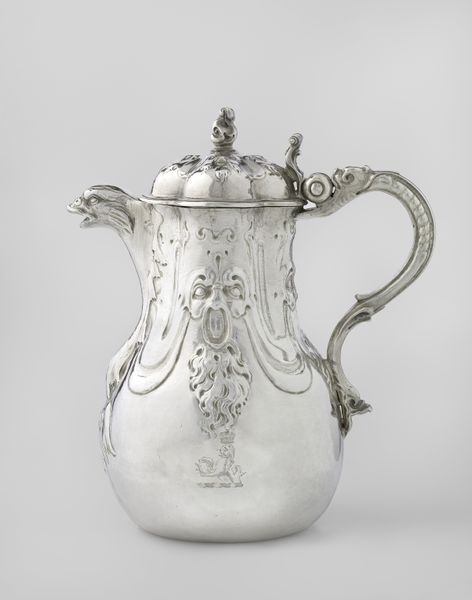
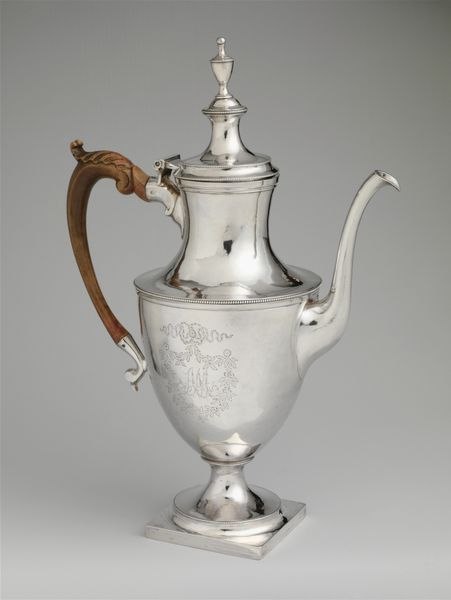
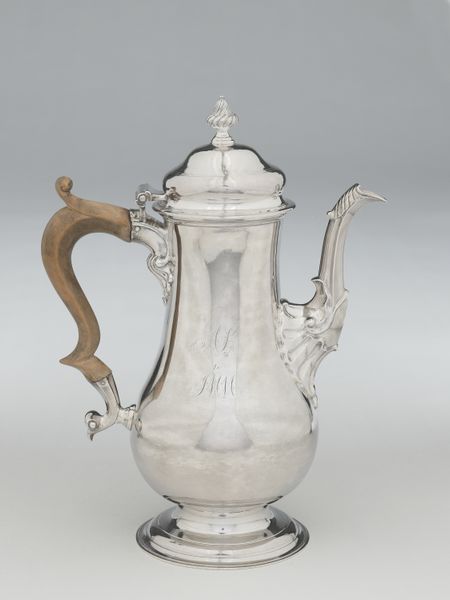
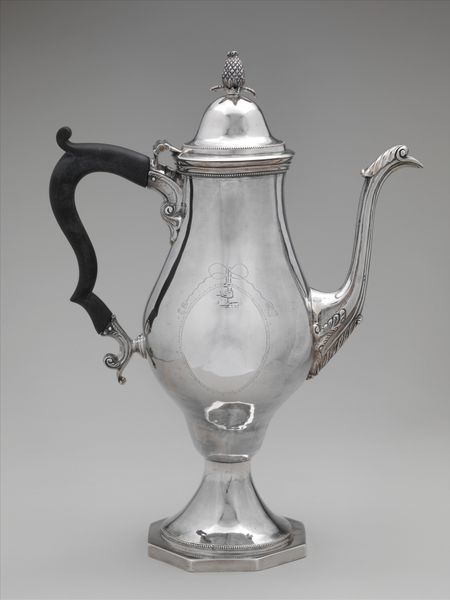
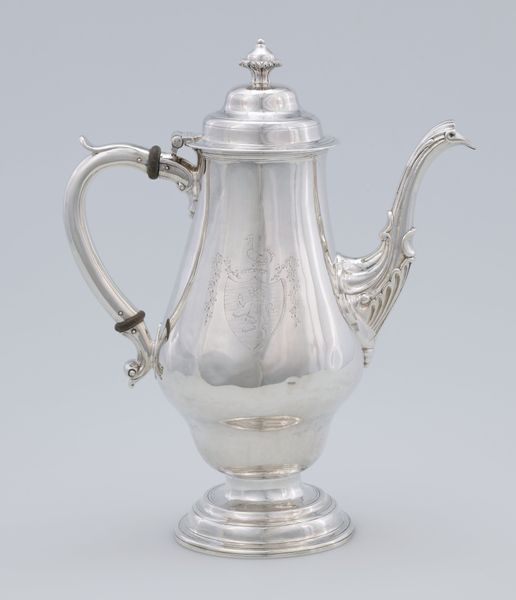
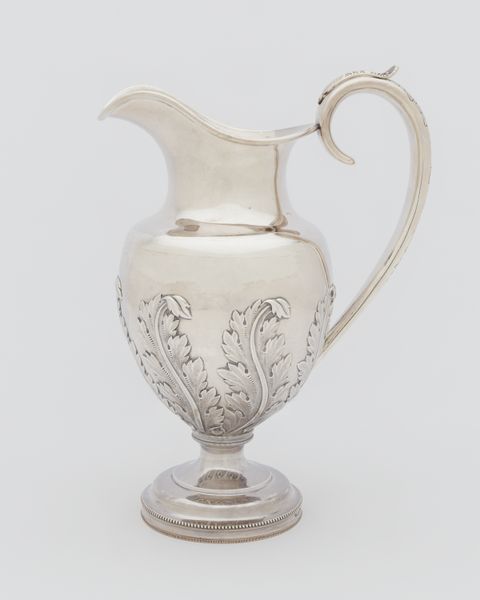
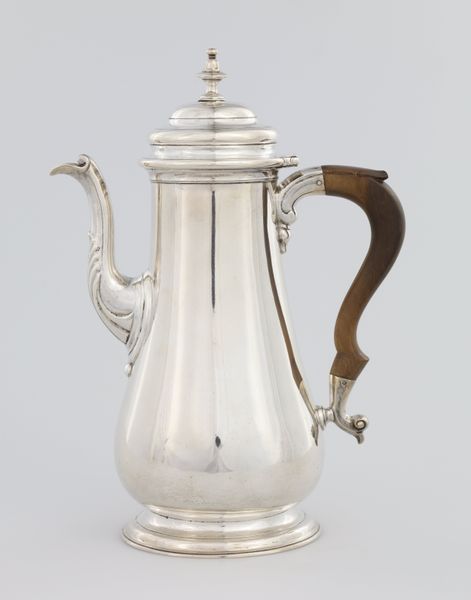
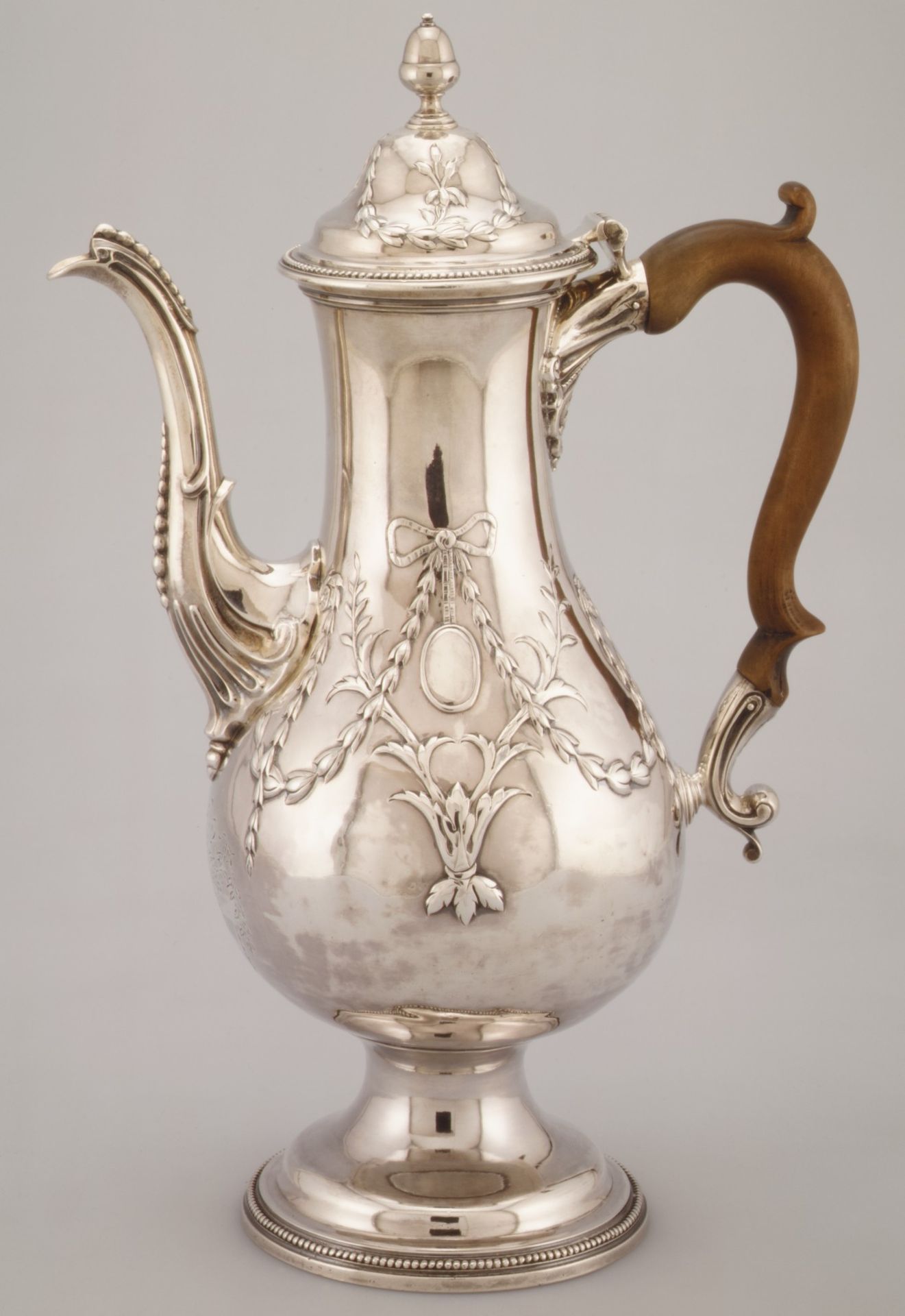
This coffeepot was crafted by William Garrard around the mid-18th century, standing about 13 inches tall, and made of silver with a wooden handle. At first glance, the piece strikes you with its bright reflective surface, intricate embellishments, and the contrast between the cool silver and the warm wooden handle. The pot’s design is structured around a bulbous body that tapers into a slender neck, topped with an ornate lid. The decoration consists of floral swags and ribbon motifs, symmetrically arranged, suggesting a controlled elegance. Note how the craftsman balances the curves of the pot with the angular spout and handle, creating a dynamic visual tension. The coffeepot reflects the Rococo period's emphasis on decorative arts, yet, the clear lines and functional design anticipate the Neoclassical movement. The reflective silver surface does not merely adorn, it invites a dialogue about value, luxury, and status. By interpreting the object as a sign, we can think of how the coffeepot functions as a symbol of wealth and sophistication, and it offers us a glimpse into the cultural codes of 18th-century society.
Coffeepot
1780 - 1781


Artwork details
- Medium
- silver, metal, sculpture
- Dimensions
- Height: 13 in. (33 cm)
- Location
- Metropolitan Museum of Art, New York, NY
- Copyright
- Public Domain
Tags
Comments
Share your thoughts
About this artwork
This coffeepot was crafted by William Garrard around the mid-18th century, standing about 13 inches tall, and made of silver with a wooden handle. At first glance, the piece strikes you with its bright reflective surface, intricate embellishments, and the contrast between the cool silver and the warm wooden handle. The pot’s design is structured around a bulbous body that tapers into a slender neck, topped with an ornate lid. The decoration consists of floral swags and ribbon motifs, symmetrically arranged, suggesting a controlled elegance. Note how the craftsman balances the curves of the pot with the angular spout and handle, creating a dynamic visual tension. The coffeepot reflects the Rococo period's emphasis on decorative arts, yet, the clear lines and functional design anticipate the Neoclassical movement. The reflective silver surface does not merely adorn, it invites a dialogue about value, luxury, and status. By interpreting the object as a sign, we can think of how the coffeepot functions as a symbol of wealth and sophistication, and it offers us a glimpse into the cultural codes of 18th-century society.
Comments
Share your thoughts