c. 20th century
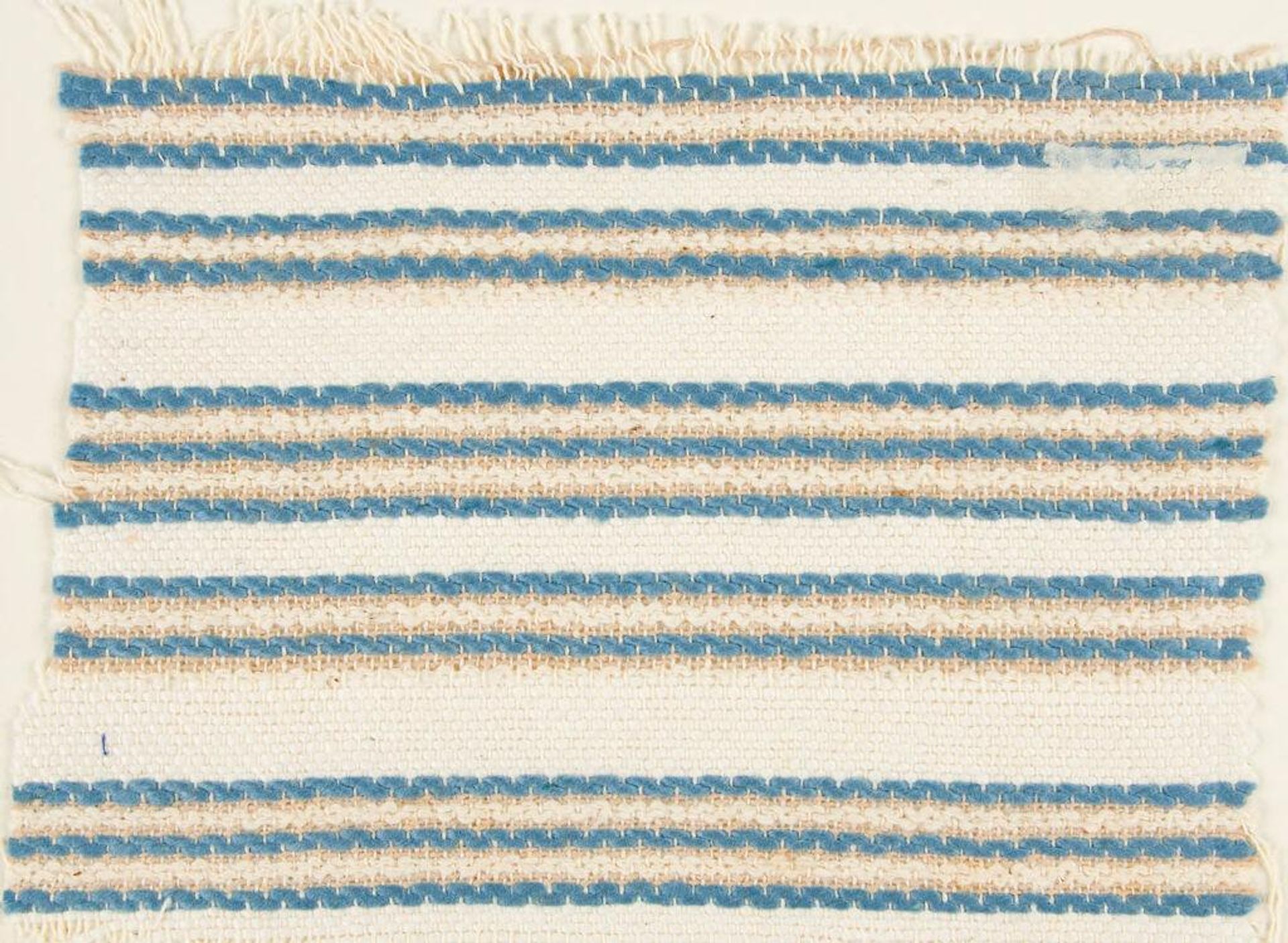
Superla Pattern Fabric Samples

Curatorial notes
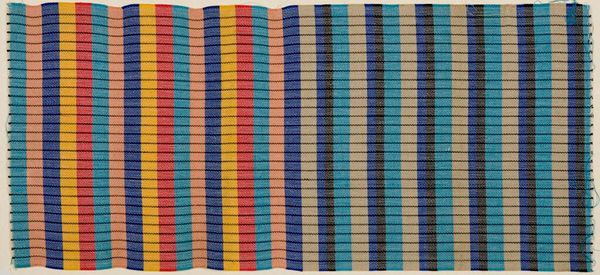
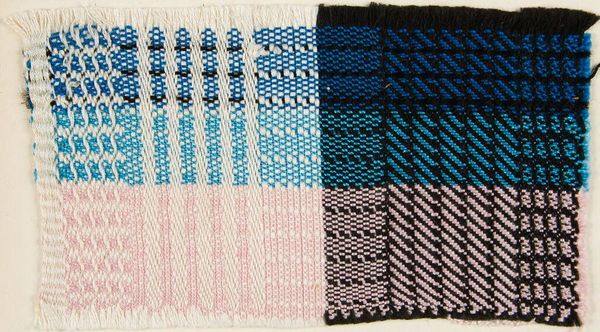
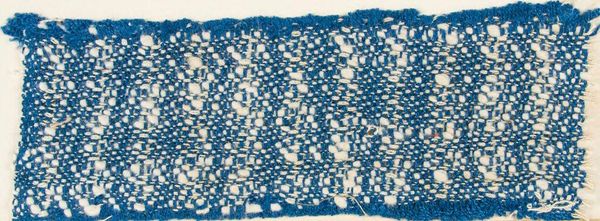
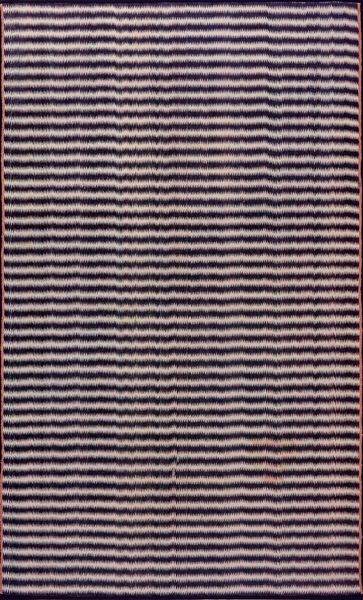
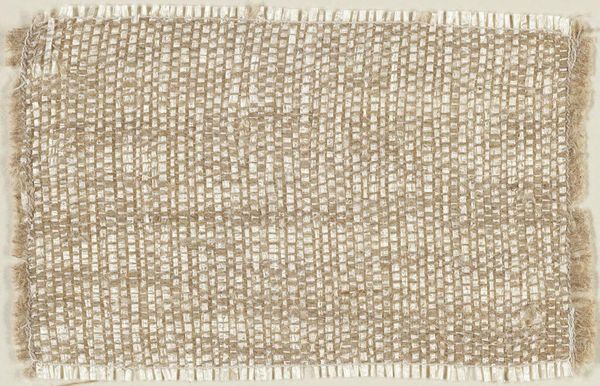
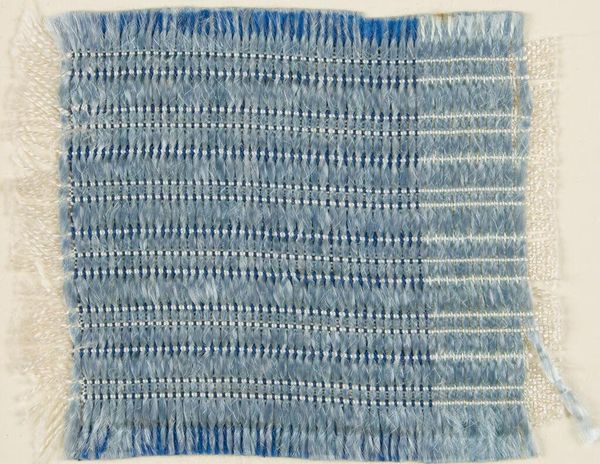
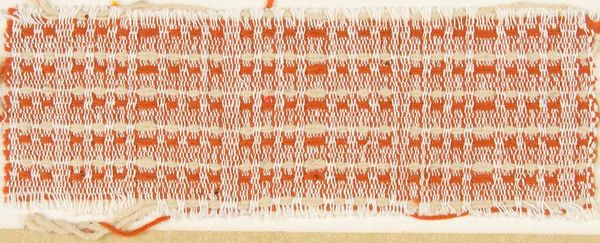
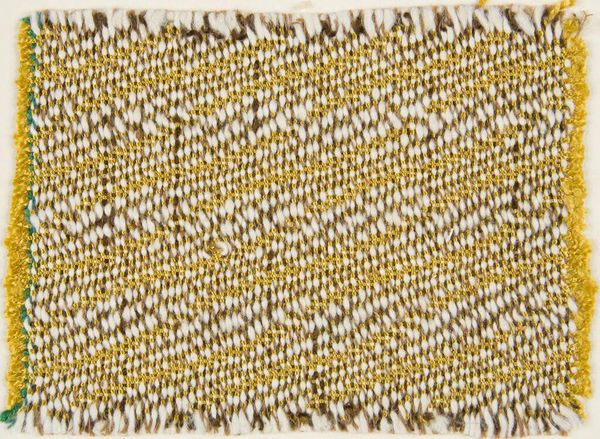
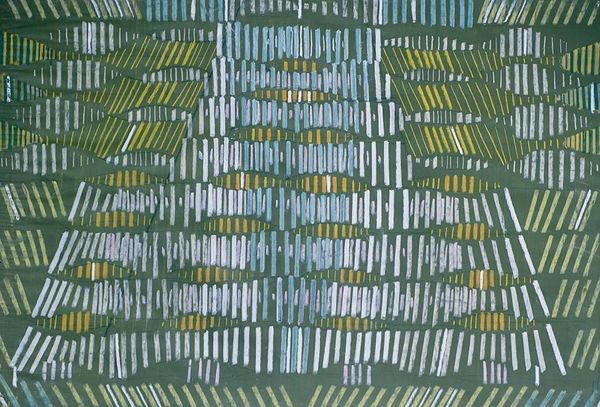
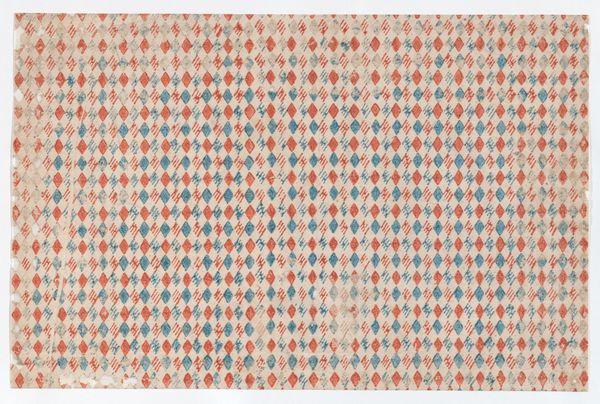
Curator: Here we have Otti Berger’s “Superla Pattern Fabric Samples,” housed right here at the Harvard Art Museums. Editor: It's beautiful. The texture and repeating lines create a sense of calm and order. Curator: Berger, a Jewish woman, was associated with the Bauhaus and this piece speaks to the complex intersection of gender, race, and design in early 20th-century Europe. Editor: The material itself tells a story too. We can see the weave, the individual threads and the way the blue and tan yarns interact with the white base. It's about process. Curator: Absolutely, and it's important to consider the sociopolitical context. As a Jewish woman at the Bauhaus, Berger faced systemic barriers. Editor: These samples are more than just aesthetic objects, they're documents of labor and industry—they tell a story of a woman navigating a complex system. Curator: Precisely. Examining Berger’s positionality brings new insights to our understanding of art history and challenges conventional narratives about the Bauhaus. Editor: Seeing the work this way helps me appreciate how material culture has meaning. It reveals so much about the time and the person who made it.