1856
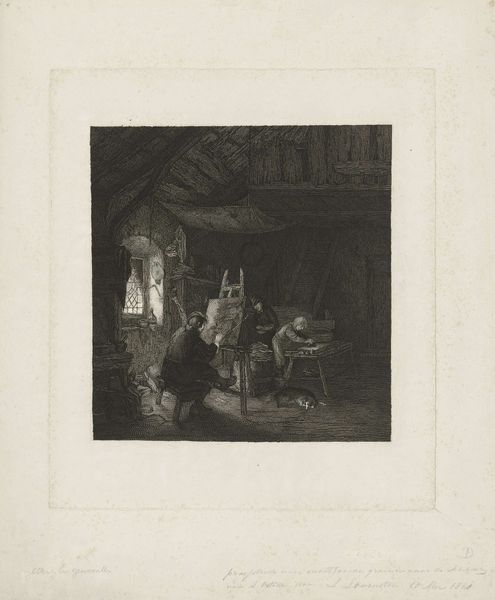
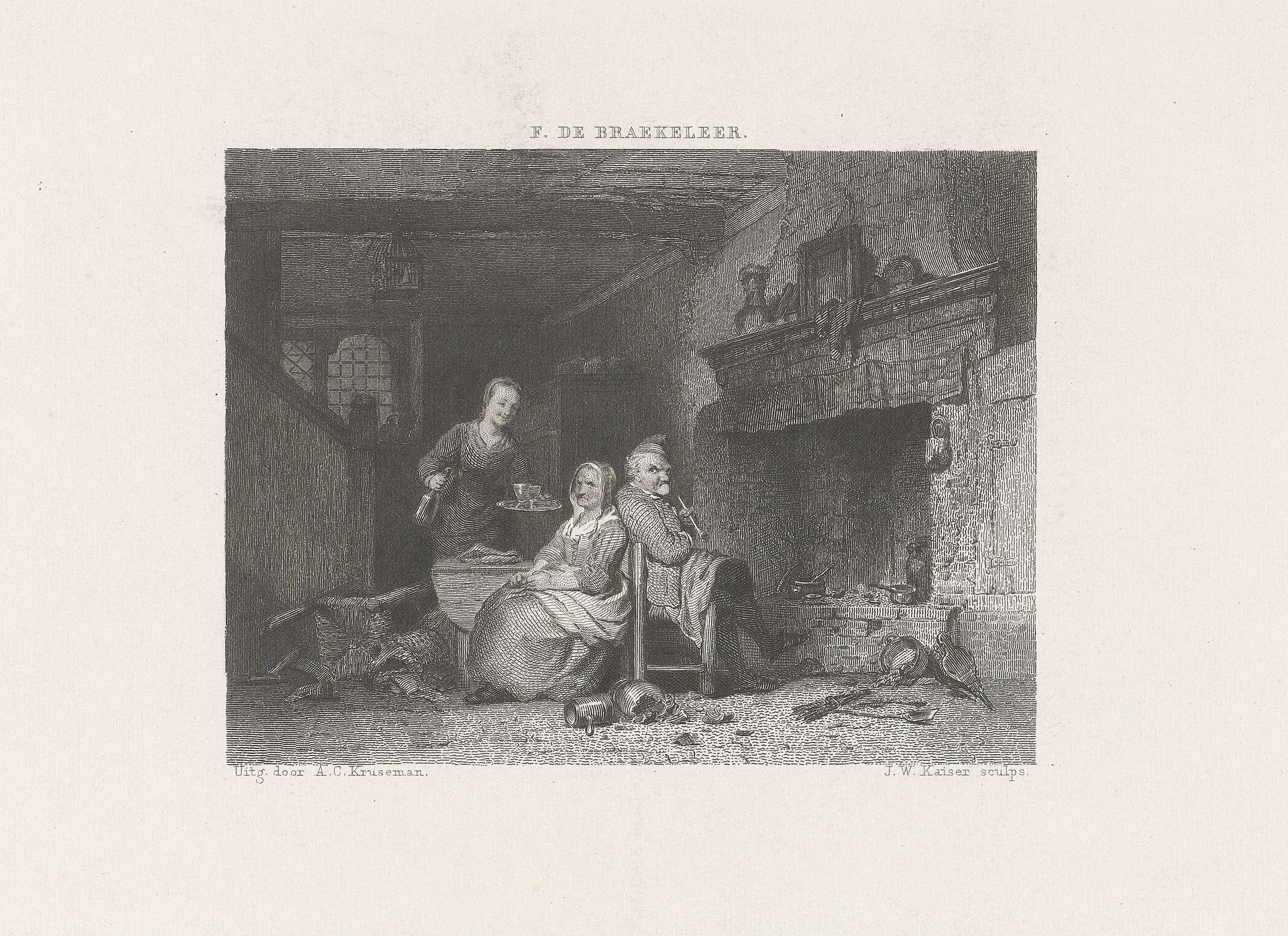
Interieur met drie personen

Johann Wilhelm (I) Kaiser
1813 - 1900Location
RijksmuseumListen to curator's interpretation
Curatorial notes
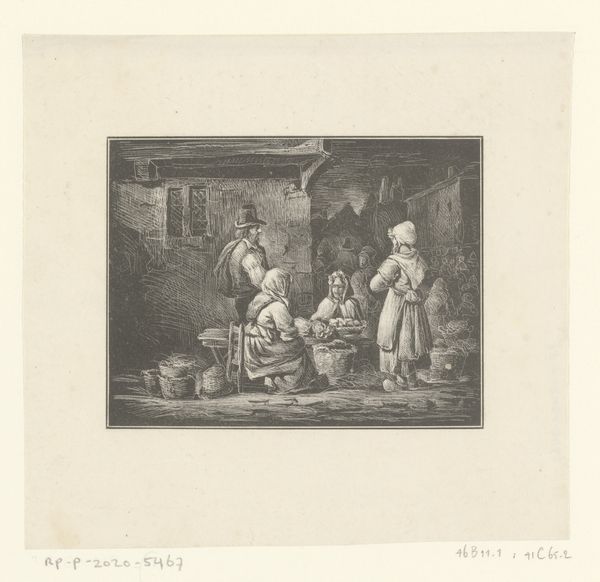
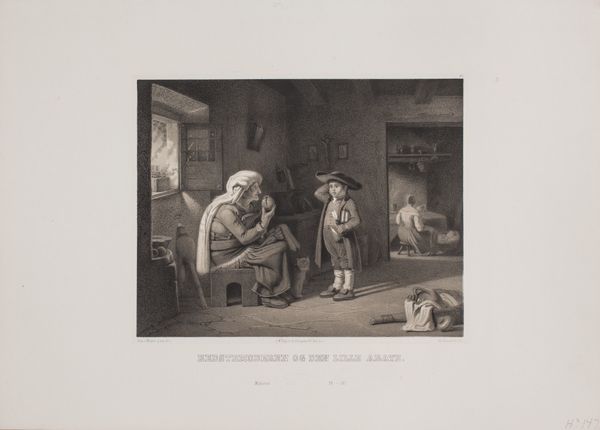
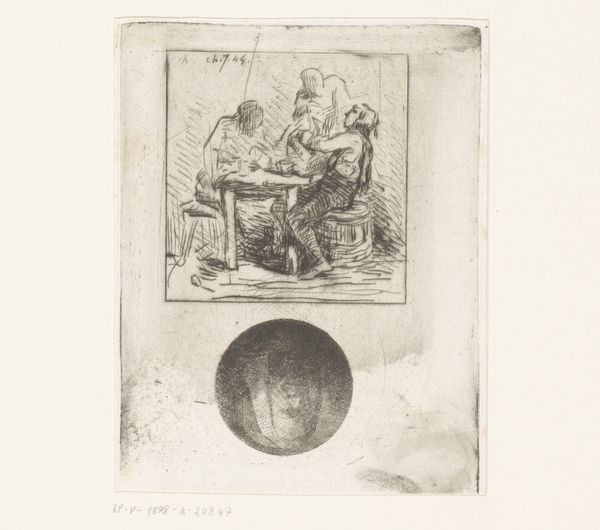
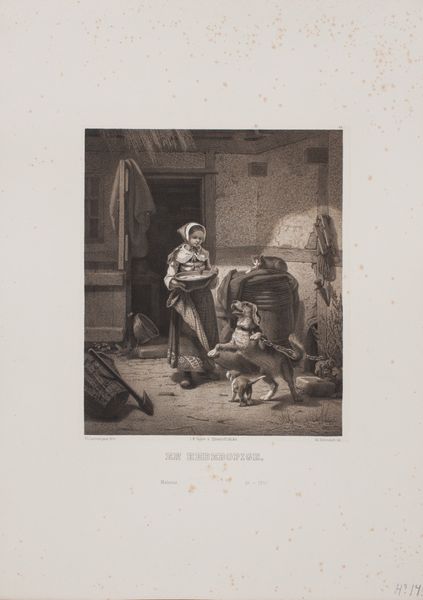
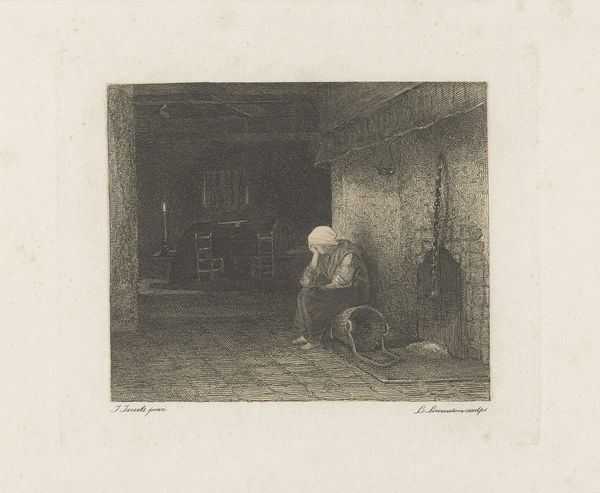
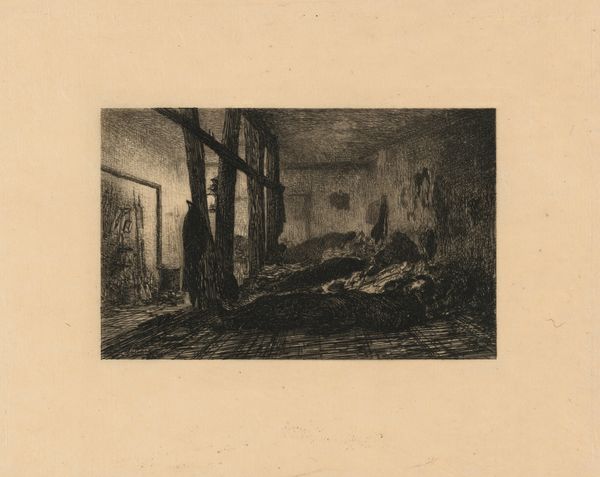
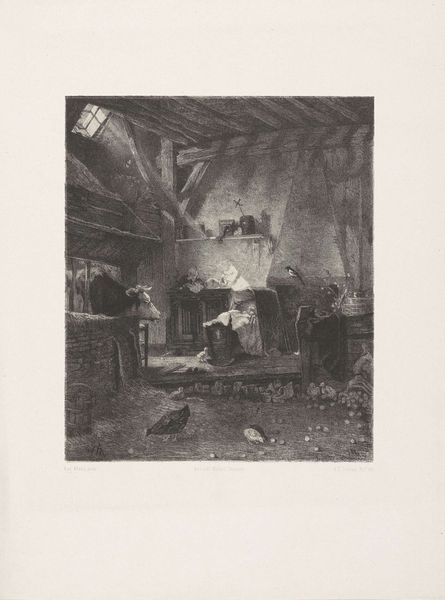
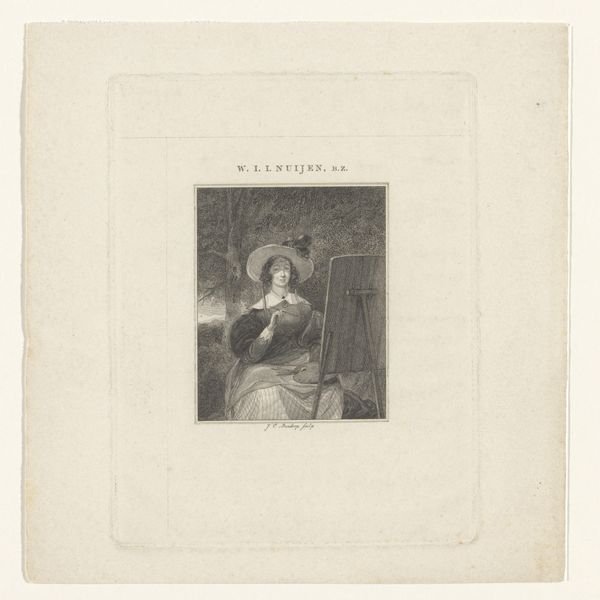
Editor: So here we have Johann Wilhelm Kaiser's "Interior with Three Figures", from 1856. It’s an engraving, a genre painting. It has a rather somber mood, doesn't it? All those finely etched lines. What can you tell me about this piece? Curator: What I see here is a carefully constructed record of material conditions. Consider the labor involved in creating this print. The engraver, Kaiser, painstakingly reproduced the details of daily life. We can see the labor embedded in every element from the coarse weave of the clothing to the brickwork of the fireplace. How do the production values affect your perception? Editor: Well, thinking about it as a commodity... engravings were more widely accessible than paintings, right? This image, reproduced and distributed, becomes a document of everyday life for a wider audience. Curator: Precisely. And the content echoes that accessibility. It's not some grand historical narrative, but a domestic scene. Look at the objects included: the humble fireplace, the simple clothing, the pet sleeping on the floor. The artist documented these elements. What statement is the work making? Editor: Maybe it’s elevating the ordinary? Showing value in the mundane and domestic, a subject usually not displayed in artworks. Curator: In a way, yes. And it’s doing it by highlighting the processes involved. Both in its production as a print, and its depiction of a family, engaged in mundane leisure, not glamorous at all! Editor: This engraving gave me a lot to think about when focusing on the cultural and production implications of materials and manufacturing! Thanks! Curator: My pleasure. Always remember to look beyond the surface.