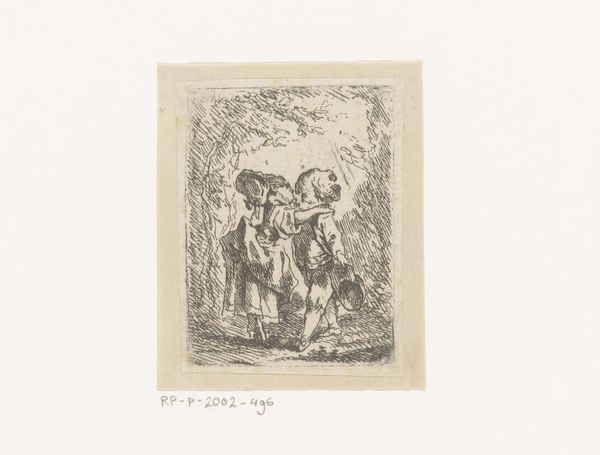
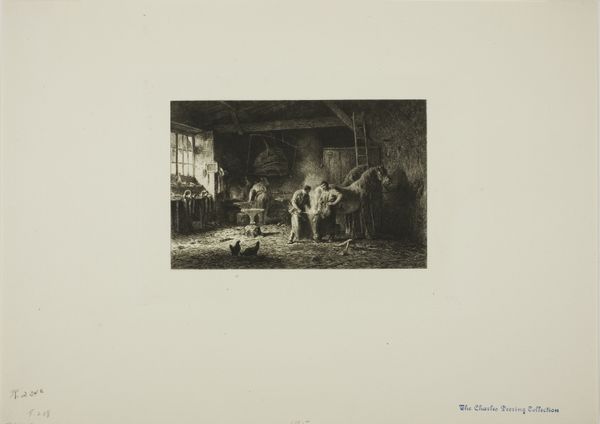
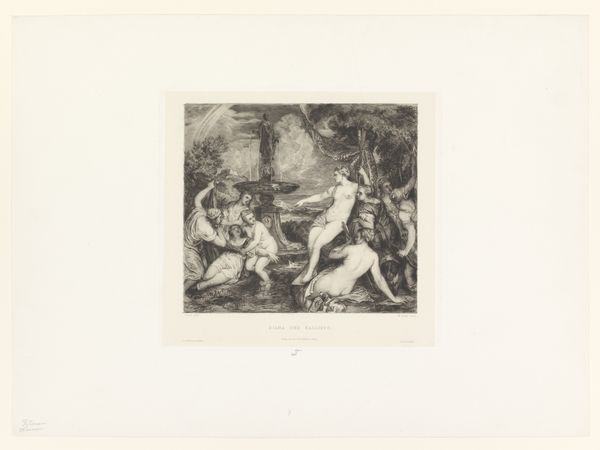
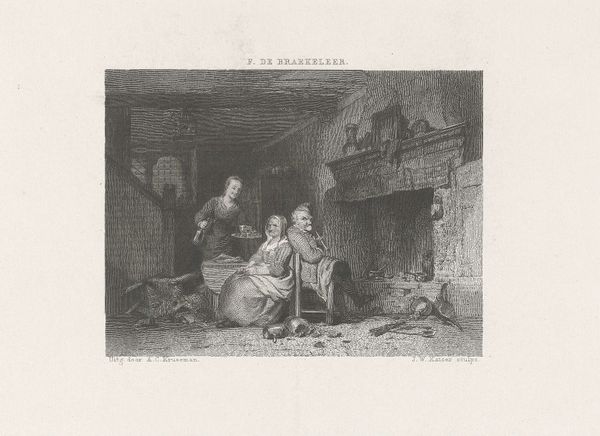
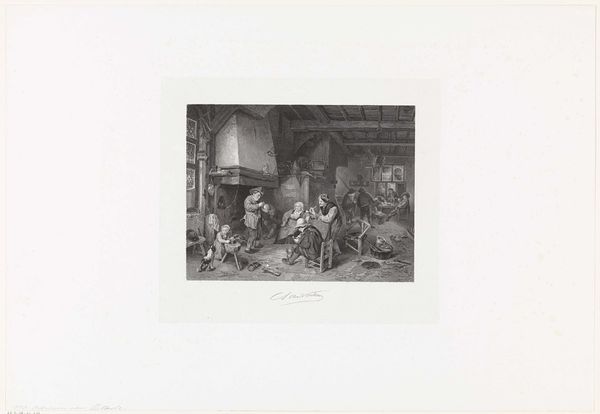
print, engraving
old engraving style
landscape
genre-painting
history-painting
engraving
realism
Dimensions: height 166 mm, width 178 mm
Copyright: Rijks Museum: Open Domain
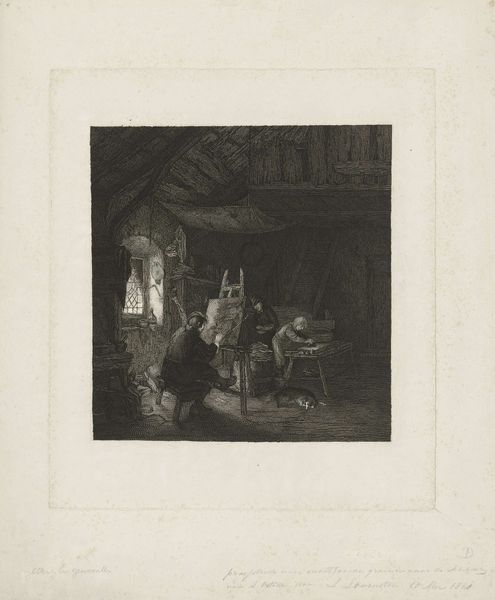
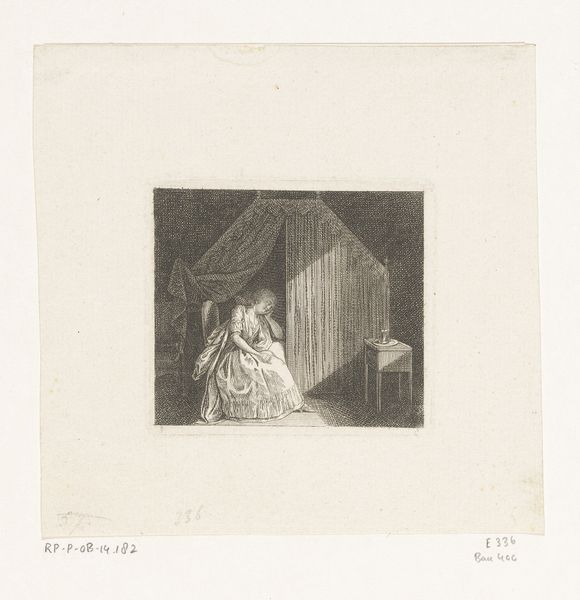
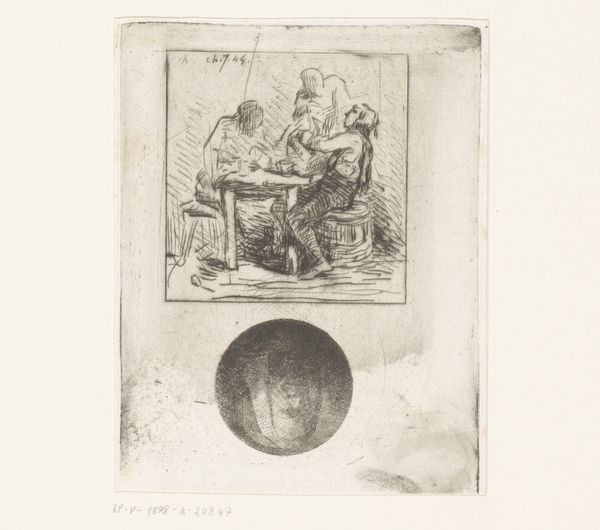
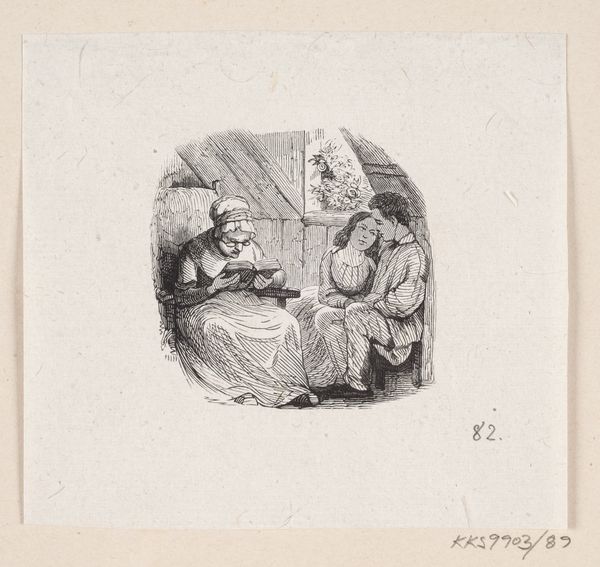
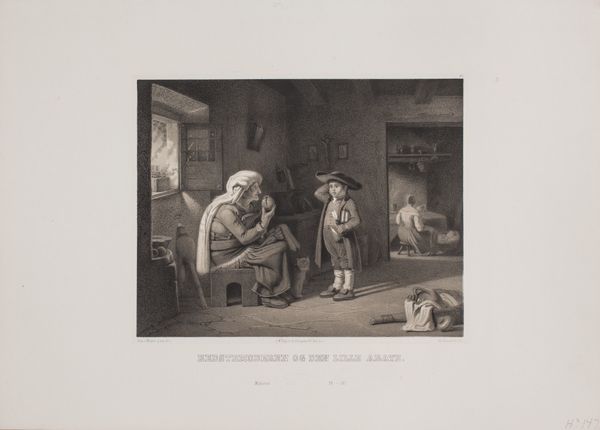
Editor: This engraving, “Dorpsgezicht bij avond met figuren aan een tafel,” or "Village Scene at Evening with Figures at a Table," is attributed to Thomas Sidney Cooper and thought to have been created between 1813 and 1902. It looks like a snapshot of everyday life, but something about the somber tones and tight composition makes me wonder about the stories of the people depicted. How do you interpret this work, considering its historical context? Curator: It's fascinating to consider this seemingly simple scene through a lens of social commentary. The gathering, the marketplace… who holds the power here? Is this depiction celebratory or critical? Notice how the composition places women at the forefront, engaged in labor, while men linger at the periphery. How might we read this in the context of 19th-century gender roles and economic structures? What's emphasized or downplayed and what could this suggest? Editor: I hadn't really focused on who does what in the composition. So, the way the women are positioned, that isn’t just because of a preference. It tells a deeper story about women's work during this time. Is the artist explicitly commenting, or is he part of reinforcing those views? Curator: The artist's intention remains open for debate, precisely because of these tensions. Are we seeing a realist depiction, reflecting the status quo, or is there a subtle critique embedded in the very act of representation? Examining the engraving within the framework of social history helps us grapple with these complex questions. The composition, the style... these aren't neutral choices. Editor: That is a new and insightful interpretation! Looking closer with this in mind really challenges initial assumptions of a simple “genre scene”. It emphasizes the social narratives that can be woven into an artwork. Curator: Precisely! Art often reflects and refracts the social conditions of its time. Recognizing these intersecting perspectives expands our understanding of its relevance.
Comments
No comments
Be the first to comment and join the conversation on the ultimate creative platform.
 React
React Comment