About this artwork
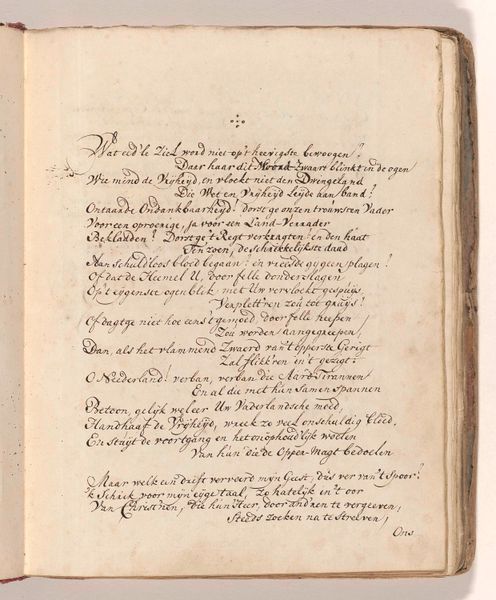
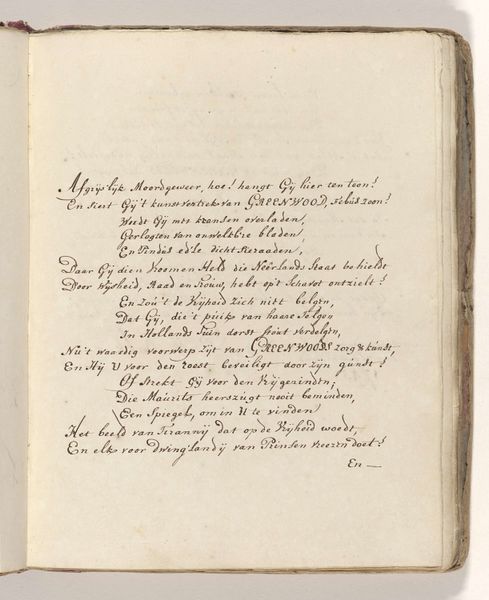
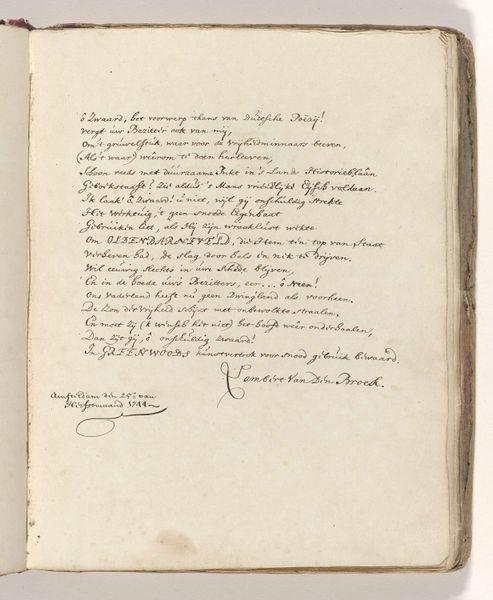
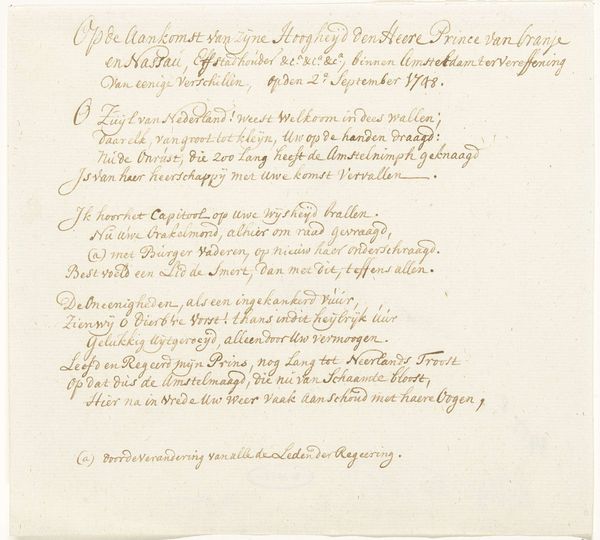
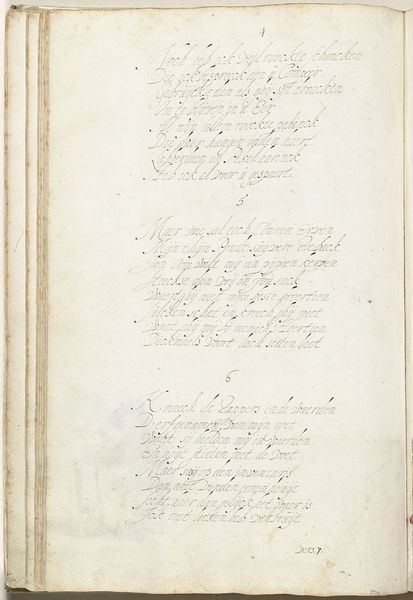
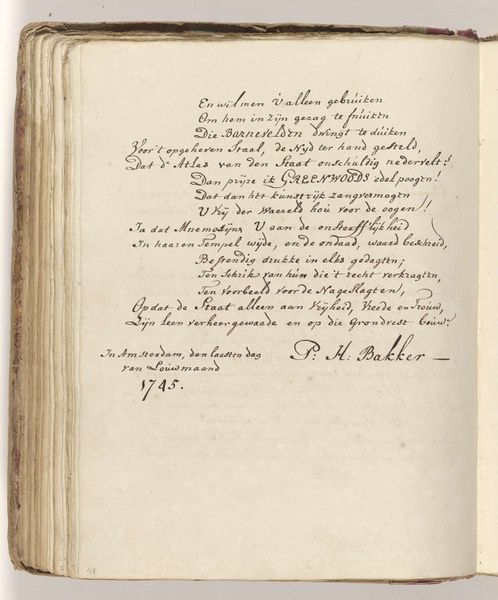
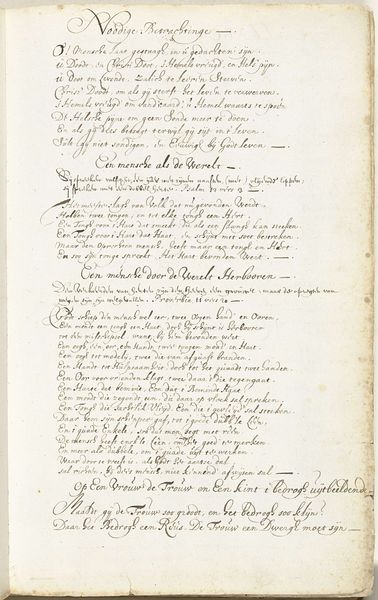
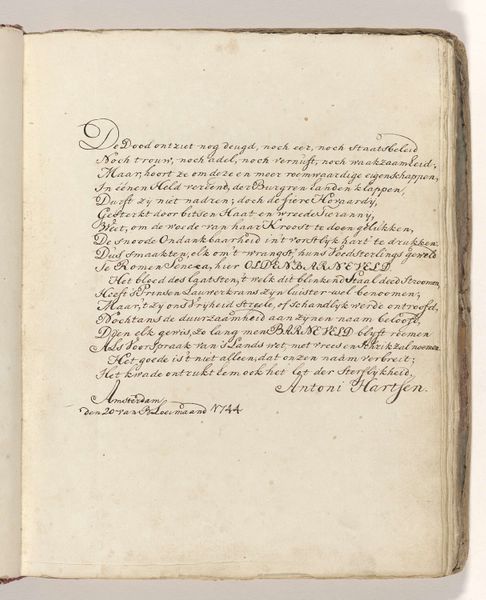
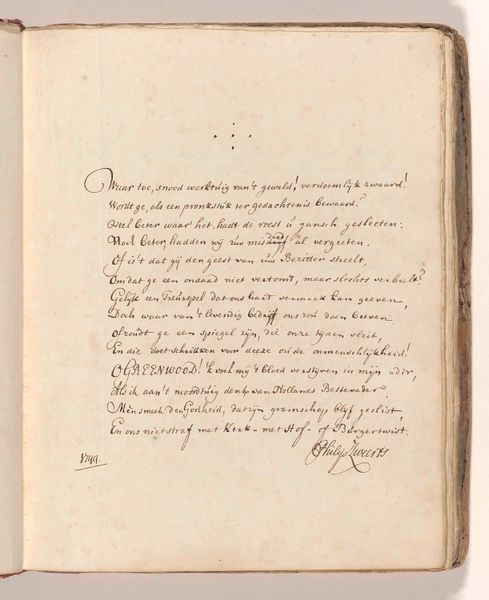
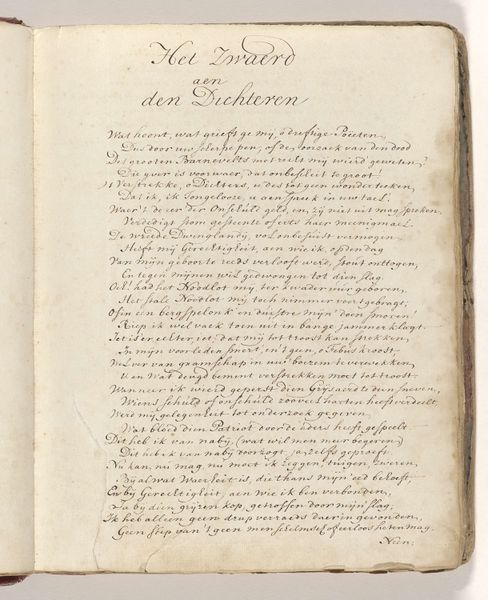
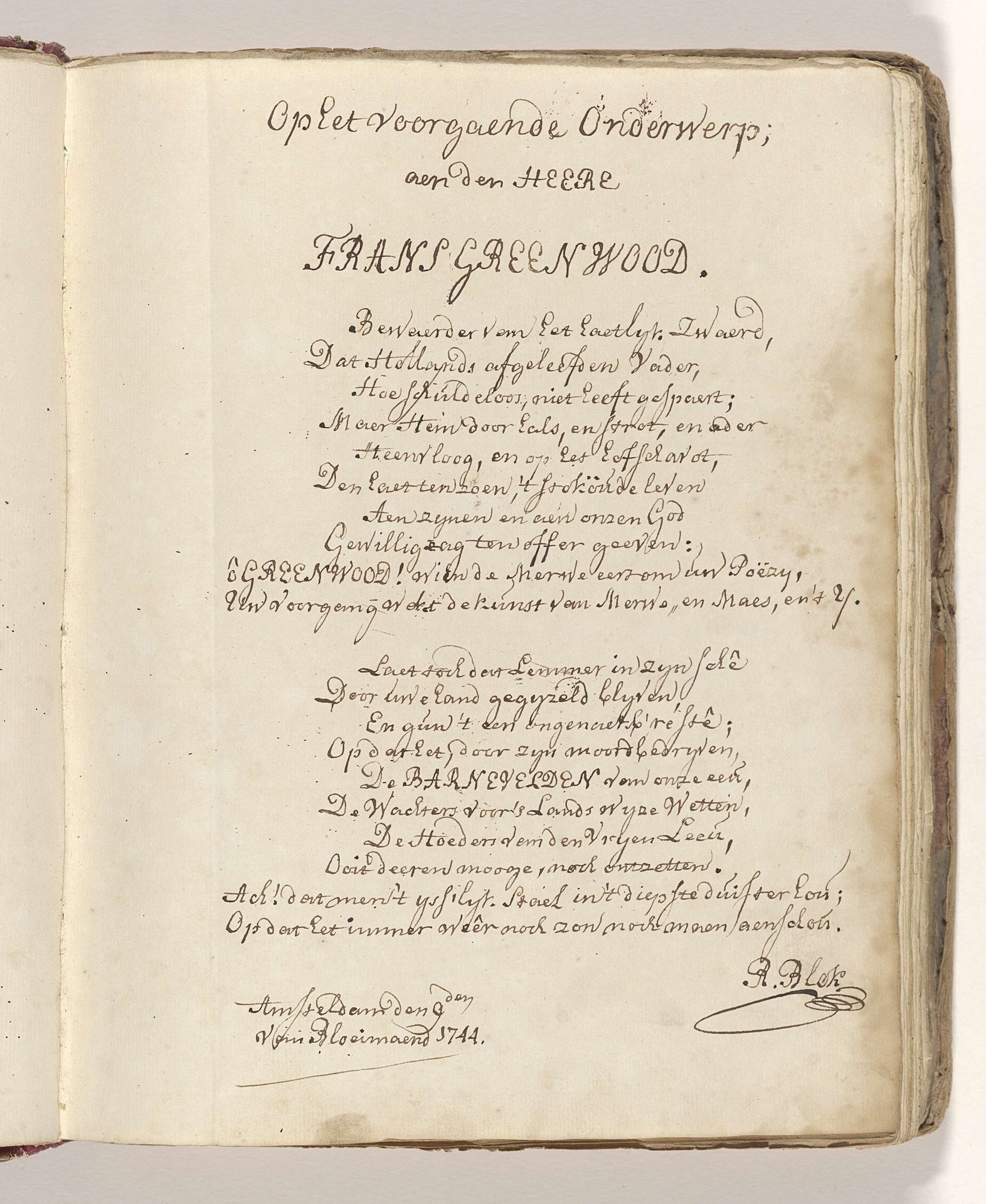
This poem about the sword used to behead Johan van Oldenbarnevelt in 1619 was penned by R. Blok, likely in 1744, as indicated by the writing at the bottom of the page. It reflects on a pivotal moment in Dutch history. Oldenbarnevelt was a key figure in the Dutch Revolt against Spanish rule, but his later conflicts with Prince Maurice of Orange led to his execution for treason. This event highlights the complex power dynamics within the young Dutch Republic, torn between advocates of states' rights and a centralized government. The poem itself can be seen as a commentary on justice, leadership, and the burdens of political life. Understanding this work requires us to look into 17th-century Dutch politics, the life and death of Oldenbarnevelt, and the artistic conventions of the period. By examining these elements, we gain a richer understanding of this historical artifact and its significance.
Gedicht op het zwaard waarmee Johan van Oldenbarnevelt in 1619 zou zijn onthoofd
Possibly 1744 - 1749

Artwork details
- Medium
- drawing, paper, ink
- Dimensions
- height 275 mm, width 220 mm
- Copyright
- Rijks Museum: Open Domain
Tags
Comments
Share your thoughts
About this artwork
This poem about the sword used to behead Johan van Oldenbarnevelt in 1619 was penned by R. Blok, likely in 1744, as indicated by the writing at the bottom of the page. It reflects on a pivotal moment in Dutch history. Oldenbarnevelt was a key figure in the Dutch Revolt against Spanish rule, but his later conflicts with Prince Maurice of Orange led to his execution for treason. This event highlights the complex power dynamics within the young Dutch Republic, torn between advocates of states' rights and a centralized government. The poem itself can be seen as a commentary on justice, leadership, and the burdens of political life. Understanding this work requires us to look into 17th-century Dutch politics, the life and death of Oldenbarnevelt, and the artistic conventions of the period. By examining these elements, we gain a richer understanding of this historical artifact and its significance.
Comments
Share your thoughts