Possibly 1660
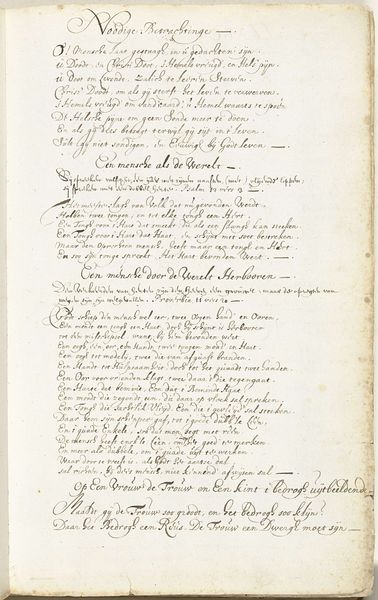
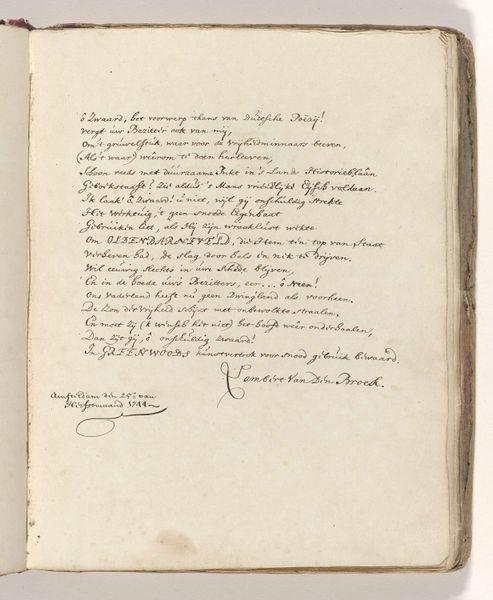
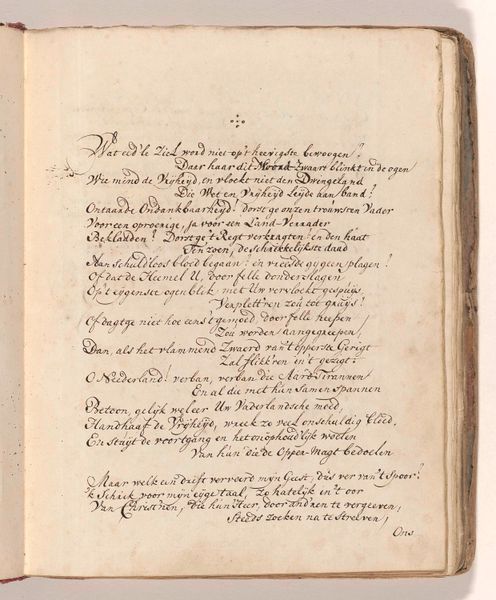
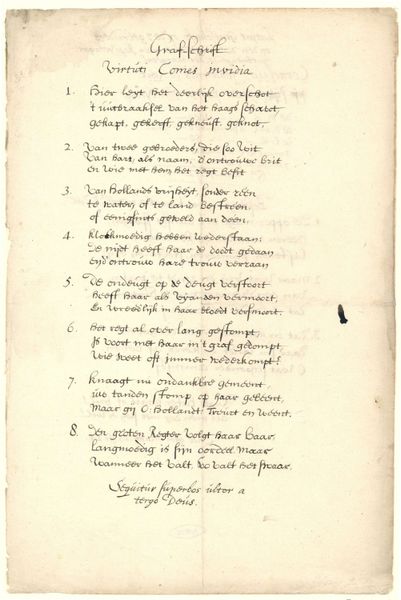
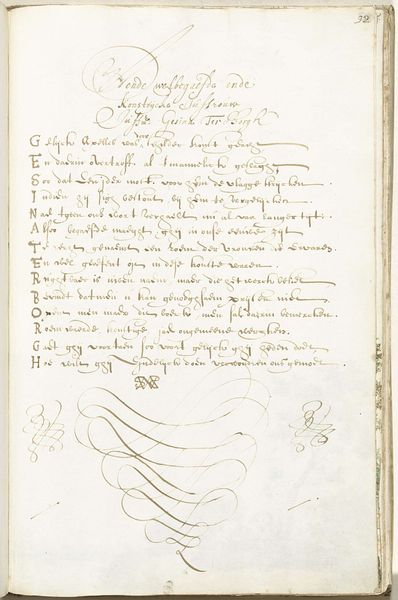
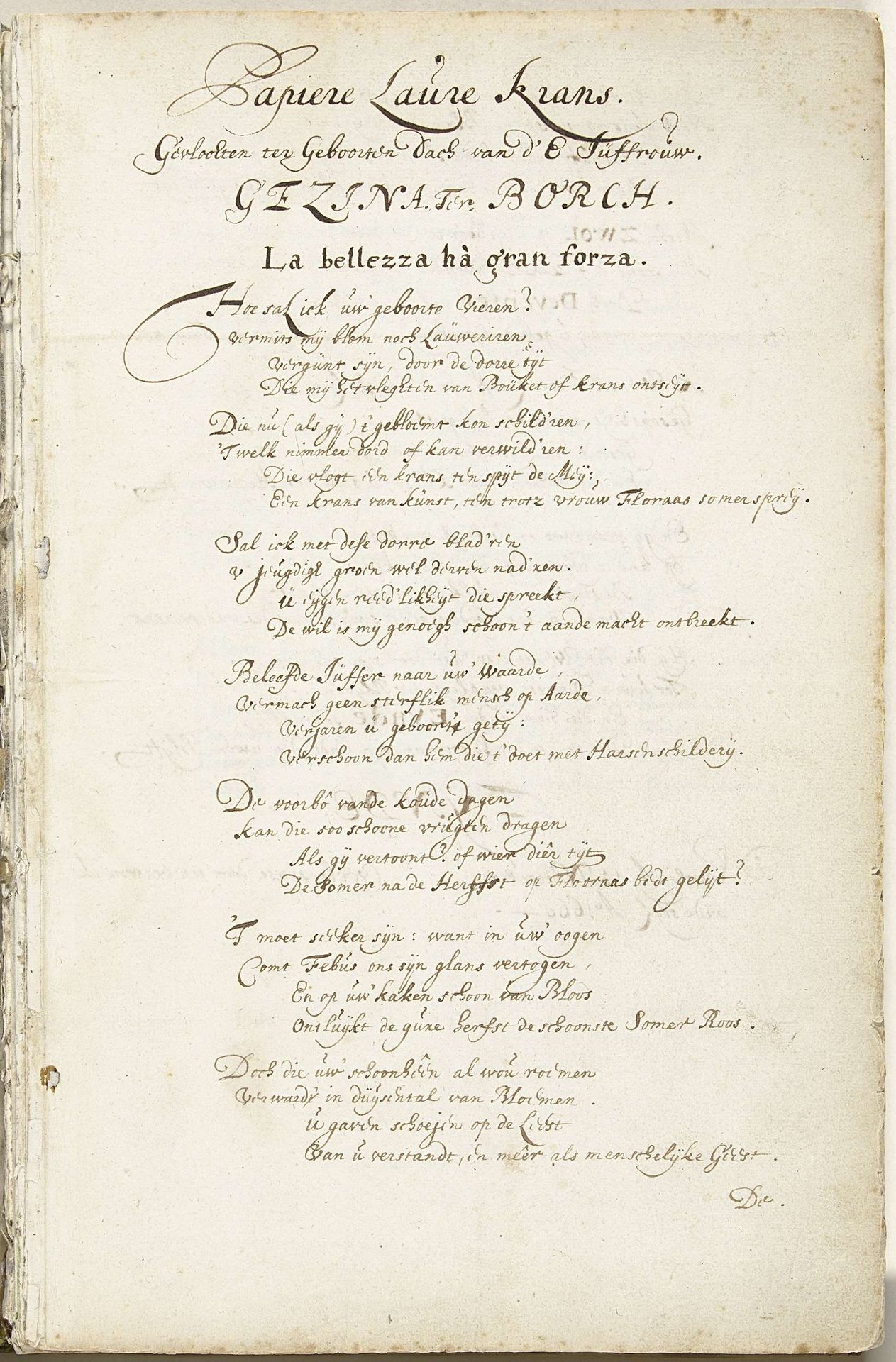
Gelegenheidsgedicht voor Gesina ter Borchs verjaardag (deel 1)

Henrik Jordis
@henrikjordisLocation
RijksmuseumListen to curator's interpretation
Curatorial notes
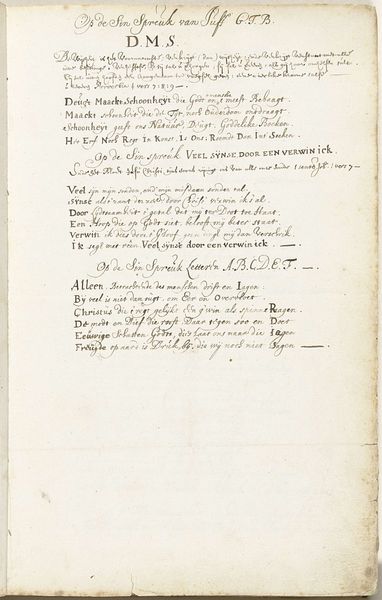
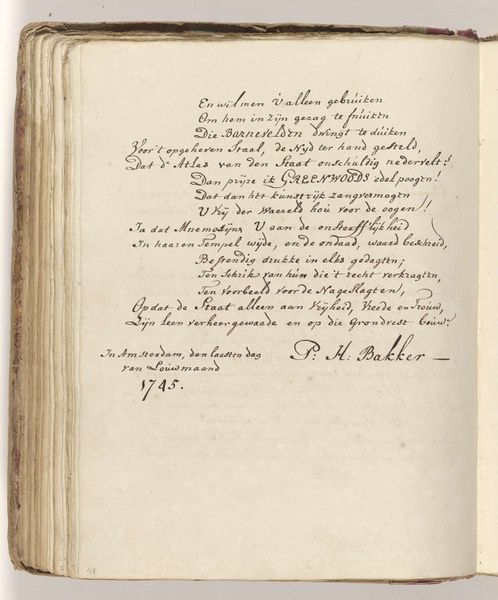
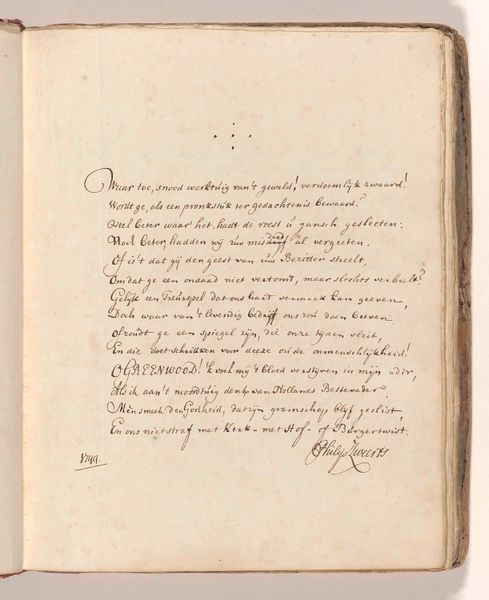
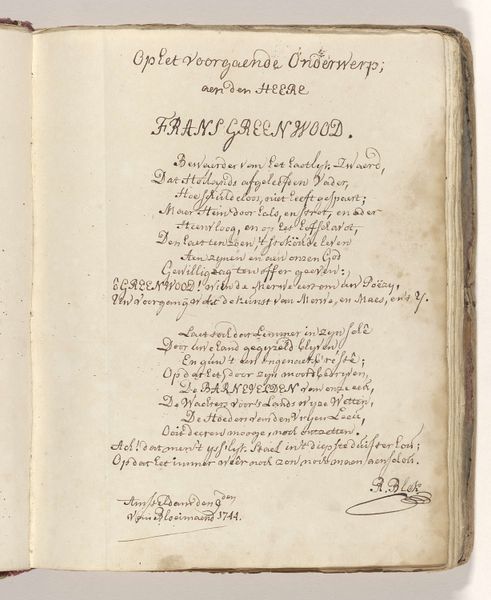
This is the first page of a birthday poem for Gesina ter Borch, written by Henrik Jordis, likely sometime in the 17th century. The most striking visual element is the laurel wreath described in the text above, a symbol of triumph and immortality since ancient times. This motif appears across time and space, from the crowns of Roman emperors to Renaissance paintings. One can see the cyclical nature of symbols through time in the wreath, which started as a pagan symbol, later adopted by Christianity to symbolize martyrdom and divine glory. It’s fascinating how these symbols evolve; the laurel wreath, initially a marker of earthly victory, transformed into a signifier of spiritual triumph. This evolution speaks to our collective memory. When we see a wreath, we are subconsciously connecting with a lineage of meaning that transcends time. It’s this layered history that imbues the image with its power, engaging us on a deep, psychological level. The wreath, therefore, is not merely an aesthetic element, but a vessel of cultural memory.