
Curatorial notes
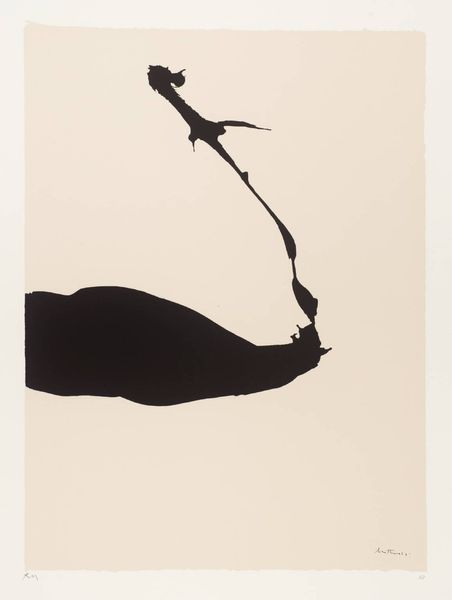
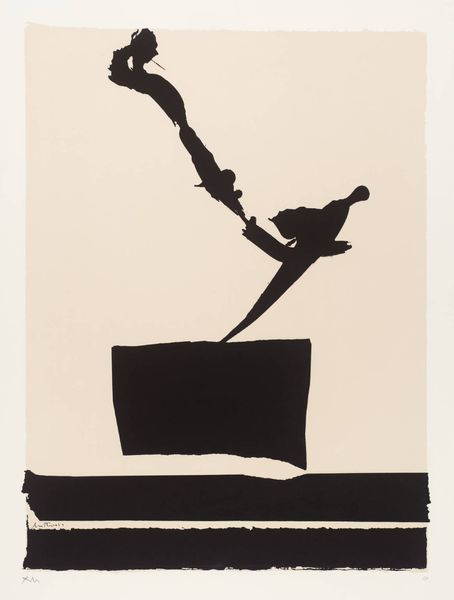
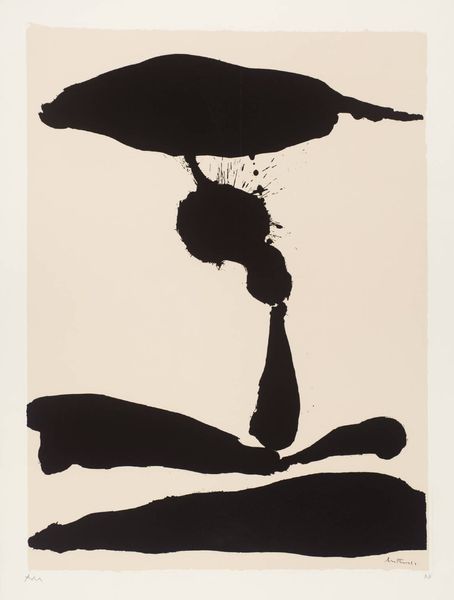
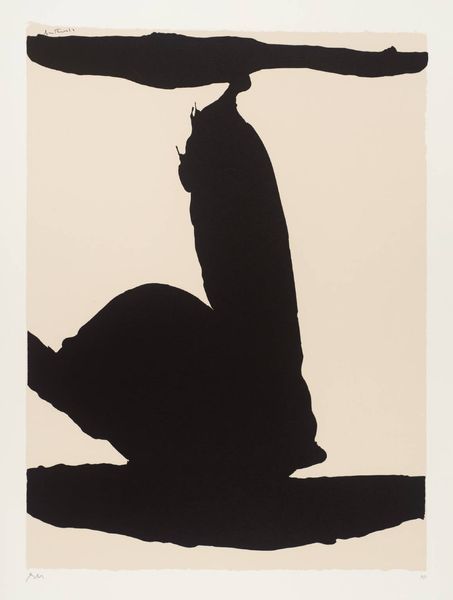
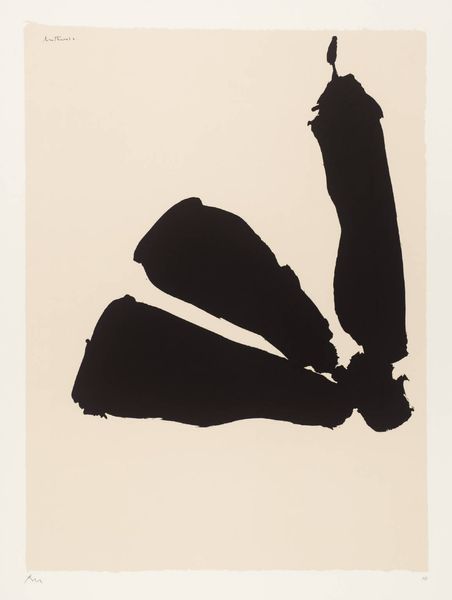
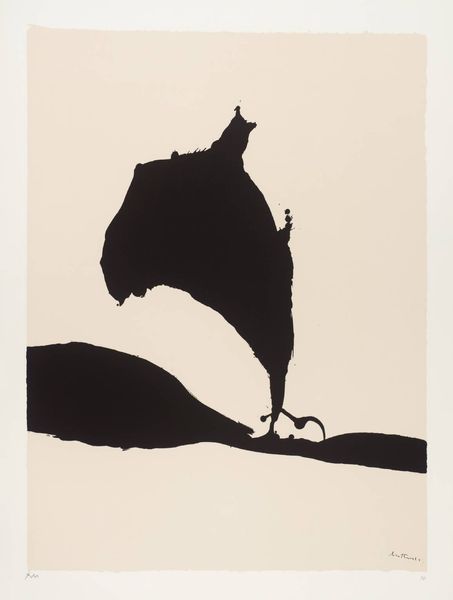
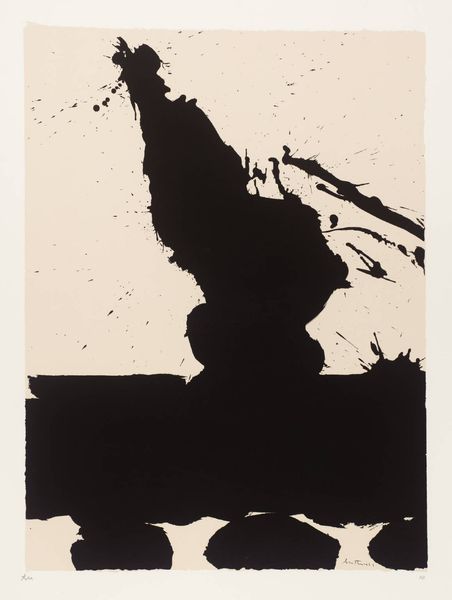
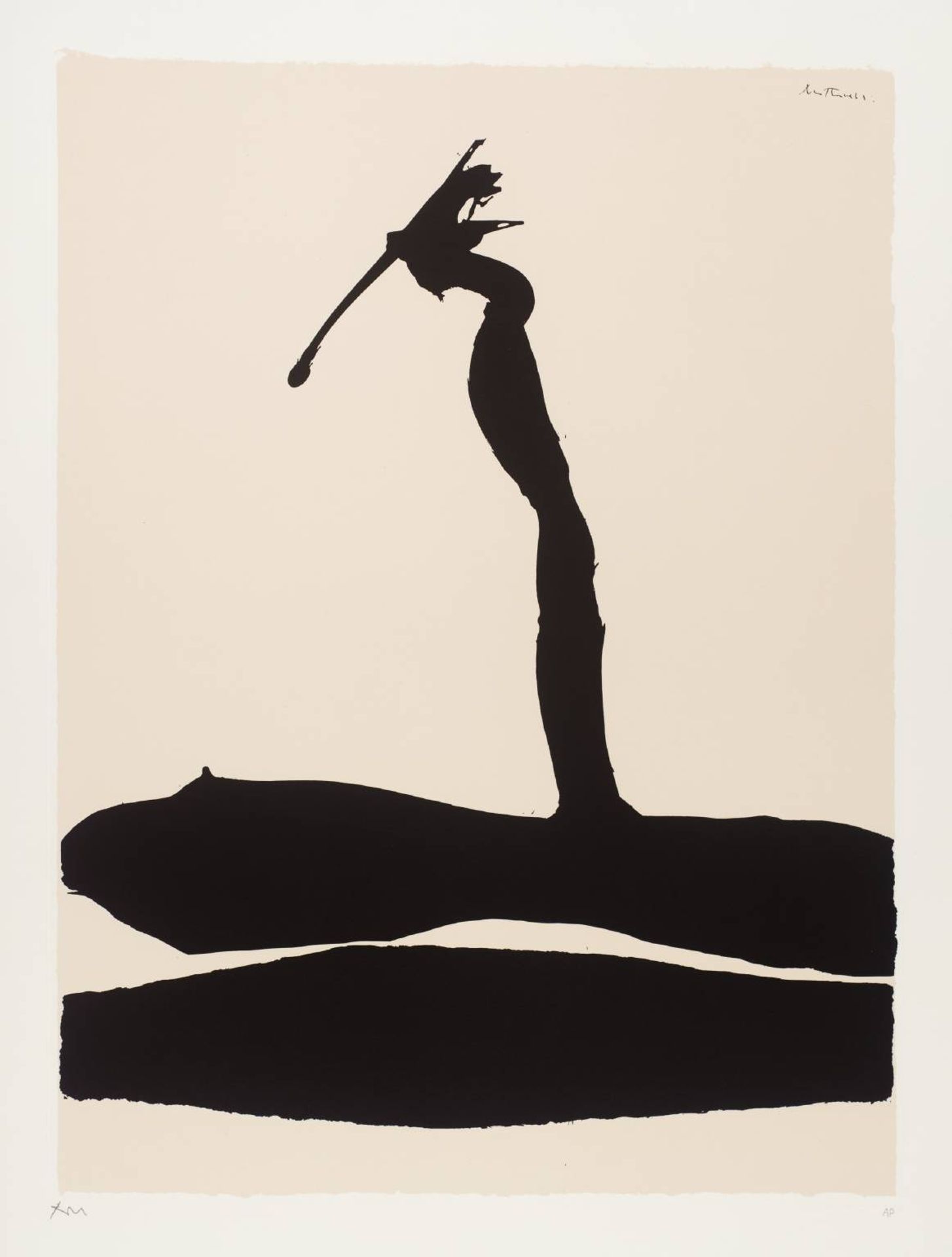
Curator: Here we have Robert Motherwell's "Africa 4" from 1970, a compelling work rendered as a print with collage elements. Editor: My initial impression is one of stark contrast. The bold black shapes against the creamy off-white paper evoke a primal, almost totemic presence. Curator: The materials are crucial to understanding Motherwell's process here. It's not just the printing and collage elements, but the visible signs of his hand at work; those raw edges, the texture of the paper itself, become intrinsic to the art object. Editor: And the title "Africa" certainly invites a symbolic reading. It conjures ideas of origin, perhaps a connection to a fundamental visual language, a grounding that exists below any superstructure. Is he channeling the archetype, do you think? Curator: Well, "Africa" for Motherwell may refer more to an engagement with materials that resist easy interpretation, that reflect raw gesture. The bold forms feel almost aggressively handmade; there's very little refinement here, perhaps in deliberate opposition to commercial manufacturing processes. It's almost anti-industrial. Editor: I still feel drawn to consider the visual language here as more than mere materiality. Doesn’t the vertical form—the stroke extending upward like a stylized figure—carry associations with growth or perhaps defiance, as a deliberate act of culture emerging from the mass below? Even in this highly abstracted state? Curator: That vertical does suggest upward mobility, an aspirational quality. And I can't deny its power. However, when I examine the printing and pasting so central to its production, I see it very differently than purely a symbolic object. These means create it in dialog with history, commerce and labor. Editor: I see your point about context. Still, this abstract language triggers cultural memory. Think of the human urge to discern figures and symbols, and read significance into them. Curator: True. Seeing it strictly from the viewpoint of labor and raw materials doesn't mean it lacks inherent meaning. Editor: Well, this interplay between raw material and the symbol reminds us that nothing, not even abstract forms, exist in isolation from our perception of the world around us. Curator: And how that world is made and who is making it, and under what conditions. An important detail to bring with you.