drawing, print, etching
#
drawing
# print
#
etching
#
genre-painting
#
history-painting
Dimensions: Sheet (trimmed): 7 1/16 × 8 11/16 in. (18 × 22 cm)
Copyright: Public Domain
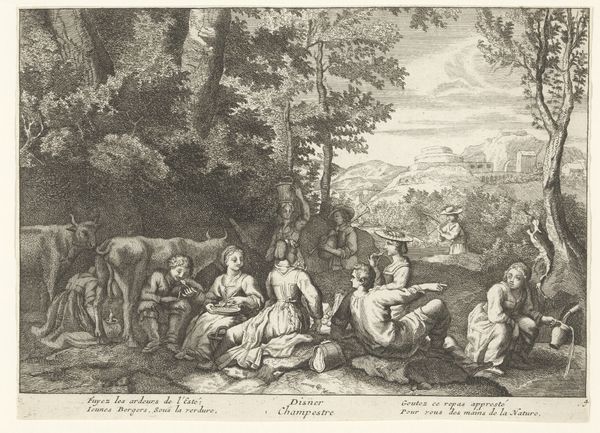
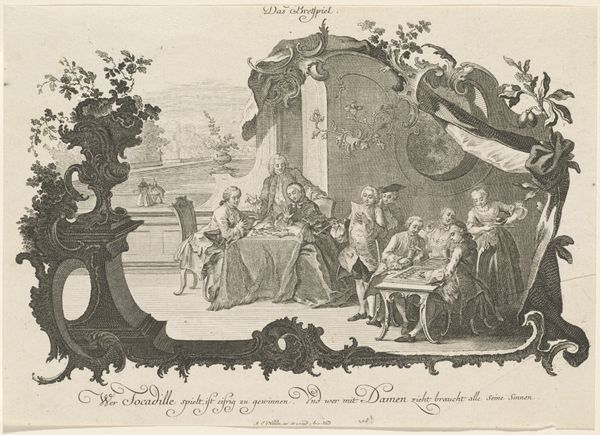
Editor: Here we have Anne Claude Philippe Caylus's etching, "Distinguished Meal," from 1770. The composition feels staged, almost theatrical. What’s your take? Curator: It's fascinating how Caylus uses etching to portray this 'distinguished meal'. Considering its historical context, the French aristocracy were moving toward more 'natural' settings. They actively looked for ways to broadcast their supposed virtuous ways, like an aristocratic propaganda campaign to distinguish them from commoners, to show that the higher class has high-class meals and lives in high-class environments. Doesn't that backdrop with the architectural facade and a classical statue lend to the impression of an intentional display? Editor: I see what you mean, but where is the real “natural” scene in this tableau? Curator: Precisely. The 'natural' scene is carefully constructed and maintained. Even the "casualness" of their open-air gathering and table setup with the fine garments of the servers seems calculated to present a certain image to those within and beyond their social circle. This artwork reveals, perhaps unintentionally, that attempts at 'naturalness' are yet another curated performance when they try to prove something. It's more than just aesthetics. It becomes a cultural and, importantly, political statement. Editor: So, is Caylus perhaps critiquing this performative naturalness of the elite? Or reinforcing it? Curator: It's a compelling question. Caylus may be commenting on this artificiality; perhaps subtly, given the political climate of the time. It seems that, back then, what defined and distinguished high class from others were the environments that were created in that high society. Editor: That gives me a whole new way to see this piece. Thinking about it now, Caylus offers so much food for thought – no pun intended!
Comments
No comments
Be the first to comment and join the conversation on the ultimate creative platform.
 Collect
 React
React Comment
More like this