16th-17th century
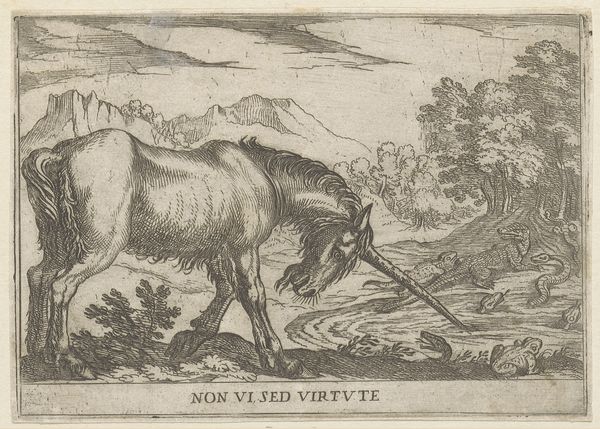
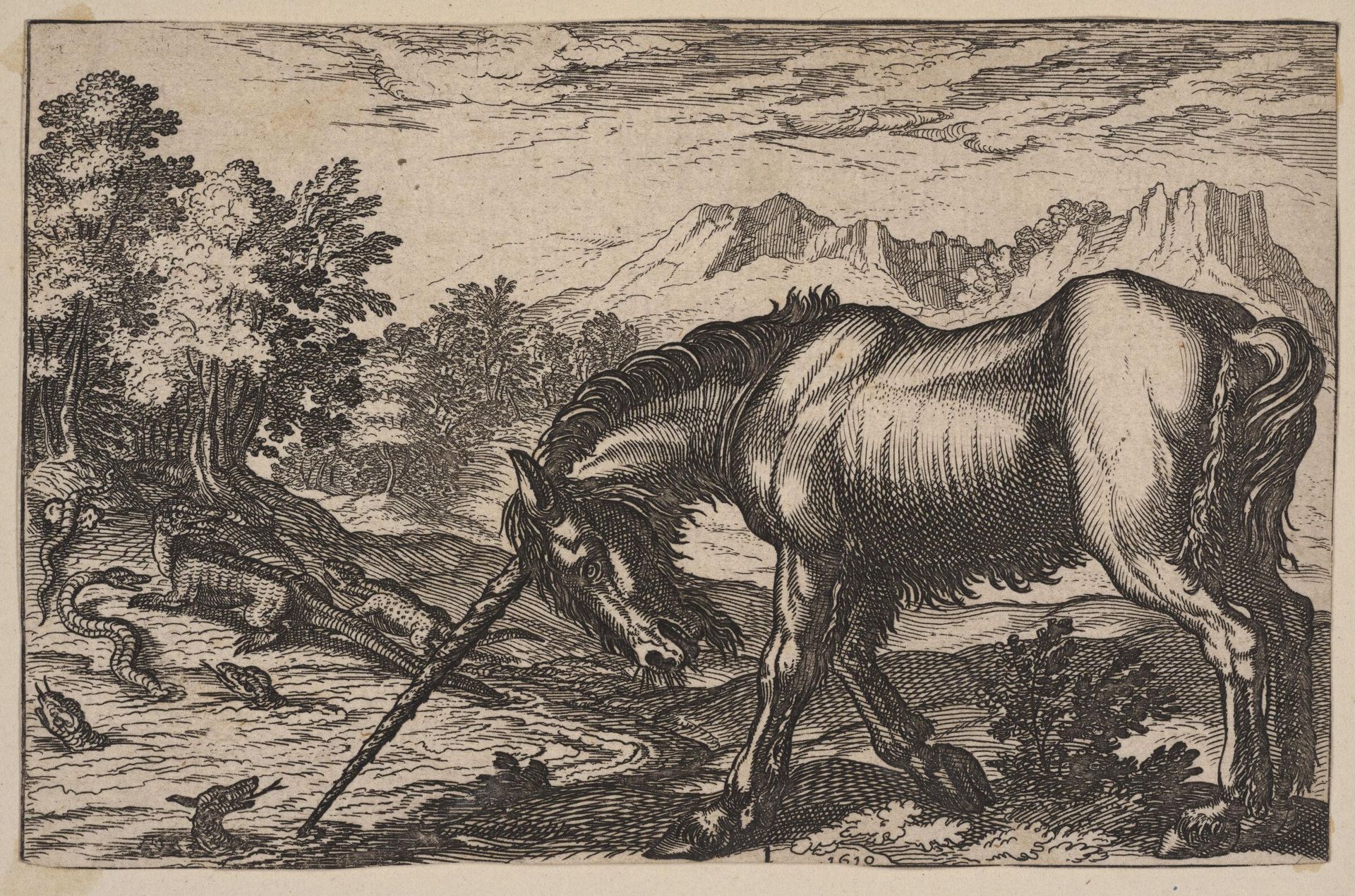
A Unicorn Chasing Lizards from a Pond


Listen to curator's interpretation
Curatorial notes
Curator: Look at this striking image—an engraving by Antonio Tempesta, dating back to the late 16th or early 17th century. It's called *A Unicorn Chasing Lizards from a Pond*. Editor: It feels like a medieval morality tale, doesn’t it? The unicorn is so powerful, yet there's a vulnerability in its bowed head. Is it cleansing the pond, or merely reacting to the reptiles? Curator: The unicorn was often seen as a symbol of purity and grace, its horn believed to have the power to purify water. In this context, the lizards could symbolize evil or disease. Editor: So, Tempesta is playing on the cultural understanding of the unicorn as a force for good. But why depict the lizards so prominently? It almost feels like a political cartoon, commenting on the social ills of the time. Curator: The image taps into deeply rooted anxieties and hopes. The unicorn's horn offers the promise of transformation, a chance to rid society of its 'venomous' elements. Editor: It makes you think about who gets to define what is pure or poisonous, and how these definitions can be used to shape social norms. Curator: Precisely. It's a potent reminder of how symbols reflect and influence our collective psyche.