About this artwork
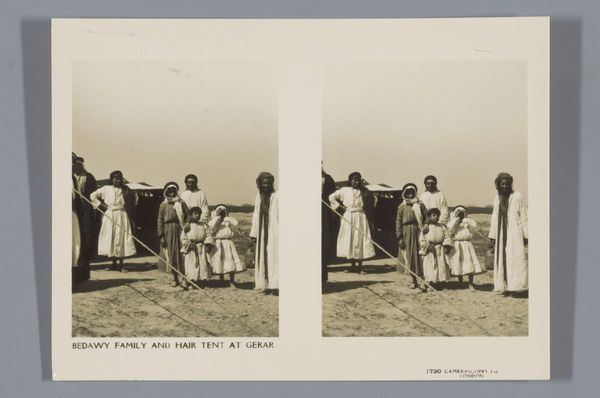
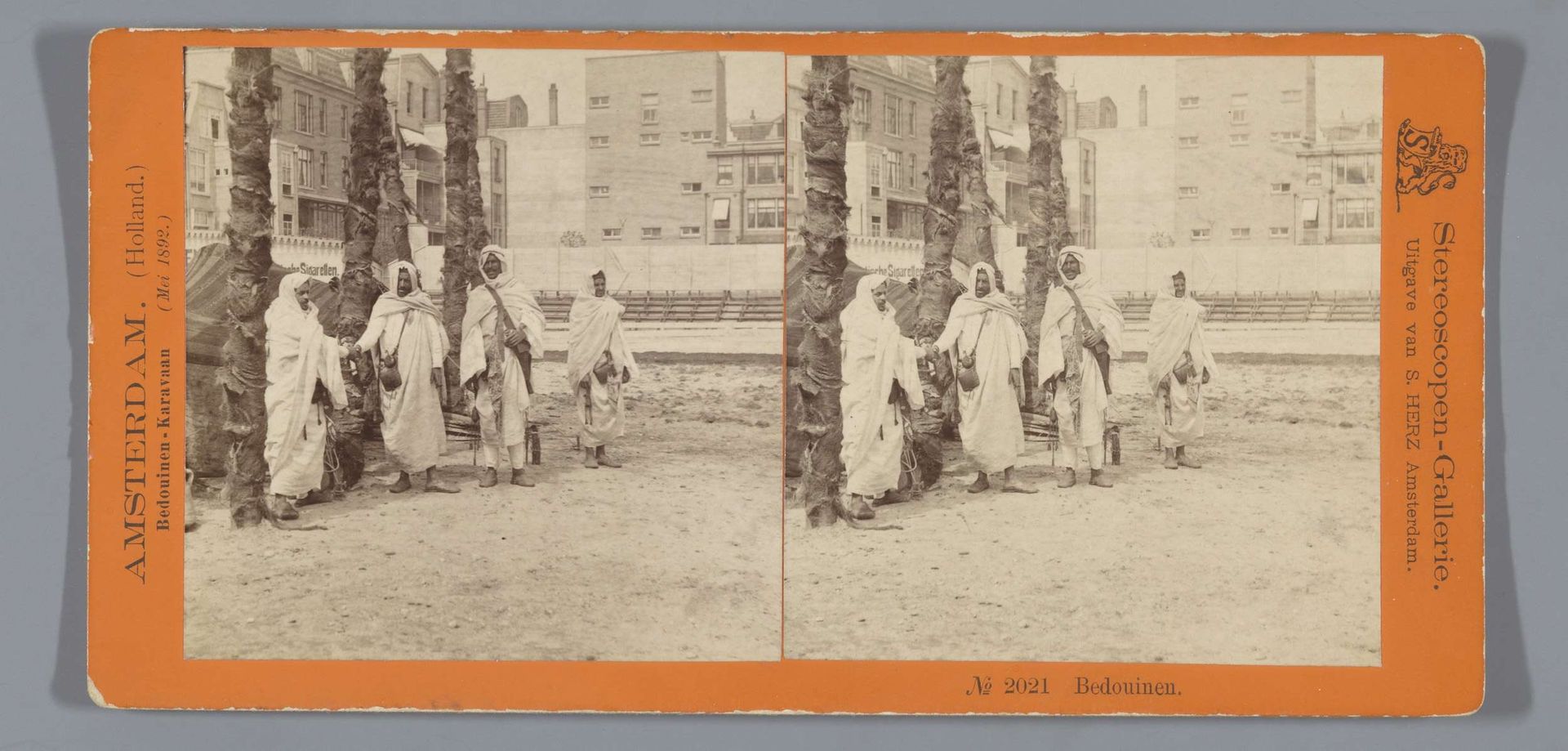
Sigmund Löw captured this stereoscopic image, titled "Bedouin on the Weesperzijde, Amsterdam," with a camera lens. The dominant figures here are the Bedouin men, their white robes stark against the urban backdrop. The color white, often associated with purity and simplicity, takes on an interesting connotation within this environment, contrasting with the industrial architecture. Consider the enduring motif of the wanderer, traceable from ancient epics to contemporary cinema. The presence of these men evokes a sense of journey, of crossing boundaries. The palm trees, seemingly out of place, symbolize a longing for a distant homeland. Yet, their placement in Amsterdam challenges our understanding of cultural identity. The image becomes a visual paradox, prompting us to reflect on the shifting nature of belonging and the intricate interplay between memory, place, and identity. Just like a dream, the collective unconscious reveals itself through symbols, reminding us of the ever-changing tapestry of human experience.

Artwork details
- Medium
- photography, photomontage, gelatin-silver-print
- Dimensions
- height 87 mm, width 178 mm
- Copyright
- Rijks Museum: Open Domain
Tags
Comments
Share your thoughts
About this artwork
Sigmund Löw captured this stereoscopic image, titled "Bedouin on the Weesperzijde, Amsterdam," with a camera lens. The dominant figures here are the Bedouin men, their white robes stark against the urban backdrop. The color white, often associated with purity and simplicity, takes on an interesting connotation within this environment, contrasting with the industrial architecture. Consider the enduring motif of the wanderer, traceable from ancient epics to contemporary cinema. The presence of these men evokes a sense of journey, of crossing boundaries. The palm trees, seemingly out of place, symbolize a longing for a distant homeland. Yet, their placement in Amsterdam challenges our understanding of cultural identity. The image becomes a visual paradox, prompting us to reflect on the shifting nature of belonging and the intricate interplay between memory, place, and identity. Just like a dream, the collective unconscious reveals itself through symbols, reminding us of the ever-changing tapestry of human experience.
Comments
Share your thoughts