About this artwork
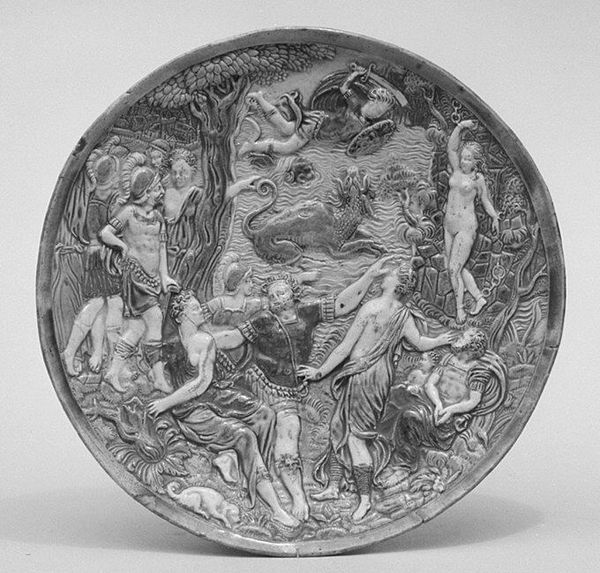
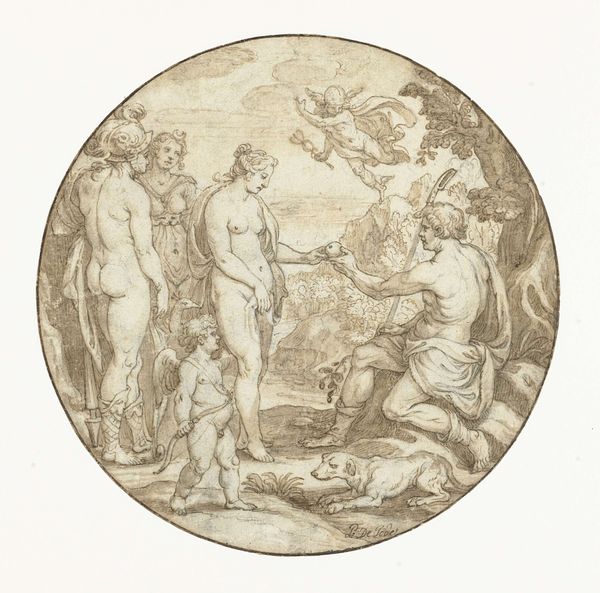
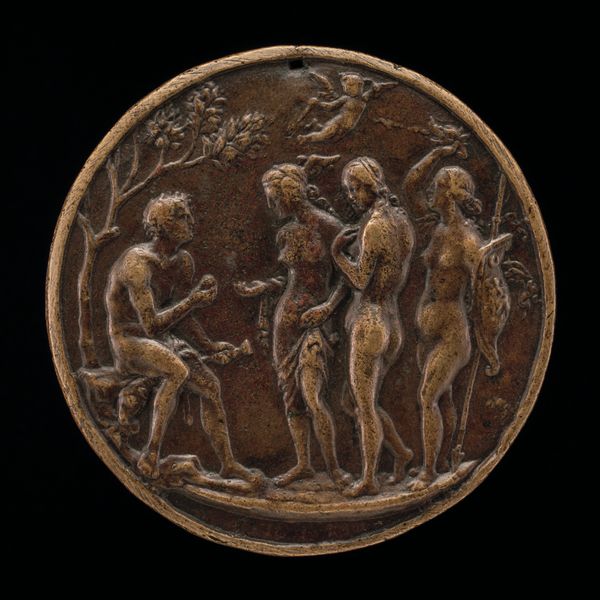
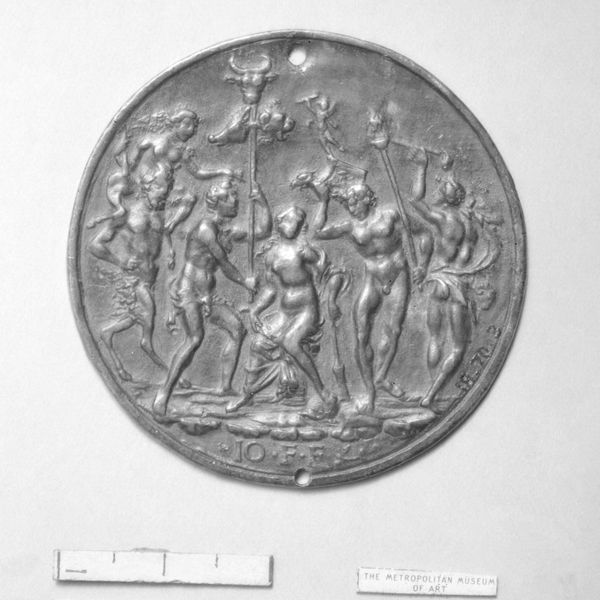
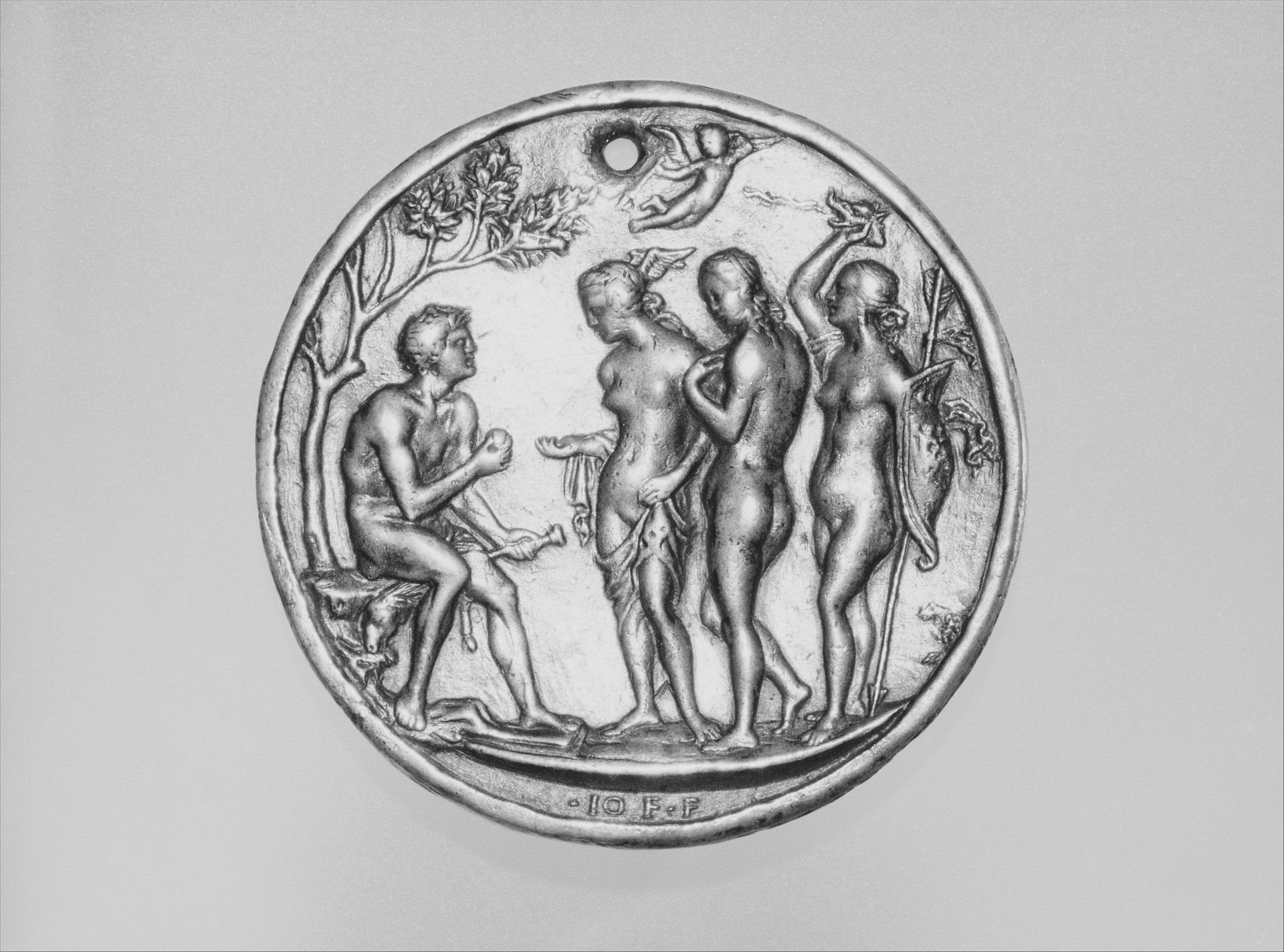
Cast in lead around 1530 by Master I.O. F.F., this plaquette depicts the Judgment of Paris, a pivotal moment from Greek mythology. As you observe Paris seated, consider the weight of his decision: to award the golden apple to the fairest of goddesses - Hera, Athena, or Aphrodite. The Renaissance context is crucial here. As male artists and patrons rediscovered and reinterpreted classical stories, they imposed contemporary values and perspectives. Here we see an articulation of power dynamics through the male gaze, where the goddesses are presented as objects of beauty, judged and ranked by male authority. This is not merely a depiction of a mythological event, but a reflection of the gendered and sexualized power structures that were emerging during the Renaissance. Note how their bodies are displayed for assessment. How does it feel to witness this ancient narrative, knowing its role in shaping Western perceptions of beauty, power, and female identity?
The Judgment of Paris 1500 - 1515


Artwork details
- Medium
- relief, bronze, sculpture
- Dimensions
- Diameter: 2 1/16 in. (5.2 cm)
- Location
- Metropolitan Museum of Art, New York, NY
- Copyright
- Public Domain
Tags
medal
relief
bronze
11_renaissance
female-nude
sculpture
decorative-art
italian-renaissance
male-nude
Comments
No comments
About this artwork
Cast in lead around 1530 by Master I.O. F.F., this plaquette depicts the Judgment of Paris, a pivotal moment from Greek mythology. As you observe Paris seated, consider the weight of his decision: to award the golden apple to the fairest of goddesses - Hera, Athena, or Aphrodite. The Renaissance context is crucial here. As male artists and patrons rediscovered and reinterpreted classical stories, they imposed contemporary values and perspectives. Here we see an articulation of power dynamics through the male gaze, where the goddesses are presented as objects of beauty, judged and ranked by male authority. This is not merely a depiction of a mythological event, but a reflection of the gendered and sexualized power structures that were emerging during the Renaissance. Note how their bodies are displayed for assessment. How does it feel to witness this ancient narrative, knowing its role in shaping Western perceptions of beauty, power, and female identity?
Comments
No comments