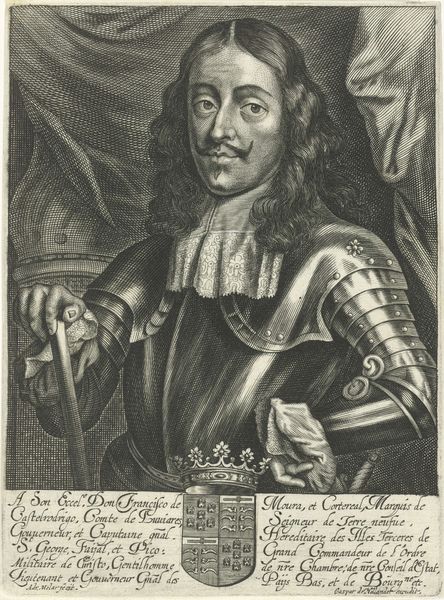
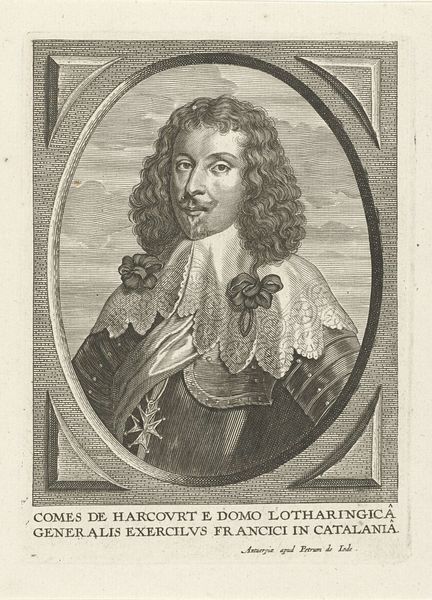
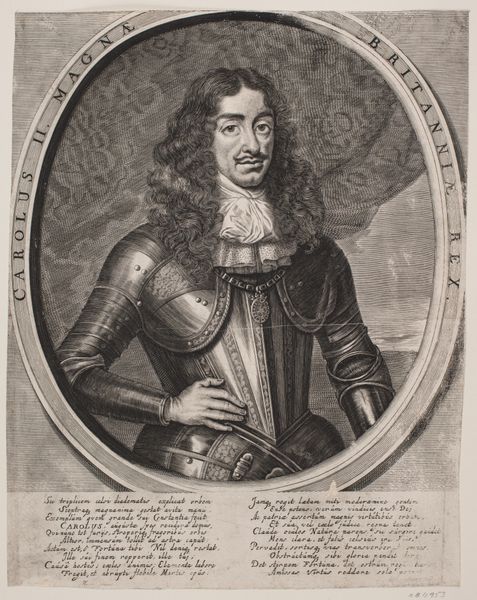
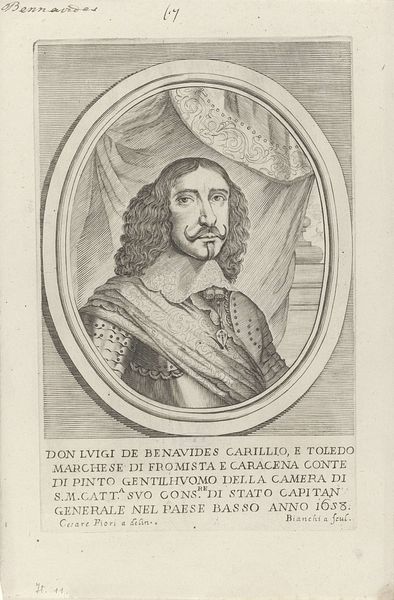
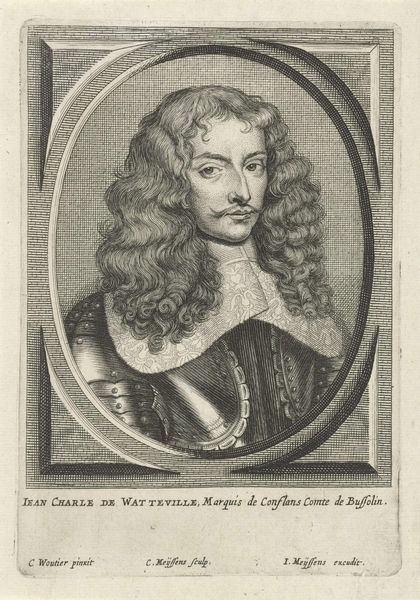
Portret van Jean Gaspar Ferdinand de Marchin, graaf van Granville 1670 - 1674
0:00
0:00

cornelismeyssens
Rijksmuseum
intaglio, engraving
#
portrait
#
baroque
#
intaglio
#
old engraving style
#
history-painting
#
engraving
Dimensions: height 242 mm, width 162 mm
Copyright: Rijks Museum: Open Domain
Curator: What a stern fellow! The meticulous detail of this intaglio gives "Portret van Jean Gaspar Ferdinand de Marchin, graaf van Granville" such weight. Editor: Weight is right! The materiality is so important; you can practically feel the pressure of the plate on the paper. Look at how the engraver, Cornelis Meyssens, has built form with incredibly fine lines. It really is more about the tactile experience. Curator: The Rijksmuseum dates this piece to between 1670 and 1674. Meyssens, working in the baroque style, captures the Count's station through carefully constructed public imagery. He was clearly a figure of immense power and importance. Editor: Absolutely. And it's not just the individual, but what the portrait does, that interests me. The social labor behind the original commission. Was this intended to reinforce his authority, to solidify his image? What narratives of control and skill were conveyed through it? Curator: Certainly, that was a primary function of portraiture. Remember, images like this circulated widely, establishing and reinforcing hierarchies within society. Note the inscription lists all his titles, solidifying his power. Editor: Exactly. I also wonder about its reception at the time. Looking beyond just the ruling classes: how did commoners experience and interpret such portrayals of nobility? We need to get behind the surface, analyze these layers, even the economics of the prints themselves. Curator: Agreed, exploring the piece from various societal perspectives does give you the fullest possible image. Editor: Yes, this seemingly straightforward portrait has layers that challenge and provoke ideas about power, artistry, and social impact. Curator: Very true. I'll look at the piece with fresh eyes.
Comments
No comments
Be the first to comment and join the conversation on the ultimate creative platform.
 Collect
 React
React Comment
More like this