engraving
#
portrait
#
baroque
#
old engraving style
#
history-painting
#
engraving
Dimensions: height 158 mm, width 121 mm
Copyright: Rijks Museum: Open Domain
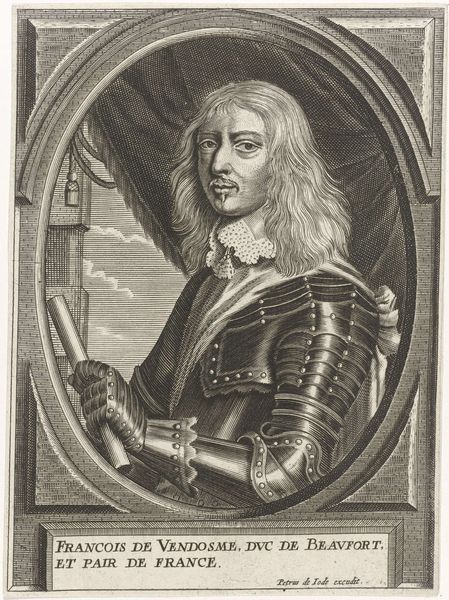
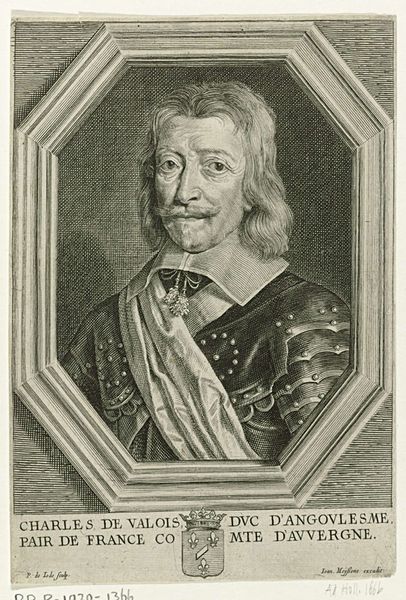
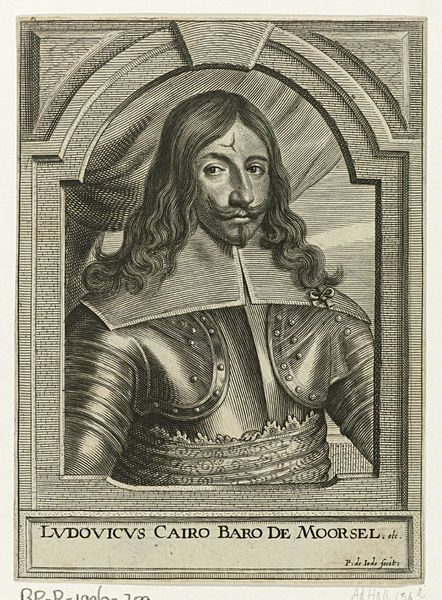
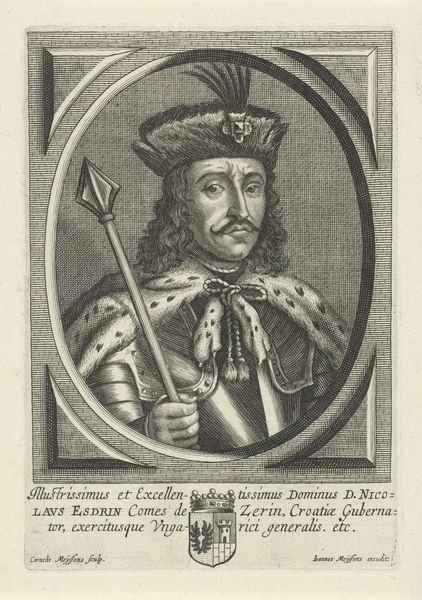
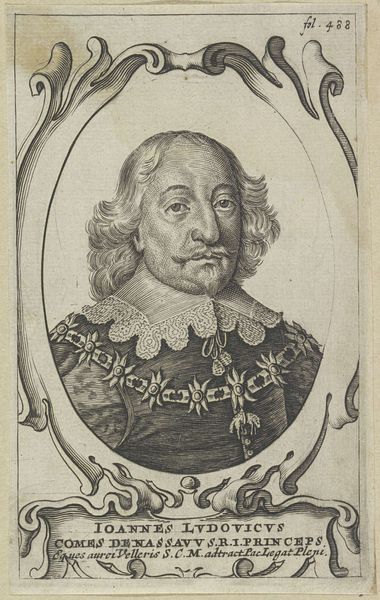
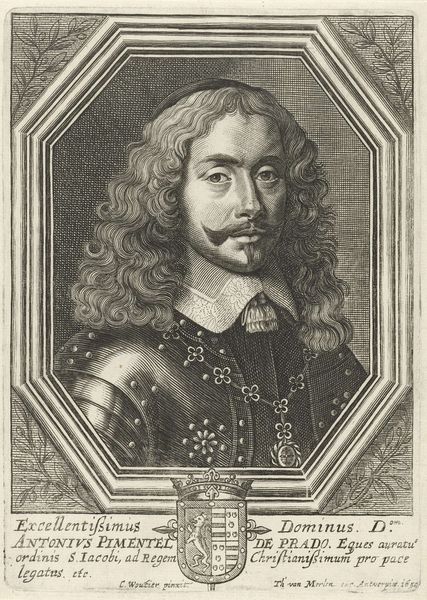
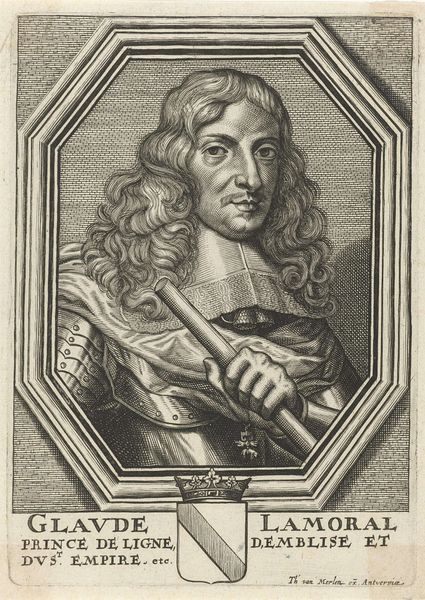
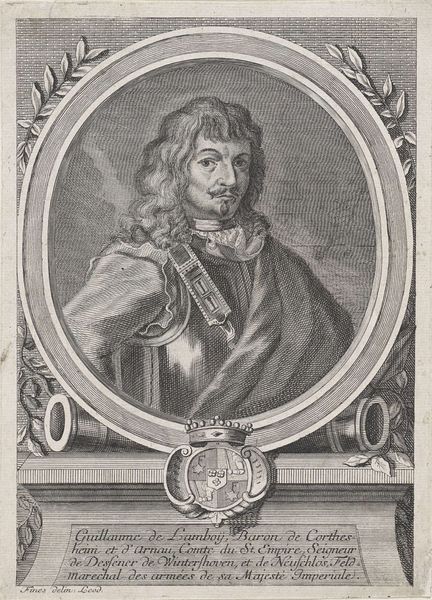
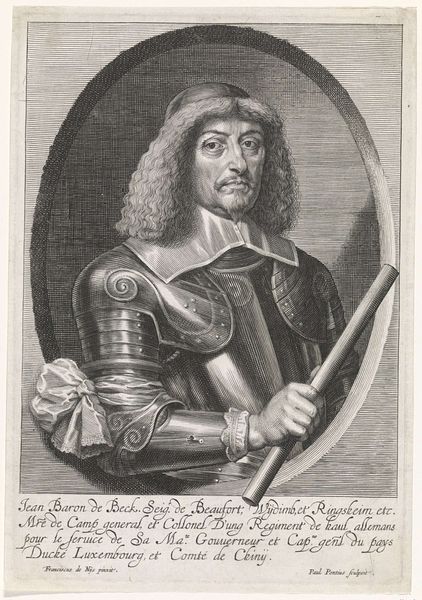
Curator: So, here we have Jacob van Reesbroeck's engraving, a portrait of Charles Antoine, Count of Calonne, dating sometime between 1630 and 1704. What strikes you most about this image? Editor: Well, first, the framing is interesting with the diamond shape. And the Count himself seems a little… melancholy? What can you tell me about it? Curator: That melancholy may hint at the complexities of class and representation. These portraits weren’t merely aesthetic; they were instruments of power. Consider the Count's attire—the armour signifies a specific societal role, a connection to military power, to lineage, and ultimately, to domination. How might this portrayal have reinforced existing power structures? Editor: It feels very performative. Almost like he's acting a part, rather than just… existing. Is that typical of Baroque portraiture? Curator: Absolutely. The Baroque was all about drama, spectacle, and asserting authority, often masking societal instability through grandeur. What's interesting here is the tension: a man of war, softened, perhaps, by the changing tides of history. The engraving flattens what would have been bold dimensionality, doesn’t it? Consider who had access to these images, who controlled the narrative, and whose stories were left untold? Editor: So, the act of portraying someone itself becomes a political act. To decide who gets remembered, how they're remembered... it’s all power. Curator: Exactly. And how do we grapple with that power when we look at this portrait today? What does it mean to inherit these representations of privilege? Editor: It definitely makes you question what we consider ‘history’ and whose stories are elevated in the first place. There is a very political side to art, even portraiture. Curator: Precisely. Let's remember art isn't neutral; it reflects and shapes our world. Hopefully, it can help us build a more just one.
Comments
No comments
Be the first to comment and join the conversation on the ultimate creative platform.
 Collect
 React
React Comment
More like this