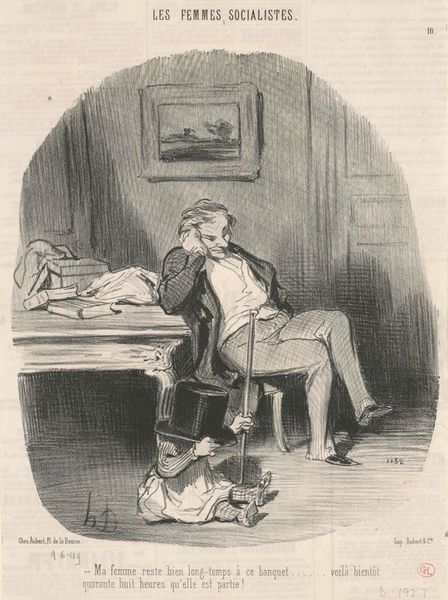
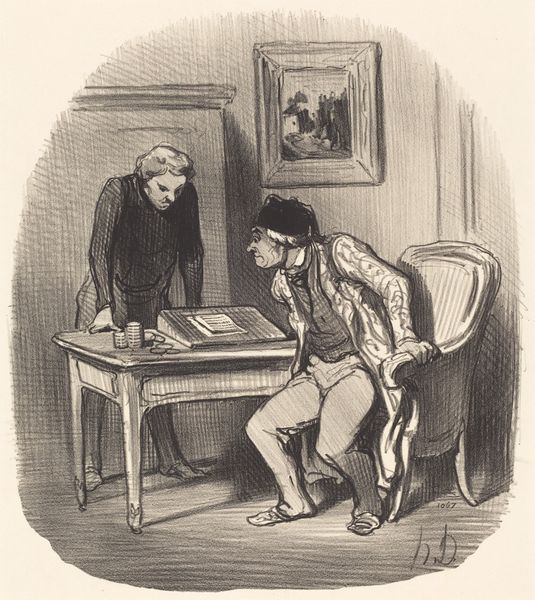
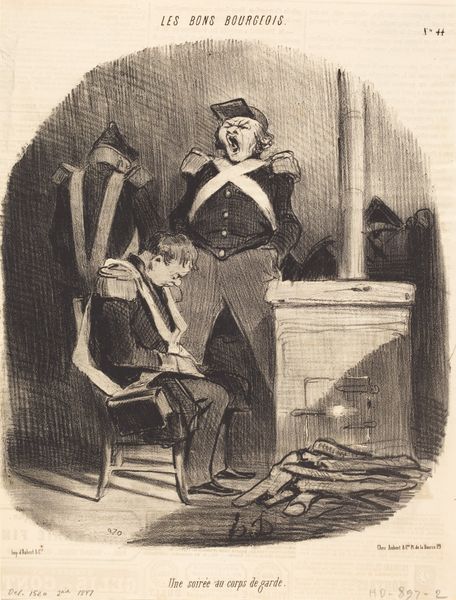
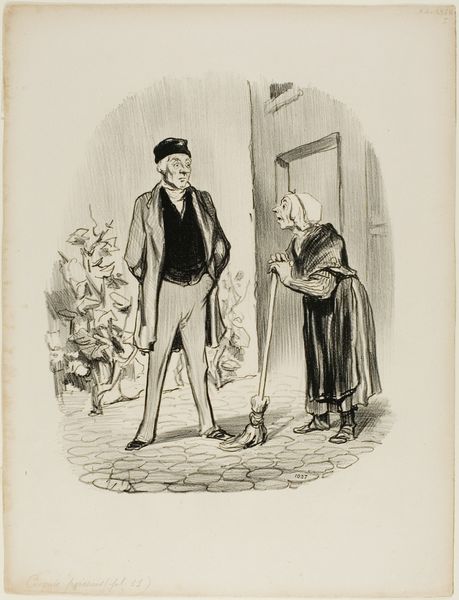
drawing, lithograph, print
#
portrait
#
drawing
#
lithograph
# print
#
caricature
#
pencil sketch
#
romanticism
#
genre-painting
Copyright: National Gallery of Art: CC0 1.0
Curator: Honoré Daumier’s lithograph, "Poète classique composant une églogue..." from 1840, presents us with quite the domestic scene. Editor: Oh, the din! My first impression? Absolute chaos and creative frustration, like a comedic operetta frozen mid-performance. The poet looks tormented, probably by that drumming child. Curator: Indeed. The lithograph medium allowed for a wider circulation of such satirical commentary. Daumier frequently critiqued bourgeois life through his work, often highlighting the clash between artistic aspirations and the banality of everyday existence. Editor: Precisely! Look at the setting—the overturned dishes, the stressed out children, the overall disorder. Is this supposed to be a space of serene artistic creation? It’s the antithesis. Curator: It speaks volumes about the artist’s relationship with his patron. This wasn't just about aesthetic pleasure; it was about a transactional relationship that often failed to nurture the creative process. The print medium emphasizes mass consumption and dissemination of images for a rising bourgeoisie with aspirations. Editor: Right. And it begs the question, how can anyone, even a classical poet, compose an idyllic eclogue amidst such clamor? His very stance, pipe dreamily aloft, seems to scream "escape!" Almost Chaplin-esque. Curator: Chaplin-esque, that's a keen observation. It speaks to the timeless quality of the visual gag, wouldn’t you say? The medium, cheap and easily made, also underscores that satire doesn't have to be elite. It’s the people’s art. Editor: Absolutely. A visual joke readily accessible for anyone experiencing the pressures of daily life. Even today, there's a resonant truth to that comical exasperation. Makes you think of art and accessibility, then and now. Curator: Precisely, and how societal structures dictate artistic processes even when attempting something sublime, as with the poet's classical subject. I’d say we see a critique on consumption itself and on the division between high and low art in its time. Editor: In essence, it highlights how true art comes from life, however chaotic, rather than lofty ideals detached from lived realities. This piece truly made me question romantic notions surrounding creative geniuses. Curator: It certainly throws those romantic ideas into stark relief, or maybe utter disarray. Editor: Daumier reminds us all not to romanticize the mess of the human condition that, ironically, gives way to moments of profound understanding, humor, and yes... art!
Comments
No comments
Be the first to comment and join the conversation on the ultimate creative platform.
 Collect
 React
React Comment
More like this