About this artwork
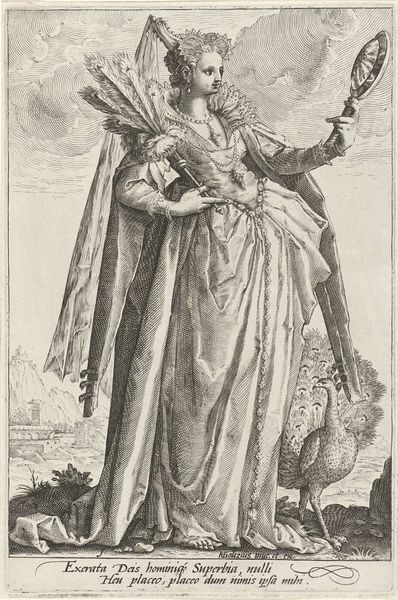
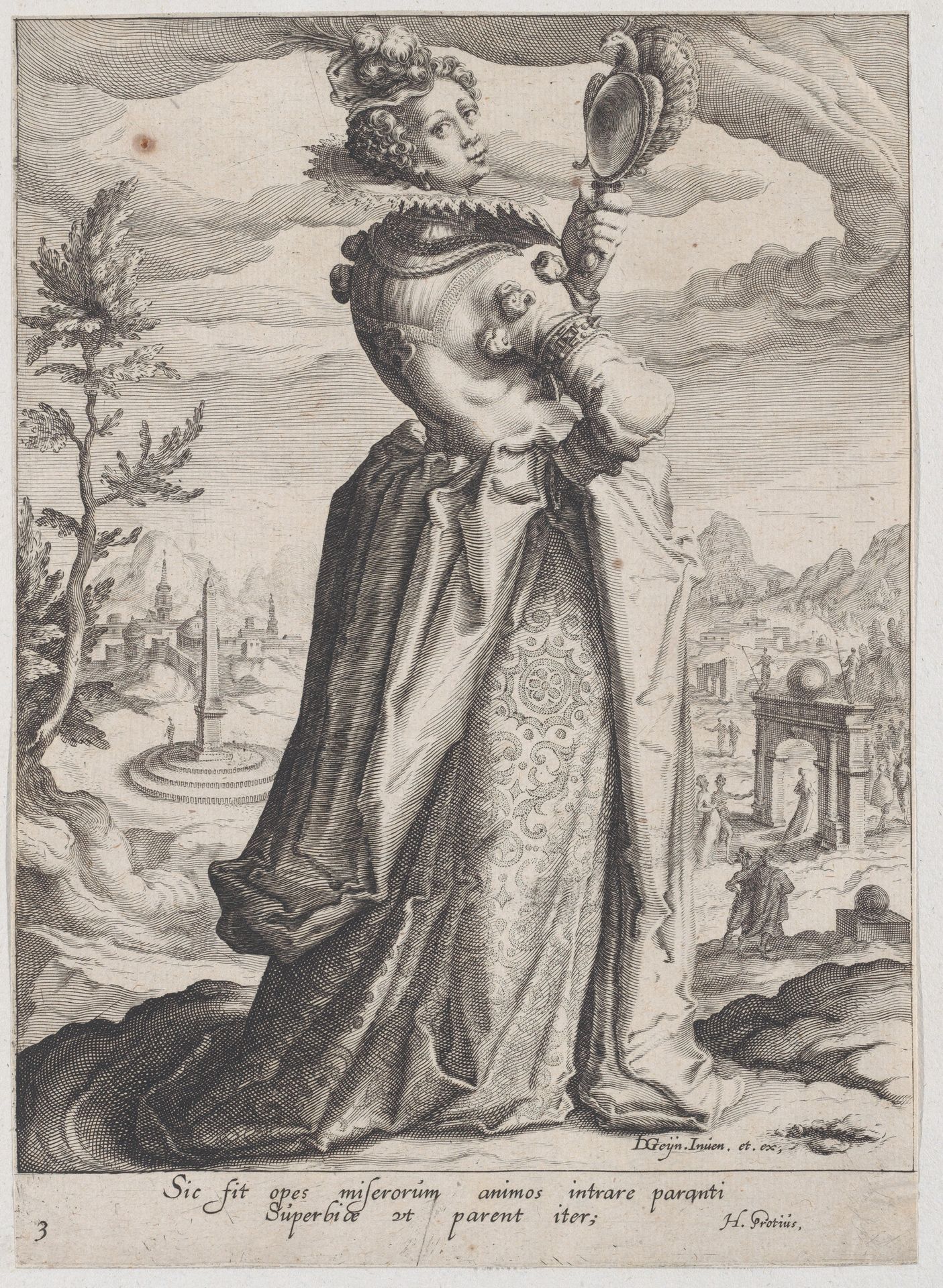
This engraving, Pride, by Zacharias Dolendo, was part of a series titled Virtues and Vices. The image offers a visual representation of the concept of pride, deeply embedded in the cultural and moral fabric of 16th-century Europe. Made in the Netherlands, this artwork reflects the social values of the time. The figure, adorned with elaborate garments, gazes at herself in the mirror, symbolizing vanity and self-absorption, while in the landscape behind, we see monuments like obelisks. Here, Pride is not merely a personal failing but a social ill, potentially threatening the moral order. Artists at this time are very much aware of their position within the institutions of art. As a printmaker, Dolendo's work would have been widely distributed, unlike painting which was often only visible to the elite. To fully understand an artwork like this, we can look to contemporary texts, sermons, and other visual representations of virtues and vices to understand the cultural meaning.
Pride, from Virtues and Vices
1596 - 1597


Artwork details
- Medium
- drawing, print, engraving
- Dimensions
- Sheet: 9 × 6 1/2 in. (22.9 × 16.5 cm)
- Location
- Metropolitan Museum of Art, New York, NY
- Copyright
- Public Domain
Tags
drawing
allegory
mannerism
figuration
history-painting
northern-renaissance
engraving
Comments
Be the first to share your thoughts about this work.
About this artwork
This engraving, Pride, by Zacharias Dolendo, was part of a series titled Virtues and Vices. The image offers a visual representation of the concept of pride, deeply embedded in the cultural and moral fabric of 16th-century Europe. Made in the Netherlands, this artwork reflects the social values of the time. The figure, adorned with elaborate garments, gazes at herself in the mirror, symbolizing vanity and self-absorption, while in the landscape behind, we see monuments like obelisks. Here, Pride is not merely a personal failing but a social ill, potentially threatening the moral order. Artists at this time are very much aware of their position within the institutions of art. As a printmaker, Dolendo's work would have been widely distributed, unlike painting which was often only visible to the elite. To fully understand an artwork like this, we can look to contemporary texts, sermons, and other visual representations of virtues and vices to understand the cultural meaning.
Comments
Be the first to share your thoughts about this work.