About this artwork
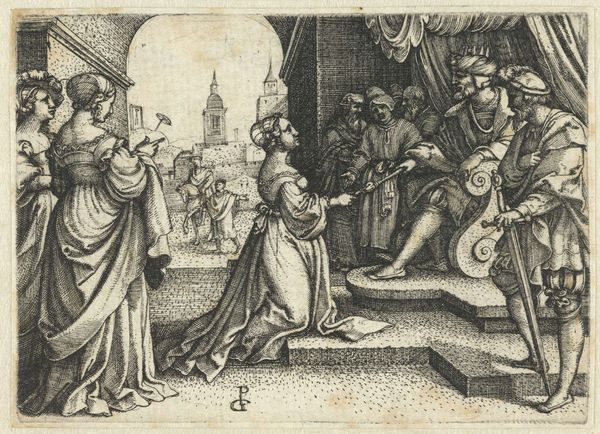
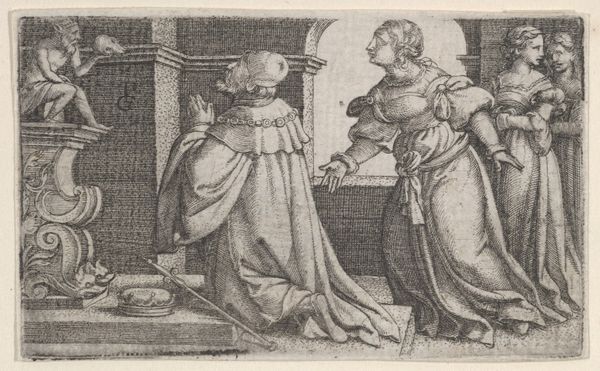
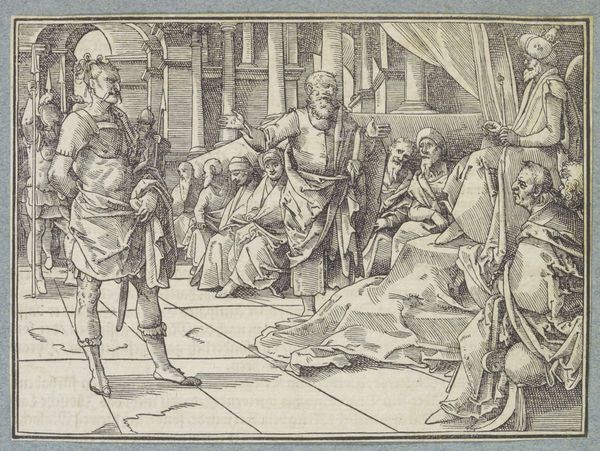
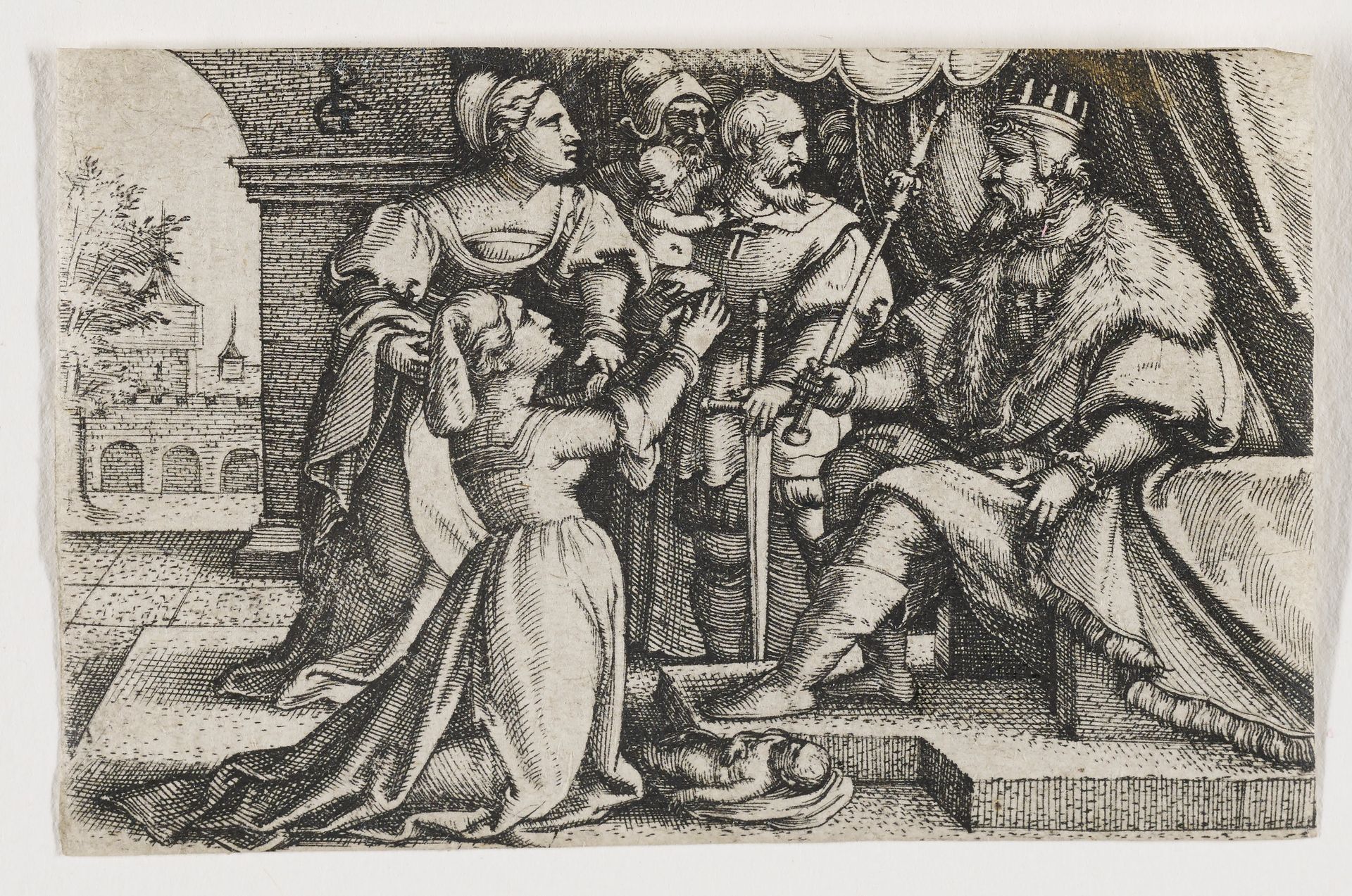
Georg Pencz created this engraving, "Judgment of Solomon," during the early to mid-16th century, a time of significant social and religious upheaval in Europe. The artwork depicts a biblical scene where King Solomon cleverly resolves a dispute between two women both claiming to be the mother of the same child. Pencz’s engraving occurs within a historical context defined by debates about justice, truth, and power. The tale highlights themes of maternal identity and sacrifice but also reflects the cultural and legal constraints placed upon women. Notice the supplicant’s emotional distress. Her face is upturned, her hands clasped in supplication. Pencz captures her desperation and her willingness to relinquish her claim rather than see the child harmed. The image may provoke questions about the nature of truth, the complexities of human relationships, and the emotional weight of decisions made by those in power. As a whole, the artwork invites us to consider how justice is perceived and administered, and how deeply personal experiences intersect with broader social structures.
Judgment of Solomon
1529 - 1533


Artwork details
- Medium
- print, engraving
- Dimensions
- 1 15/16 × 3 in. (4.92 × 7.62 cm) (image)22 1/2 × 17 5/8 in. (57.15 × 44.77 cm) (outer frame)
- Location
- Minneapolis Institute of Art
- Copyright
- Public Domain
Tags
Comments
Share your thoughts
About this artwork
Georg Pencz created this engraving, "Judgment of Solomon," during the early to mid-16th century, a time of significant social and religious upheaval in Europe. The artwork depicts a biblical scene where King Solomon cleverly resolves a dispute between two women both claiming to be the mother of the same child. Pencz’s engraving occurs within a historical context defined by debates about justice, truth, and power. The tale highlights themes of maternal identity and sacrifice but also reflects the cultural and legal constraints placed upon women. Notice the supplicant’s emotional distress. Her face is upturned, her hands clasped in supplication. Pencz captures her desperation and her willingness to relinquish her claim rather than see the child harmed. The image may provoke questions about the nature of truth, the complexities of human relationships, and the emotional weight of decisions made by those in power. As a whole, the artwork invites us to consider how justice is perceived and administered, and how deeply personal experiences intersect with broader social structures.
Comments
Share your thoughts