About this artwork
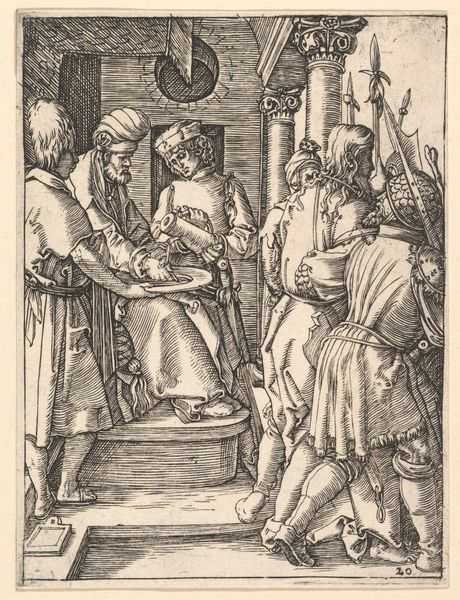
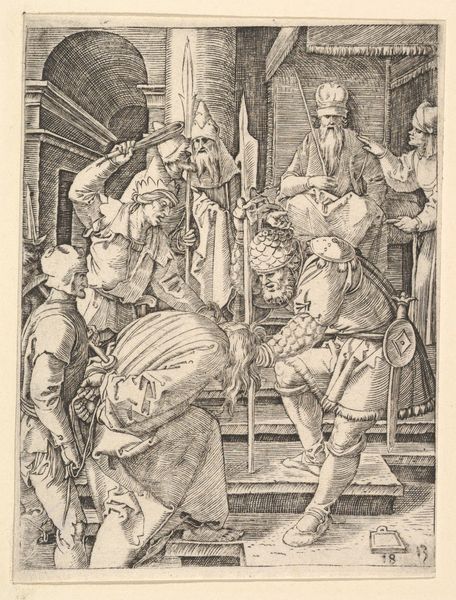
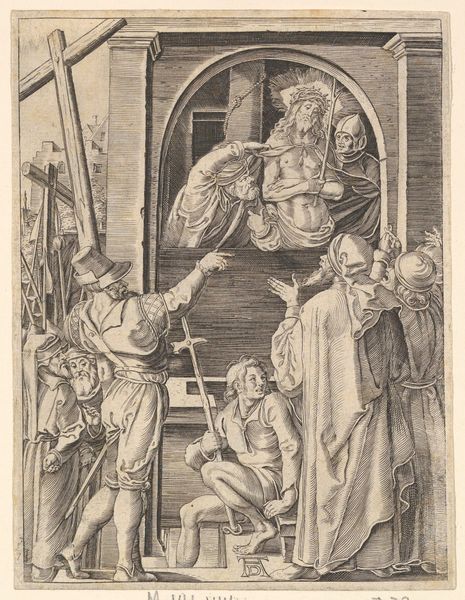
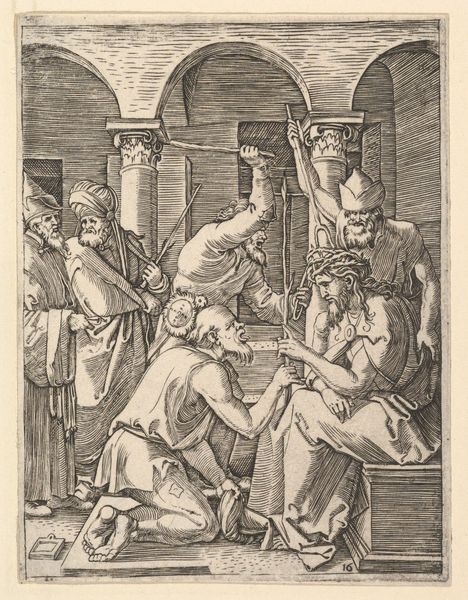
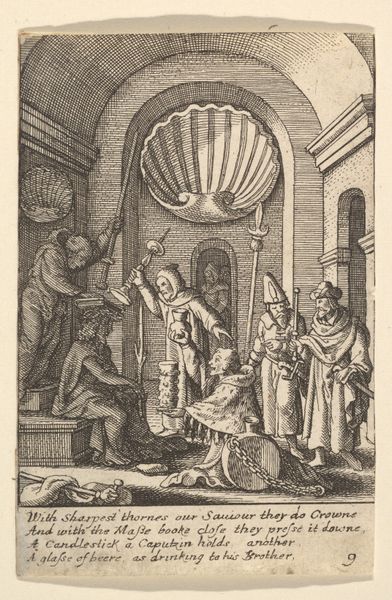
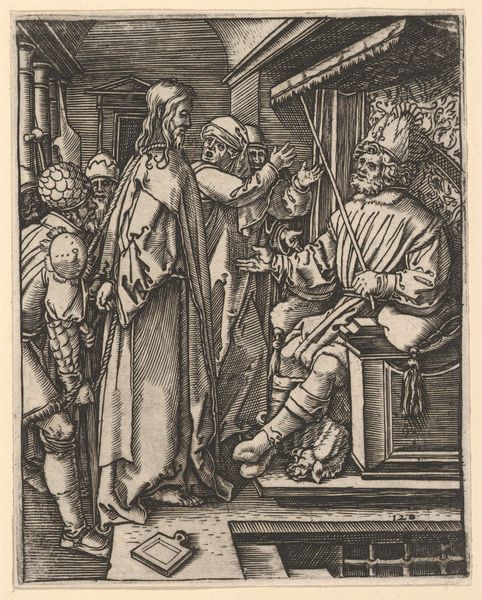
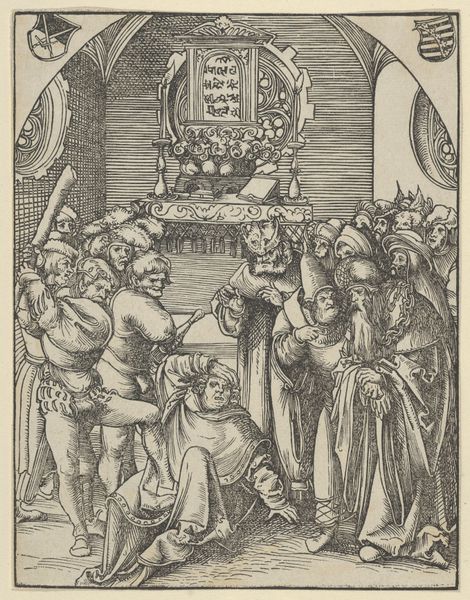
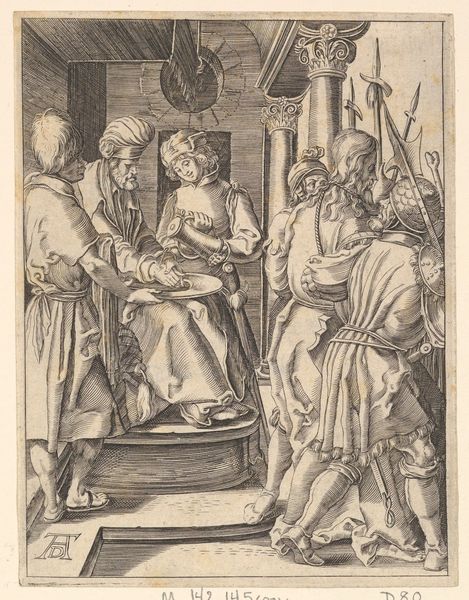
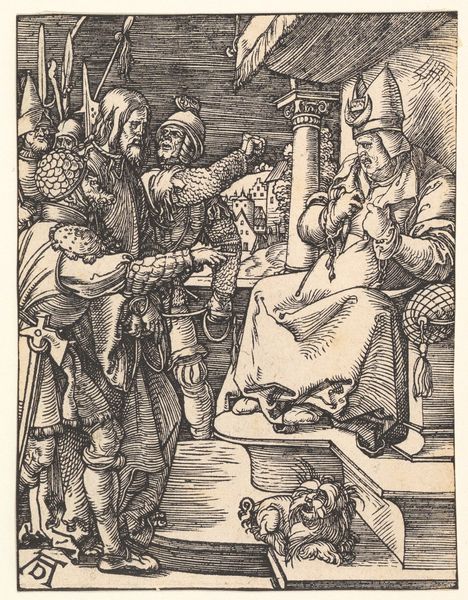
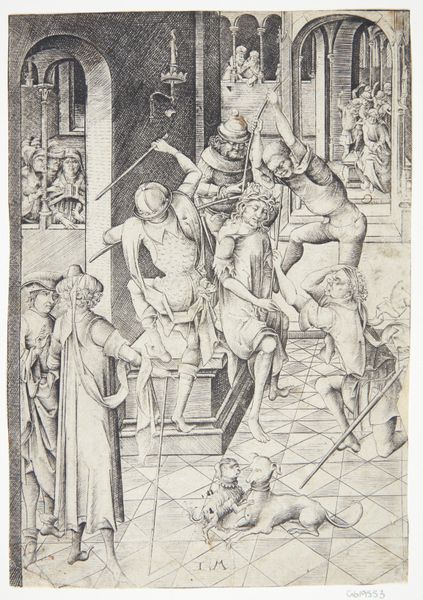
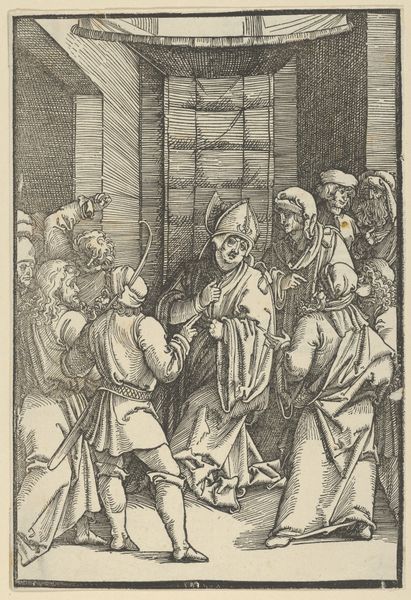
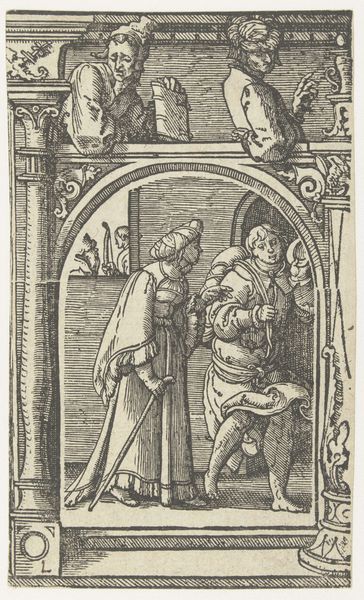
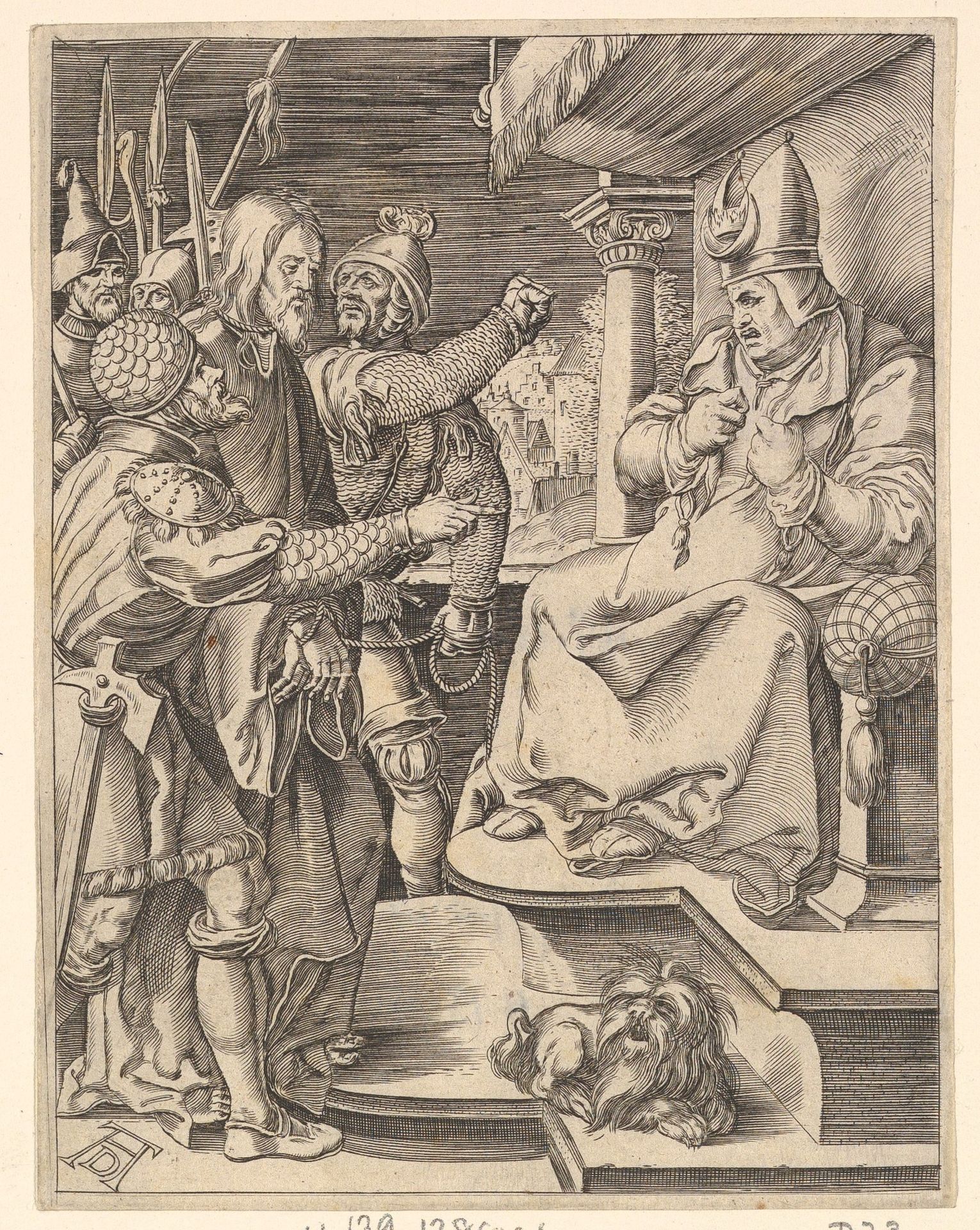
Here is a scene from Albrecht Dürer's "The Little Passion," rendered in engravings. Notice the central figure of Christ, bound and presented before a high priest. The binding of hands, a motif as old as civilization itself, recurs throughout art history, symbolizing not just physical restraint but also moral and spiritual captivity. Recall the figures from ancient Greek tragedies, bound by fate, or the medieval allegories of vice, where humanity is shackled by its own desires. The emotional power of this image lies in the contrast between Christ's serenity and the palpable aggression of his captors. It is a visual manifestation of the eternal struggle between innocence and corruption, resonating deeply within our collective psyche, stirring primal fears and moral outrage. This motif of binding continues to evolve, resurfacing in modern contexts to represent various forms of oppression and control, a testament to its enduring power as a symbol of human suffering.
Engraved copies of The Little Passion
1485 - 1699


Artwork details
- Medium
- drawing, print, woodcut, engraving
- Dimensions
- For the whole series: plate circa : 5 x 3 13/16 in. (12.7 x 9.7 cm)
- Location
- Metropolitan Museum of Art, New York, NY
- Copyright
- Public Domain
Tags
Comments
Share your thoughts
About this artwork
Here is a scene from Albrecht Dürer's "The Little Passion," rendered in engravings. Notice the central figure of Christ, bound and presented before a high priest. The binding of hands, a motif as old as civilization itself, recurs throughout art history, symbolizing not just physical restraint but also moral and spiritual captivity. Recall the figures from ancient Greek tragedies, bound by fate, or the medieval allegories of vice, where humanity is shackled by its own desires. The emotional power of this image lies in the contrast between Christ's serenity and the palpable aggression of his captors. It is a visual manifestation of the eternal struggle between innocence and corruption, resonating deeply within our collective psyche, stirring primal fears and moral outrage. This motif of binding continues to evolve, resurfacing in modern contexts to represent various forms of oppression and control, a testament to its enduring power as a symbol of human suffering.
Comments
Share your thoughts