print, engraving
portrait
baroque
old engraving style
history-painting
engraving
Dimensions: height 68 mm, width 58 mm
Copyright: Rijks Museum: Open Domain
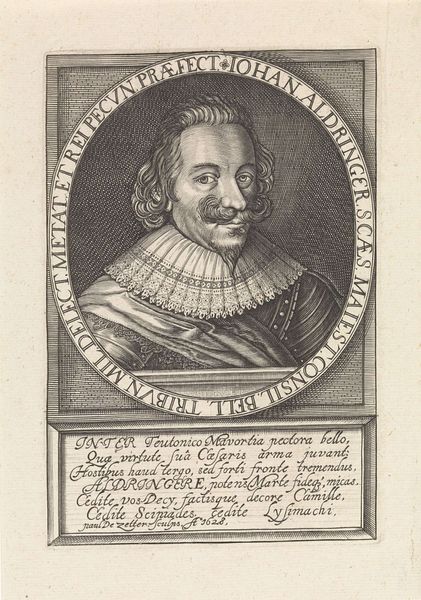
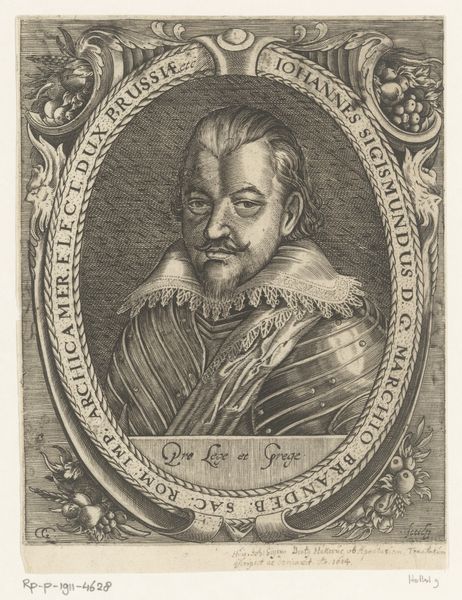
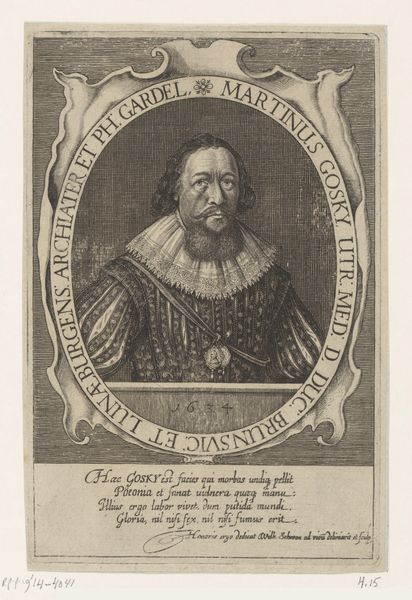
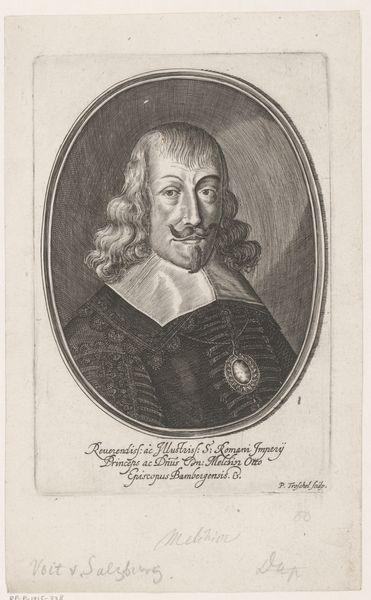
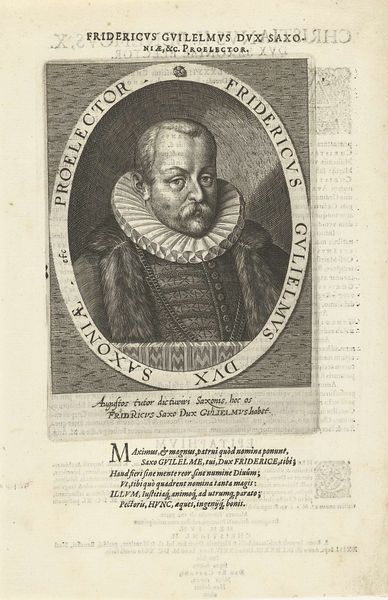
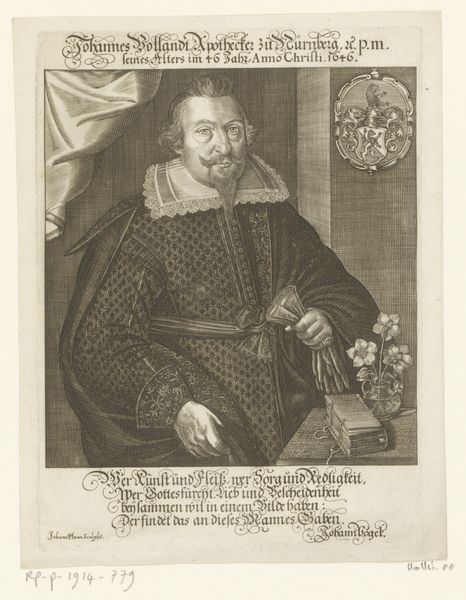
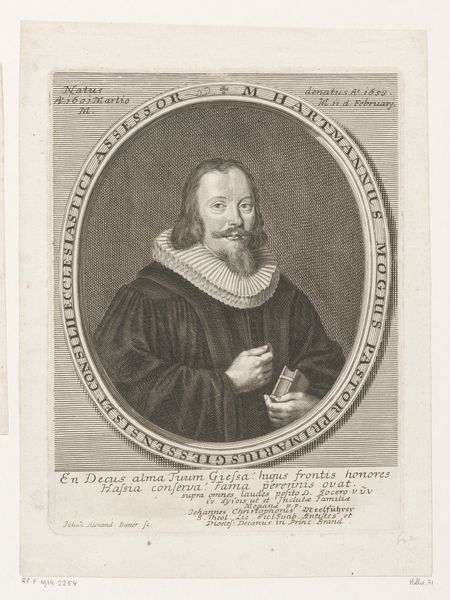
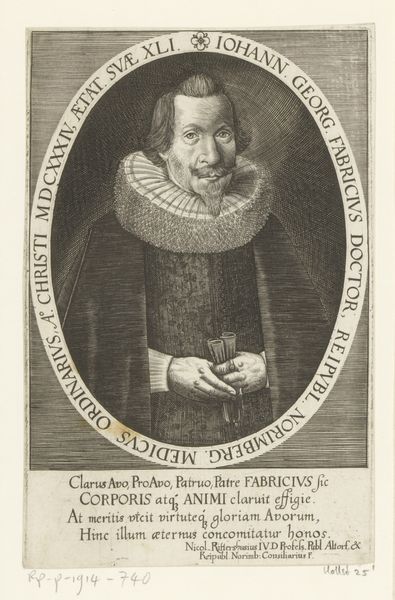
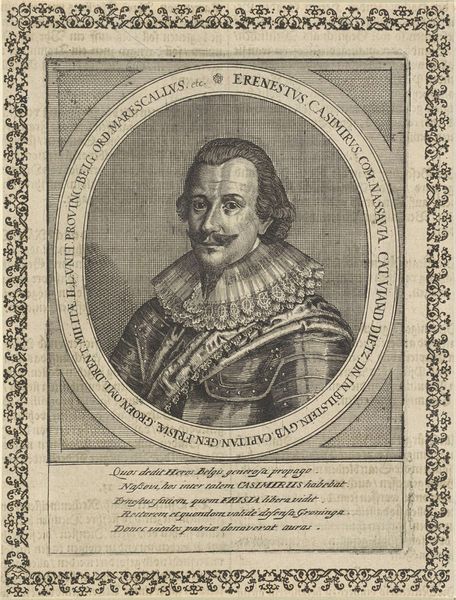
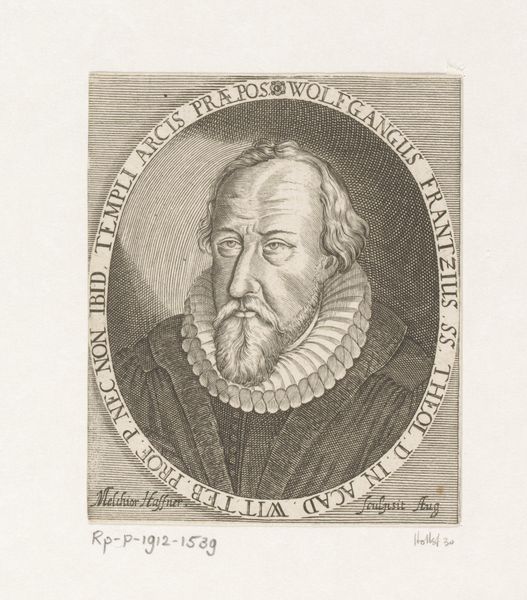
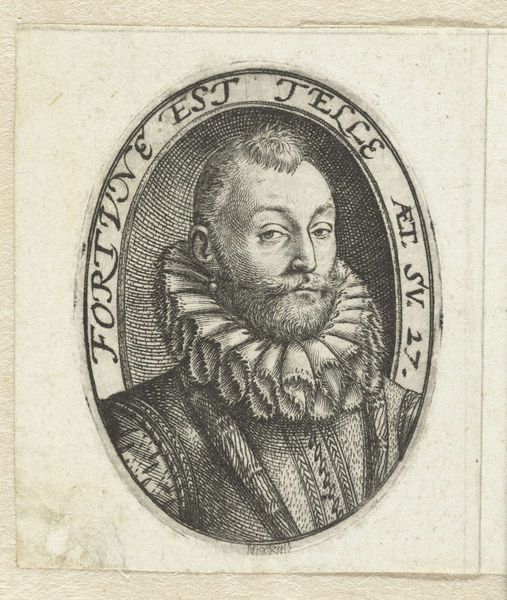
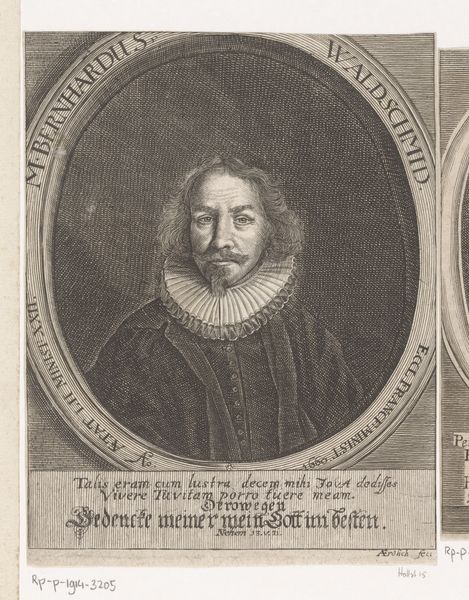
Curator: This engraving is a portrait of Maximilian I, Elector of Bavaria. It was created by Matthäus Merian sometime between 1603 and 1650, and it's now held at the Rijksmuseum. Editor: It strikes me as intensely formal, even severe. The tightly framed oval, the stark contrast of light and shadow—it creates this atmosphere of unwavering authority. Curator: It certainly conveys power. Maximilian was a significant figure in the Holy Roman Empire. His reign was marked by the Thirty Years’ War, in which he initially sided with the Catholic League. This print likely served to bolster his image and disseminate it among his allies and subjects. Editor: Yes, that makes sense. The sharp, precise lines of the engraving emphasize the details of his clothing and decorations. The lace collar, the sash, the ornate chain… Each element speaks to status and wealth. It’s a very deliberate construction. Curator: Indeed. Printmaking allowed for wider distribution of such images, functioning almost as political propaganda. Consider how the composition directs your gaze—upward, towards his face. Editor: I notice the slight asymmetry. The way his head is turned just so, the shadow falling more heavily on one side. It adds a touch of humanity, almost vulnerability, beneath the regal facade. Curator: That's a fascinating observation. It's worth noting that Maximilian was a complex figure. He was known for his political shrewdness and ambition, but also for his patronage of the arts and sciences. Editor: It’s interesting how such a seemingly straightforward portrait can reveal layers of meaning and intention, when you start examining its parts as deliberate signs. Curator: Exactly, the visual and material culture surrounding figures like Maximilian played a critical role in shaping perceptions of power and legitimacy. Editor: I will definitely leave here contemplating what an individual is trying to communicate when their representation becomes a matter of politics. Curator: And how artistic techniques amplify the meanings and functions of a portrait within its historical context.
Comments
No comments
Be the first to comment and join the conversation on the ultimate creative platform.
 React
React Comment