
Curatorial notes
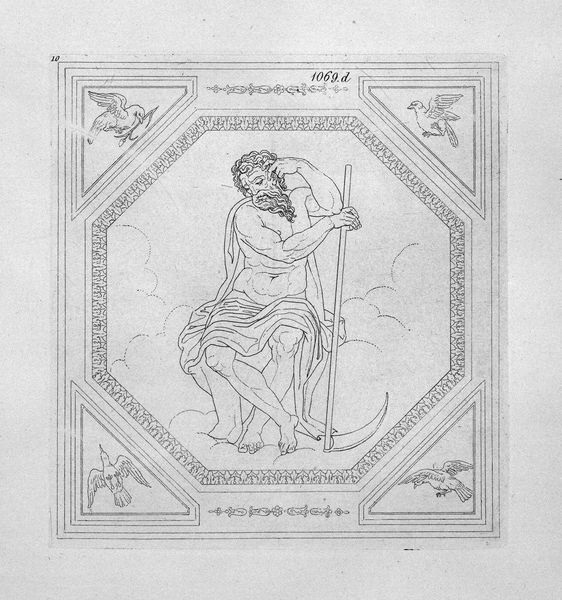
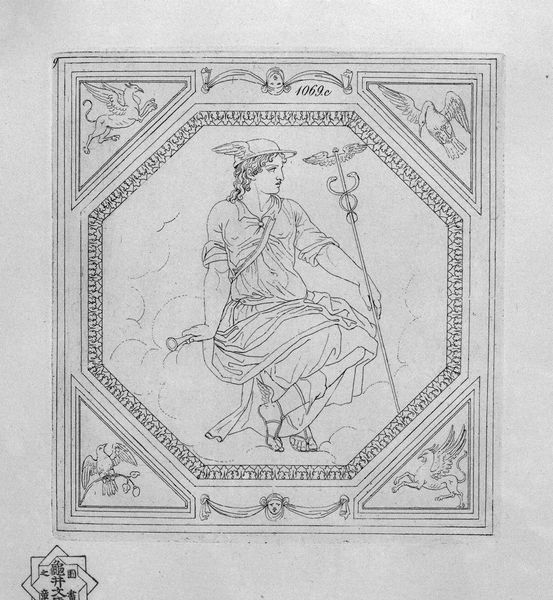
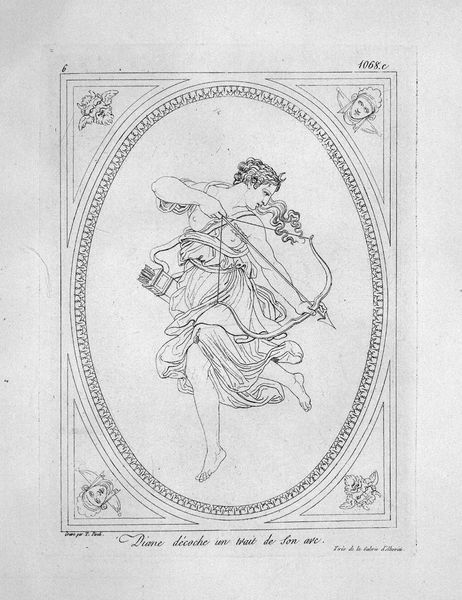
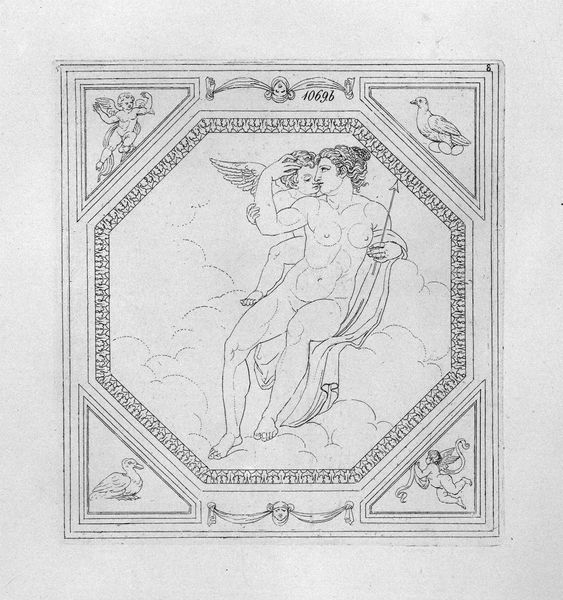
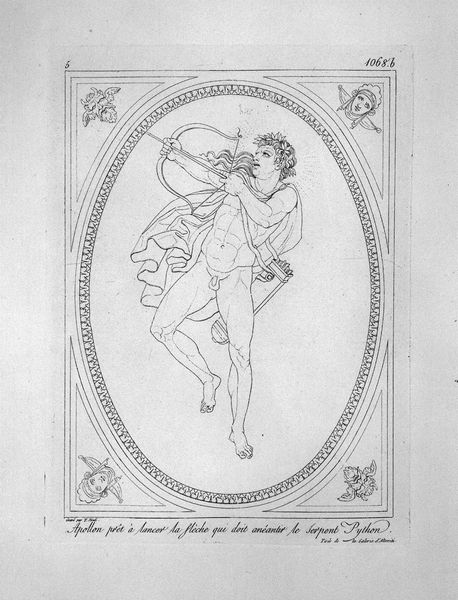
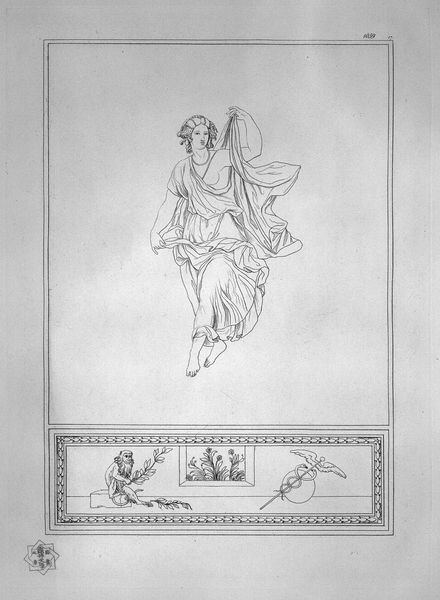
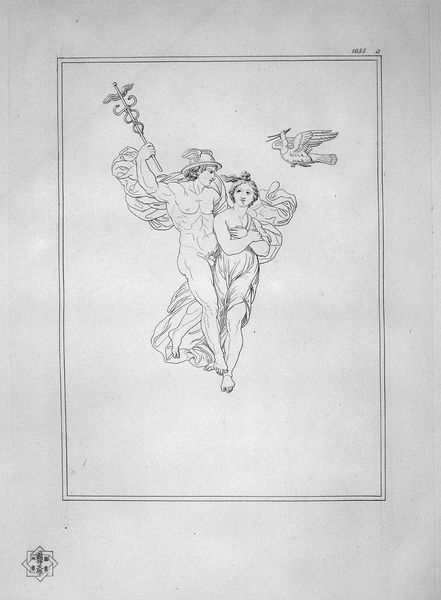
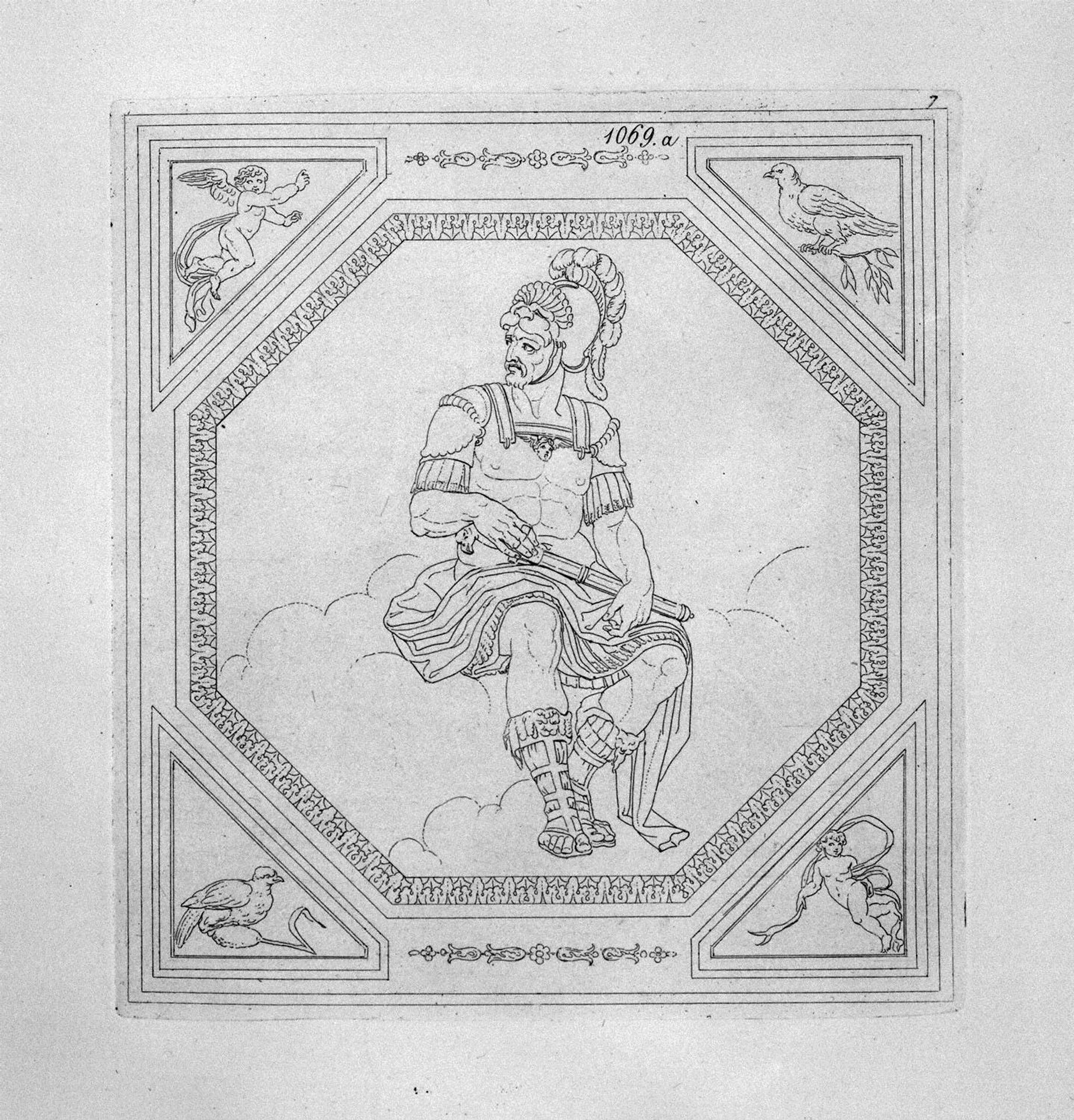
This print, "Mars", was etched by Giovanni Battista Piranesi in the 18th century. It's made using a relatively direct process of incising lines into a metal plate, which then holds ink to transfer the design onto paper. Piranesi was not just an artist, but also something of an archaeologist, and a developer. He made hundreds of prints documenting Roman ruins, often blending factual representation with imaginative reconstruction. This particular image, depicting the god of war, probably reproduces a Roman relief sculpture. The printmaking process itself is important here. Etching allowed Piranesi to disseminate his vision widely, turning ancient Rome into a commodity for consumption. The sharp, precise lines give the image clarity, while also reflecting the engraver's skilled labor. This was not just art for art's sake, but a business. Piranesi's prints catered to the Grand Tour market, fueling a fascination with antiquity that still resonates today. So, by understanding the material process, we can better understand the social context in which Piranesi operated.