About this artwork
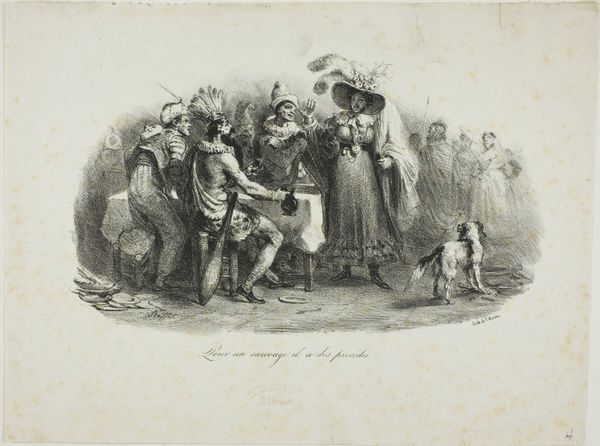
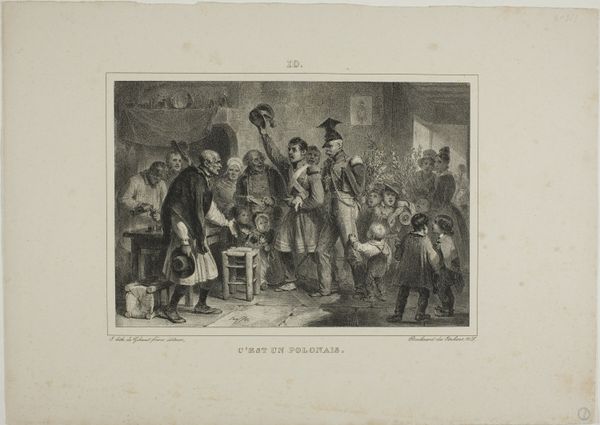
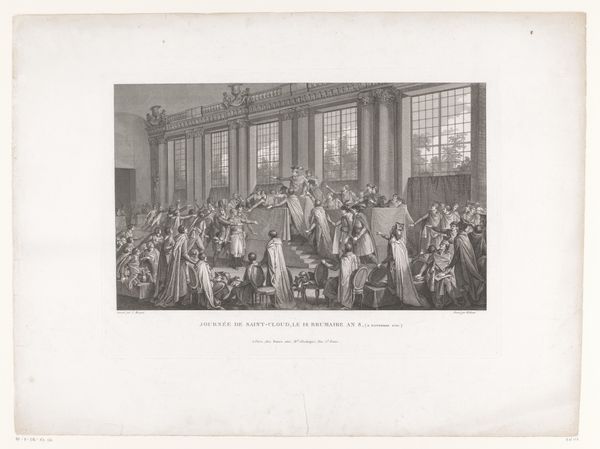
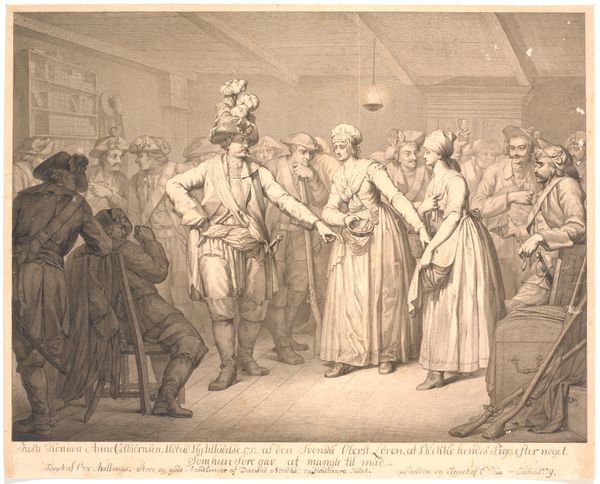
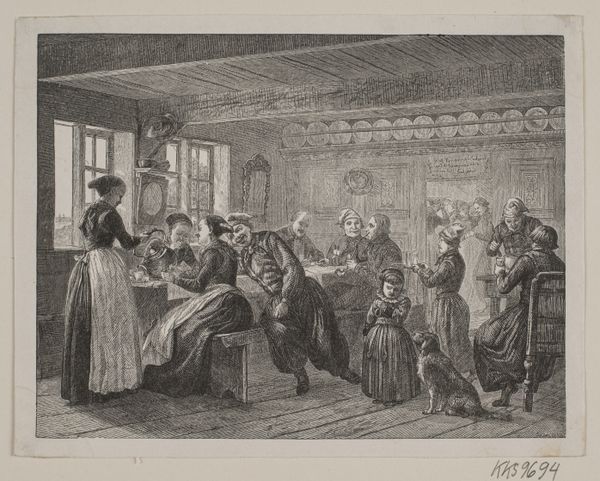
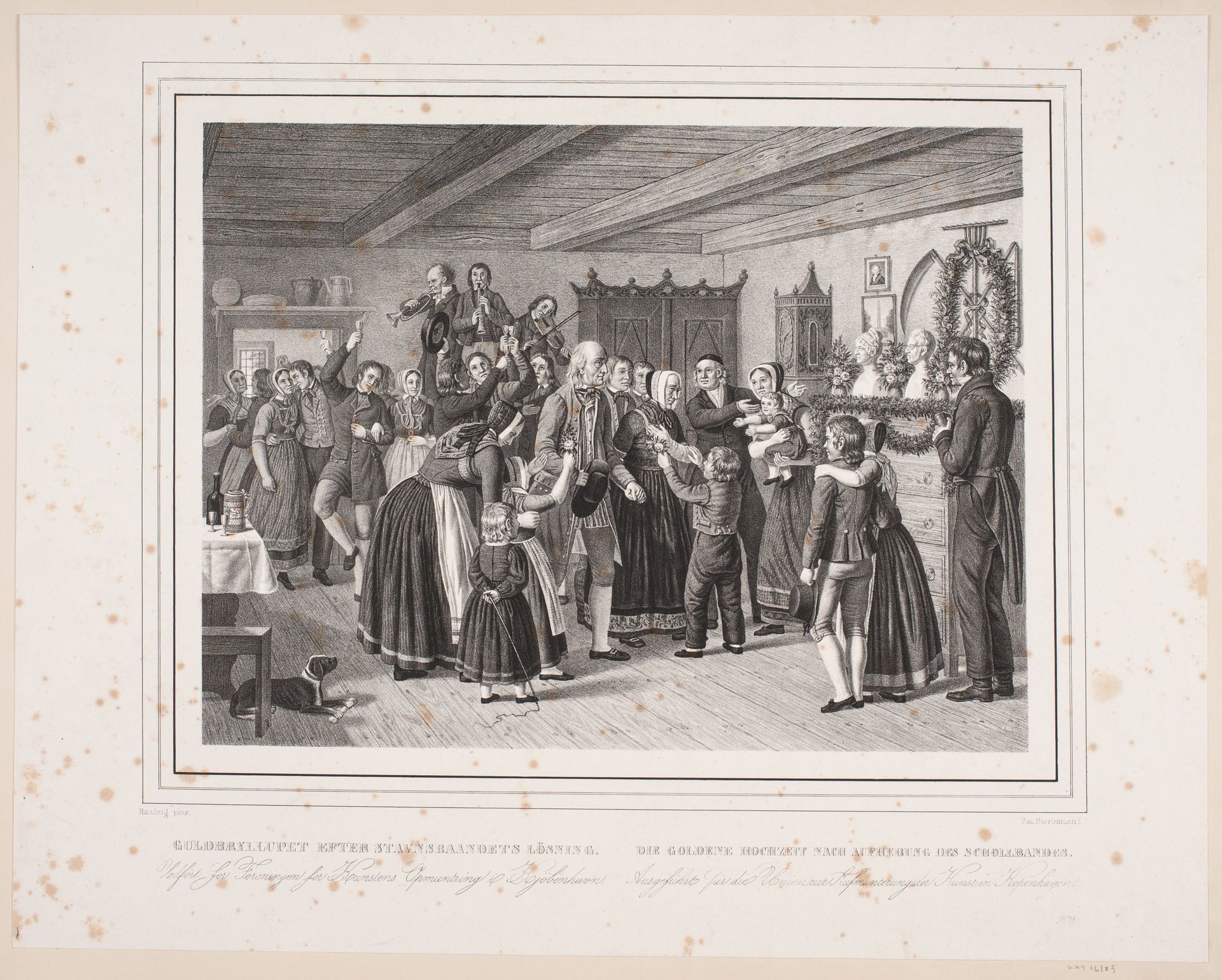
Editor: This lithograph, "Golden Wedding after the Lifting of Serfdom" from 1839, showcases a bustling domestic scene. The celebratory atmosphere is palpable. What social dynamics do you see at play within this gathering? Curator: This piece reflects a significant socio-political shift. The lifting of Stavnsbåndet—the serfdom act in Denmark—had a profound impact on peasant life. Artists at the time like to showcase these intimate scenes to depict a golden age, and even serve as propaganda for a rising merchant class. But who is truly at the center of the gathering in this image? Is it about pure joy, or about something else? Editor: I suppose I hadn't thought about the possible underlying purpose of depicting only the joy, rather than an objective account. Perhaps a touch of nationalism or a promotion of rural stability? Curator: Exactly. It invites questions. Is the family depicted a reflection of true emancipation, or is it presenting a curated narrative for a particular audience, cementing a political ideal through art? How might this image have functioned within the broader social discourse of 19th-century Denmark? Editor: That's a crucial consideration – how the image *functions*. So it’s not just *what* is depicted, but *why* and *for whom*. Curator: Precisely. And the "for whom" directly shapes the "what". This perspective also forces us to re-examine our relationship to images today, and whether art can truly be "apolitical." Editor: That's a really insightful point! It makes you consider the potential messaging and who the target audience may be, it provides a great framework. Curator: Indeed. It's about unraveling the intended, and sometimes unintended, narratives embedded within. Thank you for helping explore that with me.
Guldbryllup efter stavnsbåndets løsning
1839


Artwork details
- Medium
- drawing, lithograph, print, paper
- Dimensions
- 430 mm (height) x 550 mm (width) (bladmaal)
- Location
- SMK - Statens Museum for Kunst
Tags
Comments
Share your thoughts
About this artwork
Editor: This lithograph, "Golden Wedding after the Lifting of Serfdom" from 1839, showcases a bustling domestic scene. The celebratory atmosphere is palpable. What social dynamics do you see at play within this gathering? Curator: This piece reflects a significant socio-political shift. The lifting of Stavnsbåndet—the serfdom act in Denmark—had a profound impact on peasant life. Artists at the time like to showcase these intimate scenes to depict a golden age, and even serve as propaganda for a rising merchant class. But who is truly at the center of the gathering in this image? Is it about pure joy, or about something else? Editor: I suppose I hadn't thought about the possible underlying purpose of depicting only the joy, rather than an objective account. Perhaps a touch of nationalism or a promotion of rural stability? Curator: Exactly. It invites questions. Is the family depicted a reflection of true emancipation, or is it presenting a curated narrative for a particular audience, cementing a political ideal through art? How might this image have functioned within the broader social discourse of 19th-century Denmark? Editor: That's a crucial consideration – how the image *functions*. So it’s not just *what* is depicted, but *why* and *for whom*. Curator: Precisely. And the "for whom" directly shapes the "what". This perspective also forces us to re-examine our relationship to images today, and whether art can truly be "apolitical." Editor: That's a really insightful point! It makes you consider the potential messaging and who the target audience may be, it provides a great framework. Curator: Indeed. It's about unraveling the intended, and sometimes unintended, narratives embedded within. Thank you for helping explore that with me.
Comments
Share your thoughts