photography, albumen-print
#
landscape
#
photography
#
orientalism
#
albumen-print
Dimensions: height 113 mm, width 164 mm
Copyright: Rijks Museum: Open Domain
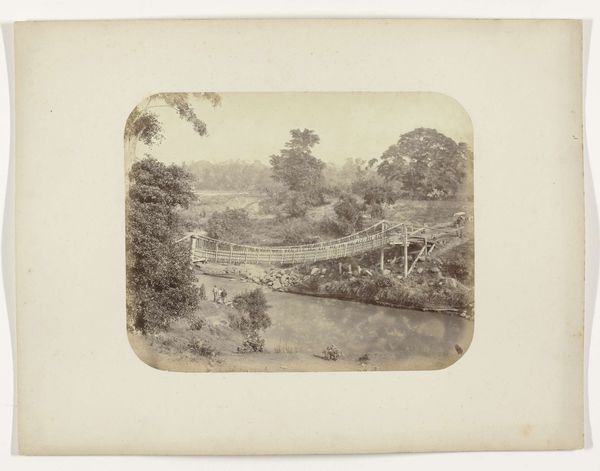
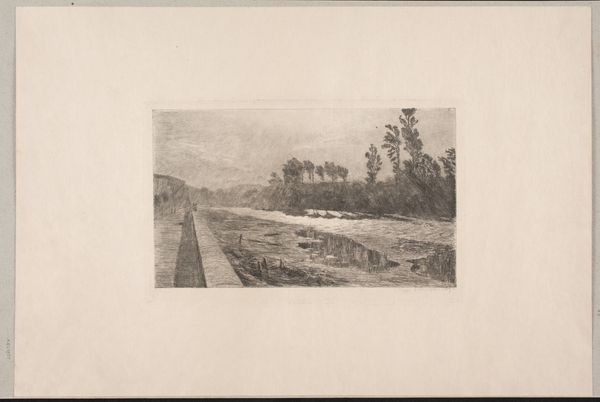
Editor: This albumen print, "Spoorbrug over de rivier Ponduine in Mozambique" by Manuel Romão Pereira, taken around the 1880s, presents a landscape with a somewhat melancholic tone. It seems to document the bridge construction. How do you see the significance of this work? Curator: This photograph offers a fascinating glimpse into the history of colonialism and infrastructure. The railway, likely built by European powers, represents a form of control and extraction of resources from Mozambique. Consider who commissioned this photograph and its purpose: was it to document progress, promote investment, or serve as propaganda? Editor: So, the photograph is less about the aesthetic landscape and more about its historical and political implications? Curator: Exactly. The bridge and railway symbolize the imposition of foreign power onto the landscape and the disruption of existing social and economic structures. The very act of photographing it and labeling it, "Caminho de ferro de Lourenço Marques", demonstrates an intent to map, claim, and control the territory. Editor: The style has been tagged as orientalism; can you expand on this aspect? Curator: Yes, while set in Africa, there are visual elements suggesting an Orientalist approach in the aestheticizing of the foreign space, casting it as exotic for a Western audience. Ask yourself, does this photograph reinforce a narrative of European superiority and dominance? And how does the artist’s gaze shape our understanding of Mozambique at this time? Editor: I see, it makes me think about the power dynamics involved in constructing not just the railway, but also the narrative surrounding it. Thanks for shedding light on that. Curator: Indeed, the image isn't just a representation, but a construction of power itself. I am glad to have clarified things for you.
Comments
No comments
Be the first to comment and join the conversation on the ultimate creative platform.
 Collect
 React
React Comment
More like this