print, etching
# print
#
etching
#
landscape
#
realism
Dimensions: height mm, width mm
Copyright: Rijks Museum: Open Domain
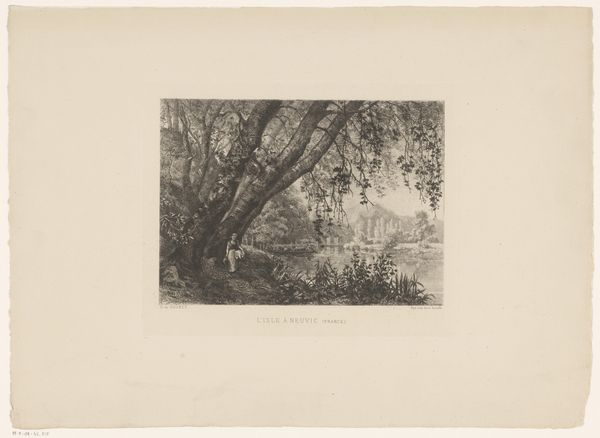
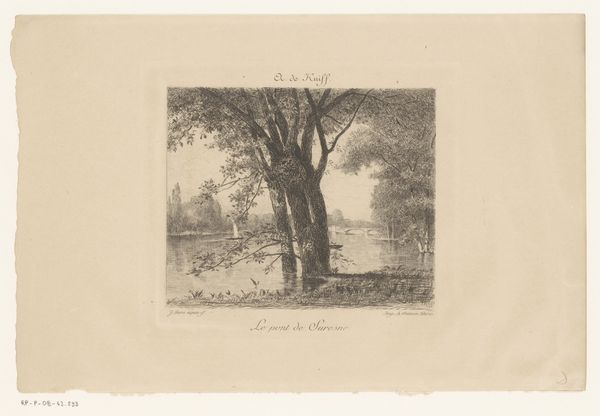
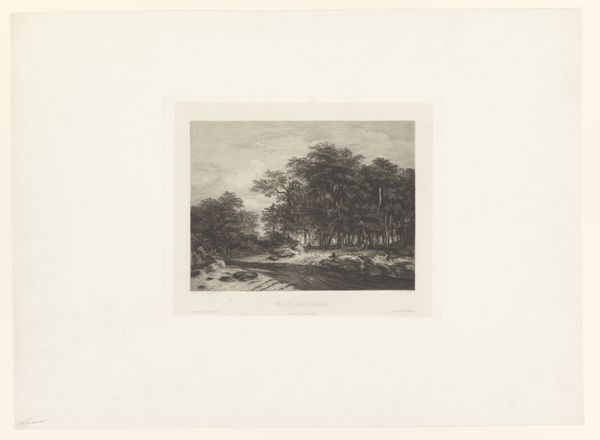
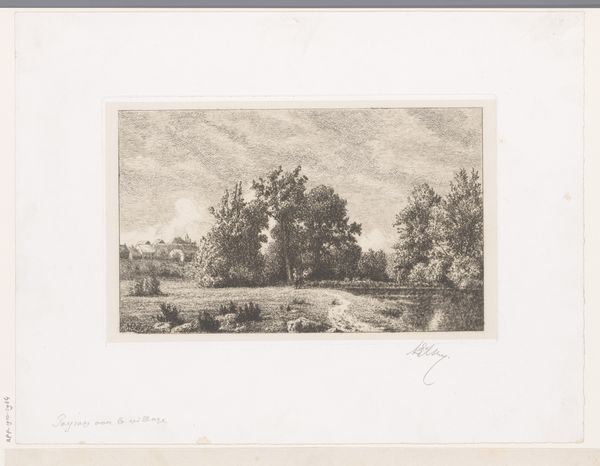
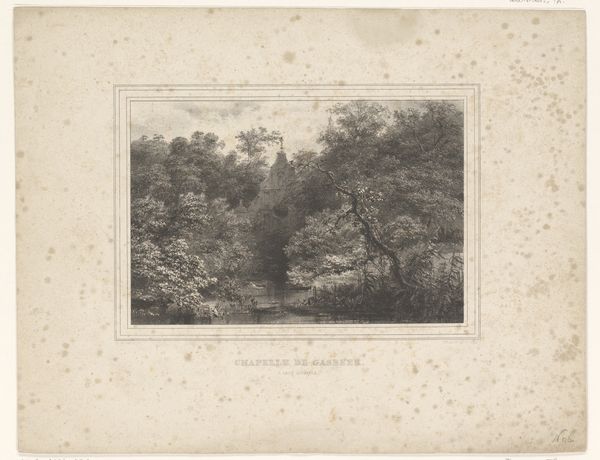
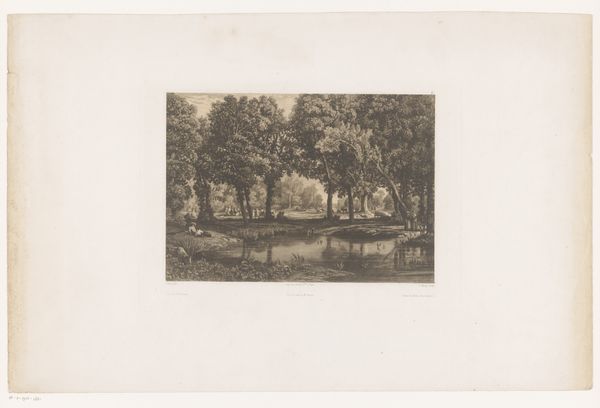
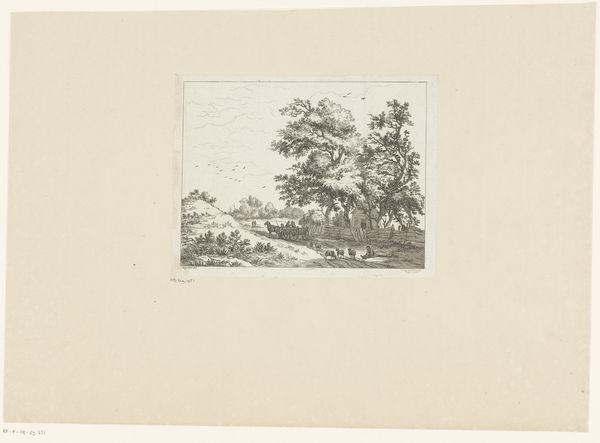
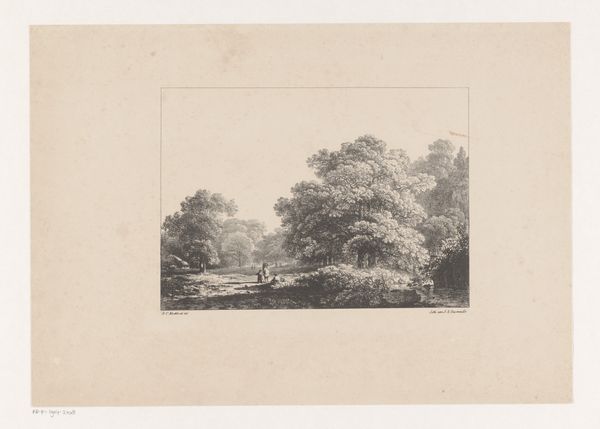
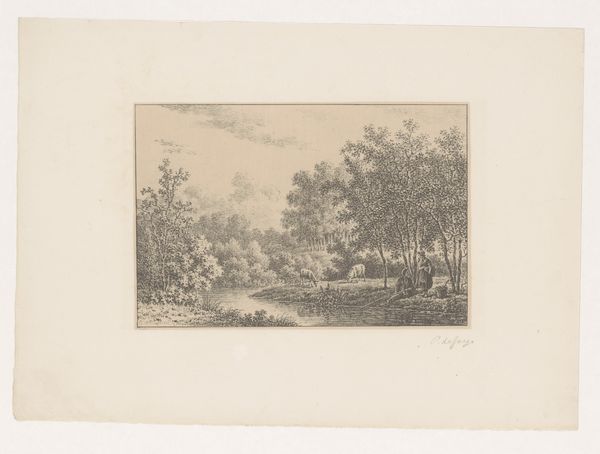
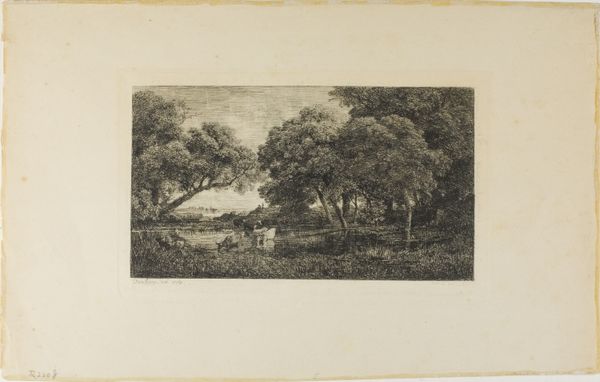
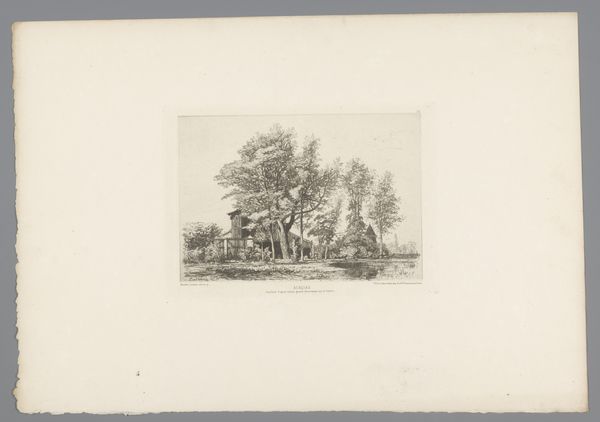
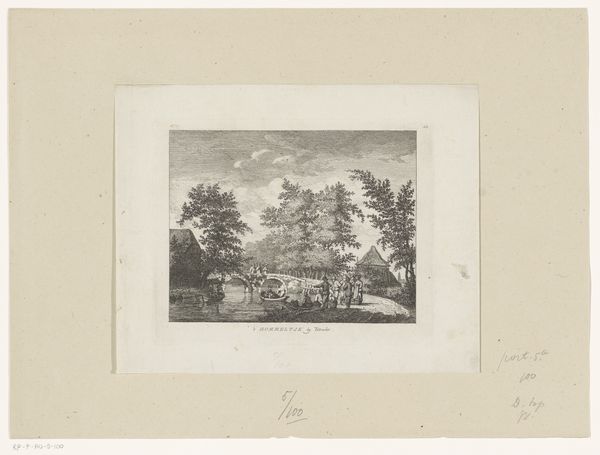
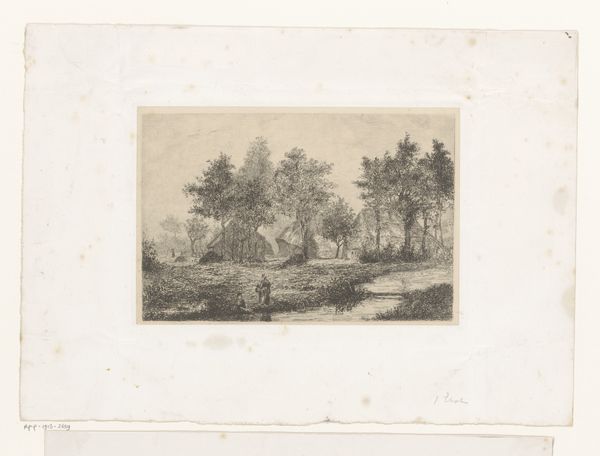
Curator: Well, here we have Willem Roelofs' "Beek," an etching created between 1877 and 1920. Editor: It's quite small and delicate, almost monochromatic with the varied tones of black and grey. I'm struck by how detailed and realistic the trees and water appear. How should we interpret this kind of image? Curator: Considering our materialist perspective, we must delve into the process itself. Etching, as a medium, relies heavily on industrial materials like acid and metal plates. The artist manipulates these, effectively collaborating with industrial production to create a "natural" scene. Notice how the textures, seemingly mimicking nature, are achieved through a deeply laborious and chemical process. The very means of production inflect our reading. How might the availability and cost of these materials shape the kinds of scenes Roelofs chose to depict? Editor: That's interesting! I hadn’t considered the industrial connection. I suppose I thought of landscapes as being separate from the city, removed from factories and production. Does the rise of industrialization explain the increased appeal of landscape art? Curator: Precisely. Escapism often arises from societal pressure, a dialectical relationship where the increasing prevalence of factories directly resulted in a growing market for art depicting nature. Where and for whom might an etching like this been traded? Editor: Possibly among wealthy urban residents wanting a reminder of simpler times? I am really beginning to think about how access and trade may have shaped the piece we’re viewing. Curator: Indeed. Reflect on the labor involved, the material constraints and possibilities, and the implied audience – this print speaks volumes about the shifting landscape of production and consumption in the late 19th century.
Comments
No comments
Be the first to comment and join the conversation on the ultimate creative platform.
 Collect
 React
React Comment
More like this