1535 - 1545
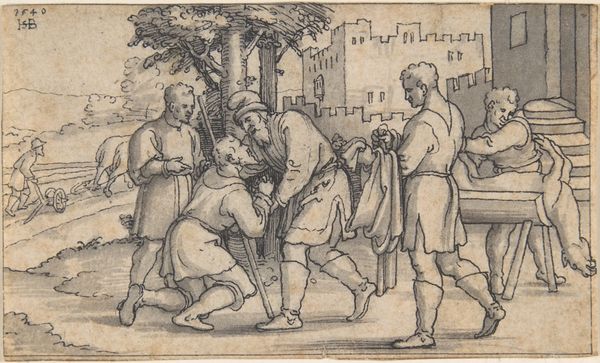
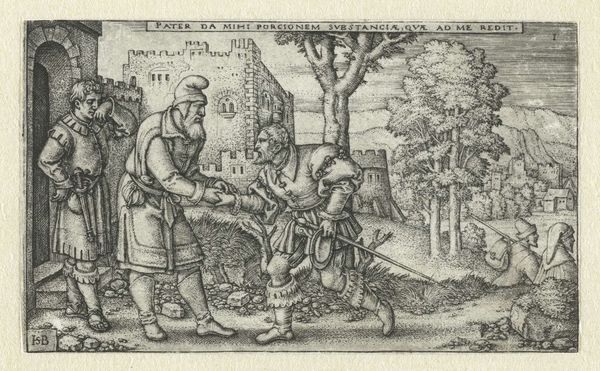
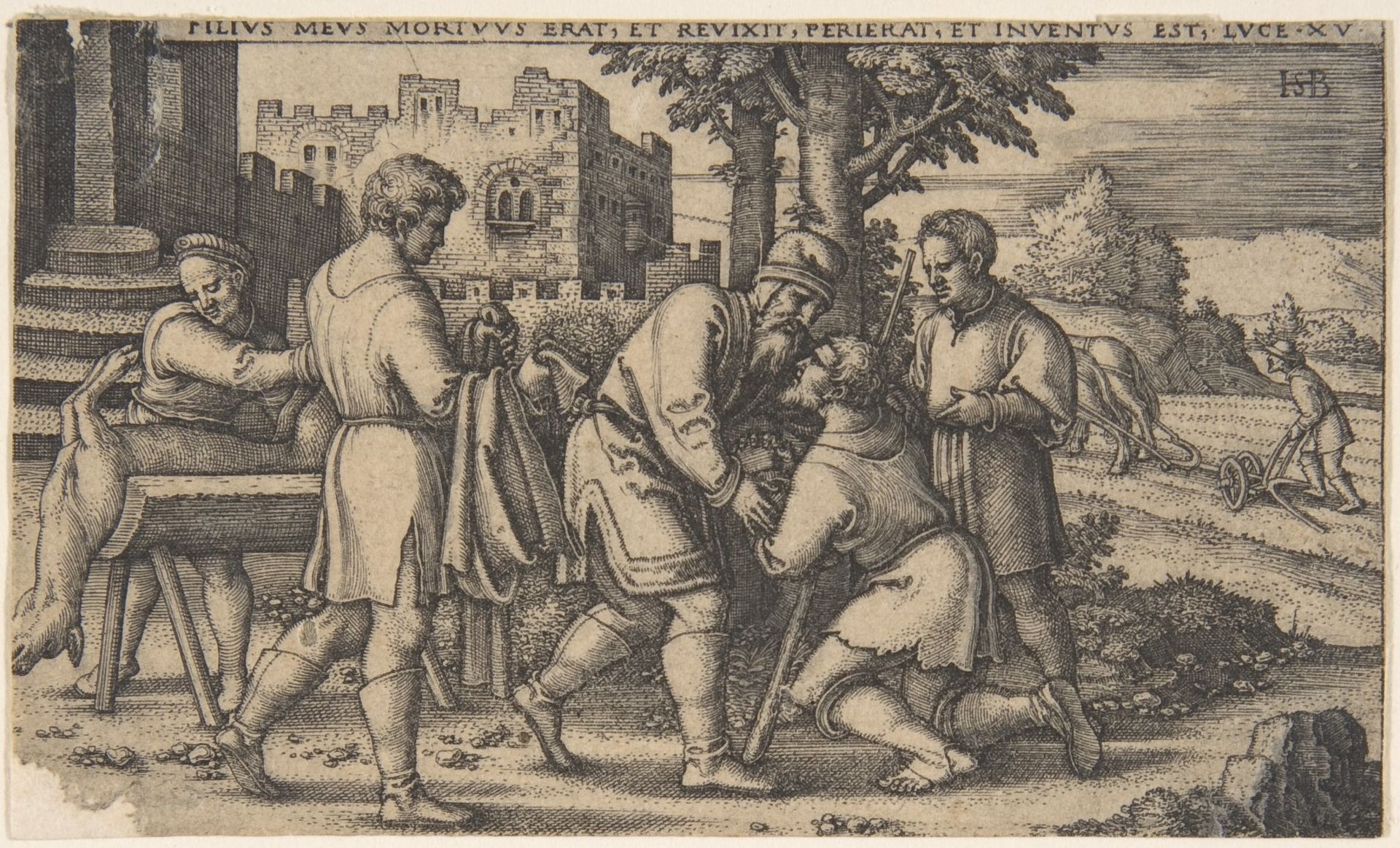
Return of the Prodigal Son, from The History of the Prodigal Son


Listen to curator's interpretation
Curatorial notes
Sebald Beham etched "Return of the Prodigal Son" around 1540, capturing a poignant moment from the Gospel of Luke. Central to the scene is the kneeling son, an ancient gesture of supplication, mirroring images of defeated warriors before triumphant kings. The father's embrace resonates deeply; it is a motif we see echoed in depictions of divine forgiveness across cultures. Consider, for instance, the tender embrace of reunited souls in ancient Roman sarcophagi, a visual language of reconciliation that predates Christianity yet shares a common thread. The fatted calf, prepared for the feast, is a symbol of abundance and celebration, reminiscent of ancient harvest rituals where communal feasting marked nature's bounty. The emotional weight of this image lies in its powerful invocation of familial love and forgiveness, tapping into our collective subconscious understanding of redemption. This image, like many others, speaks to the cyclical nature of human experience.