print, etching, engraving
#
portrait
#
aged paper
#
baroque
# print
#
etching
#
old engraving style
#
caricature
#
portrait reference
#
history-painting
#
academic-art
#
engraving
#
realism
Dimensions: height 166 mm, width 114 mm
Copyright: Rijks Museum: Open Domain
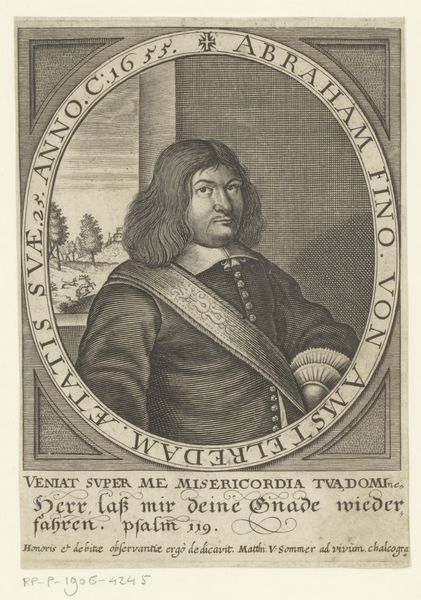
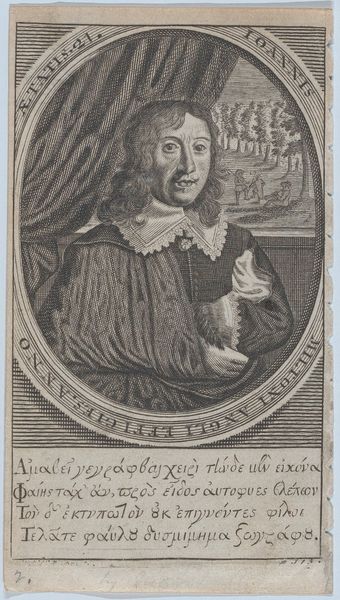
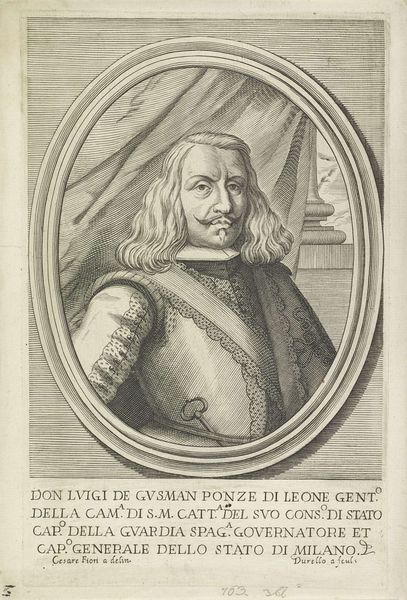
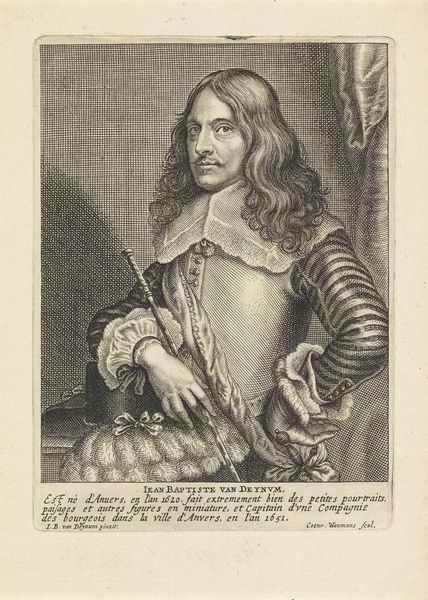
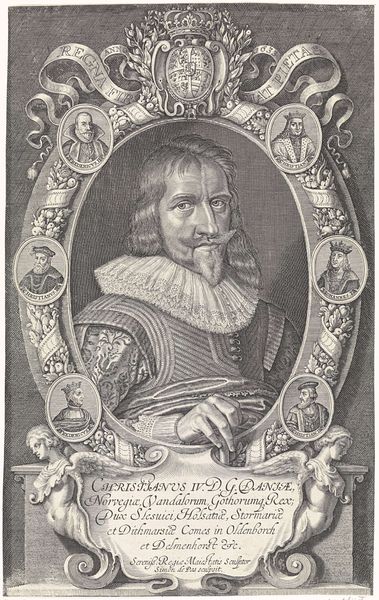
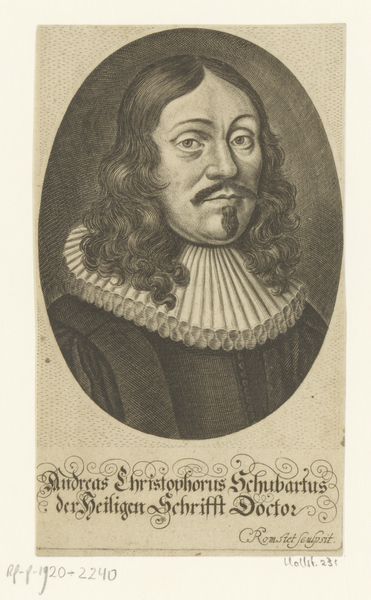
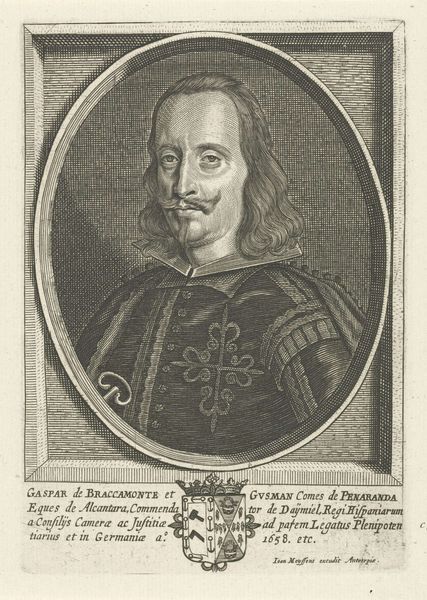
Curator: Here we have a 1654 engraving by Matthias van Sommer, titled "Portret van Guidobald von Thun und Hohenstein". My first reaction is that its incredible detail points to high skill and equally impressive printing. What strikes you initially? Art Historian: Well, beyond the immediate visual impression, that severe gaze hints at power, and possibly a lifetime steeped in some form of authority. His expression and formal dress both hint at deeper symbolic meaning that's begging to be unravelled. Curator: Absolutely. Consider the context. Van Sommer, likely commissioned to create this print, employed etching and engraving to make it reproducible and disseminate the subject's image widely. We can trace social capital here. The layered techniques also challenge preconceived distinctions about skill and craft. Art Historian: And let's dive into the man himself! Guidobald von Thun und Hohenstein...clearly an important figure. The draping curtain hints at theatricality and suggests prestige, while the crest shows complex family heritage and heraldic symbolism, probably lionising Thun. How might that reading fit the process of its making? Curator: I see that you're making an analogy with class stratification and manufacturing—perhaps fair to say in a society rigidly ranked by the feudal vestiges found in 17th century Europe. The production reflects and reinforces power structures of its era. It speaks of distribution; were these prints intended for political allies or family members of the sitter, acting as announcements? How was the labor divided for that etching plate; that can unveil distribution practices and costs to see if that supports that view of distribution. Art Historian: Indeed, and the symbolism extends beyond social class. Consider the slight upward gaze. Is it aspiration? Devotion? These minute choices speak volumes about his aspirations, perceived virtue and self image which he wants conveyed. The choice of an oval border may imply timelessness and continuation in cultural memory too. Curator: So it’s a controlled articulation. Yet, understanding the availability and cost of paper then informs our insight to his reach and influence - even if it is subtle positioning to the world. We mustn’t over-invest in merely personal meaning. Art Historian: Agreed. It's a fascinating interplay between personal identity and crafted public image! A convergence that tells us so much. Curator: An intersection of visual impact and the nuts and bolts of production... a compelling point. I feel it gives new consideration to the circulation and social imprint in printmaking. Art Historian: Yes, and thinking about the subject through symbols and visual cues illuminates cultural attitudes to status, faith and identity. Fascinating how the image lives on through Matthias' van Sommers’ lines.
Comments
No comments
Be the first to comment and join the conversation on the ultimate creative platform.
 Collect
 React
React Comment
More like this