About this artwork
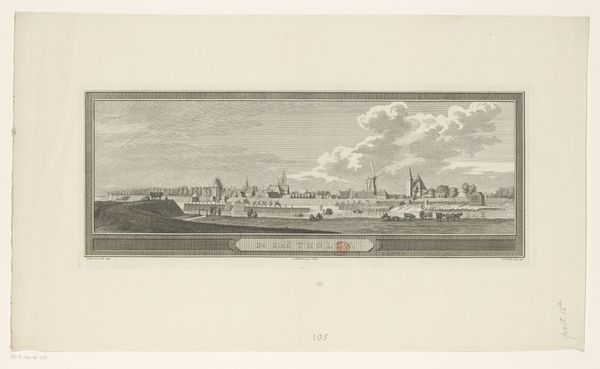
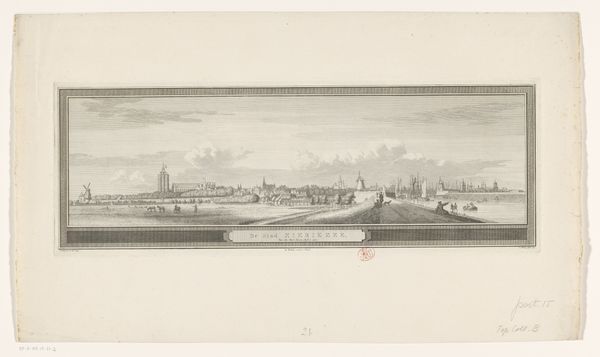
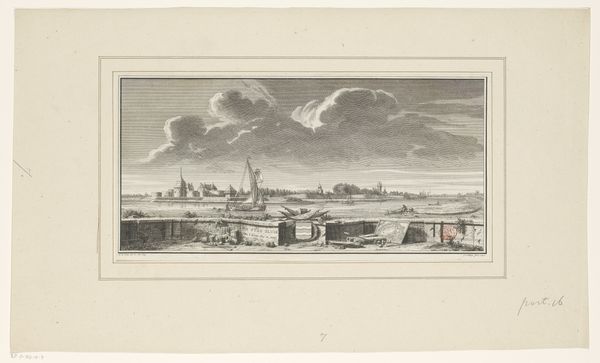
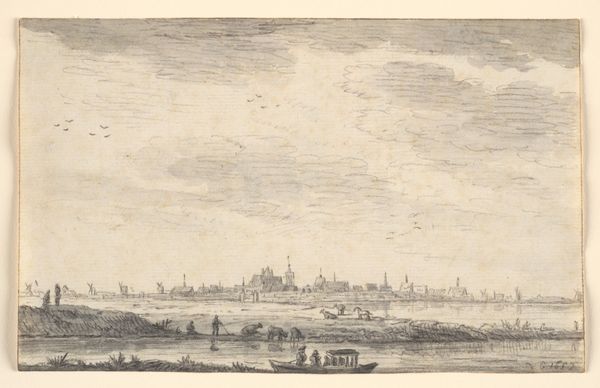
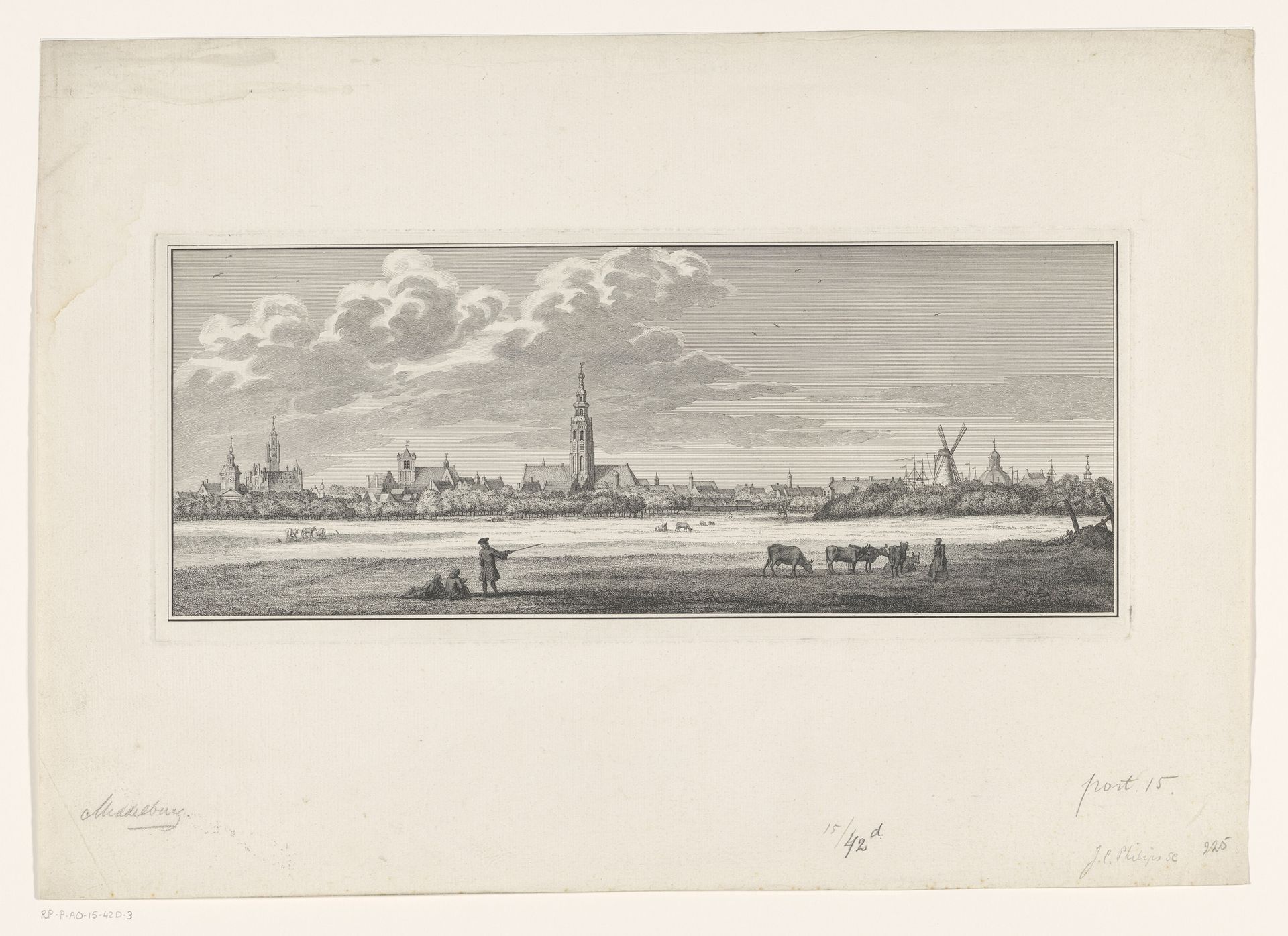
Curator: Let's take a look at this serene cityscape, "Gezicht op Middelburg, gezien vanaf het zuidoosten" dating from the mid-18th century. It's a drawing and engraving by Jan Caspar Philips, part of the Rijksmuseum collection. Editor: Instantly, I'm drawn to that horizon, so soft and muted. The cows in the foreground— they almost feel more alive than the city itself! It gives this whole scene a very quiet, pastoral feel, doesn’t it? Curator: Precisely! Philips's choice to depict Middelburg from this perspective highlights the town's connection to the surrounding rural landscape. This period saw a growing interest in topographical art, commissioned by city governments to project an image of prosperity and order. It's fascinating to see how urban identity was shaped through art intended for public consumption. Editor: Order indeed! The details are astounding for an engraving of that size. And those clouds... they almost seem like the breath of the city, don’t you think? The artist has somehow captured the weight and ephemerality of the weather, the passing of time, as if to suggest "Even the most stable edifice is only for a while". Curator: Indeed. Consider too how the location of placement of figures anchors our gaze: they're placed on the threshold between our space, and the constructed, municipal space. As though there is an intended visual negotiation between rural and urban. That horizon line is very deliberate. Editor: Almost as if to emphasize how little space and how close people really lived and still do to their agricultural environment and livelihood? I suppose these prints circulated among the citizens, reaffirming their place and time, creating shared memories. Curator: Exactly. By showcasing Middelburg as both a functioning port and a picturesque place, Philips’ engraving served to boost civic pride and promote the city’s commercial interests. A kind of marketing campaign ahead of its time. Editor: Ah, so it's a little bit propaganda! Very subtle, and quite beautiful nonetheless. Gives me a whole new way of looking at things... Thank you! Curator: And thank you! Always another layer to uncover when you change your point of view.
Gezicht op Middelburg, gezien vanaf het zuidoosten, 1744 1744 - 1751

Jan Caspar Philips
1700 - 1775Location
RijksmuseumArtwork details
- Medium
- drawing, graphic-art, print, engraving
- Dimensions
- height 172 mm, width 412 mm
- Location
- Rijksmuseum
- Copyright
- Rijks Museum: Open Domain
Tags
drawing
graphic-art
baroque
dutch-golden-age
landscape
cityscape
engraving
Comments
No comments
About this artwork
Curator: Let's take a look at this serene cityscape, "Gezicht op Middelburg, gezien vanaf het zuidoosten" dating from the mid-18th century. It's a drawing and engraving by Jan Caspar Philips, part of the Rijksmuseum collection. Editor: Instantly, I'm drawn to that horizon, so soft and muted. The cows in the foreground— they almost feel more alive than the city itself! It gives this whole scene a very quiet, pastoral feel, doesn’t it? Curator: Precisely! Philips's choice to depict Middelburg from this perspective highlights the town's connection to the surrounding rural landscape. This period saw a growing interest in topographical art, commissioned by city governments to project an image of prosperity and order. It's fascinating to see how urban identity was shaped through art intended for public consumption. Editor: Order indeed! The details are astounding for an engraving of that size. And those clouds... they almost seem like the breath of the city, don’t you think? The artist has somehow captured the weight and ephemerality of the weather, the passing of time, as if to suggest "Even the most stable edifice is only for a while". Curator: Indeed. Consider too how the location of placement of figures anchors our gaze: they're placed on the threshold between our space, and the constructed, municipal space. As though there is an intended visual negotiation between rural and urban. That horizon line is very deliberate. Editor: Almost as if to emphasize how little space and how close people really lived and still do to their agricultural environment and livelihood? I suppose these prints circulated among the citizens, reaffirming their place and time, creating shared memories. Curator: Exactly. By showcasing Middelburg as both a functioning port and a picturesque place, Philips’ engraving served to boost civic pride and promote the city’s commercial interests. A kind of marketing campaign ahead of its time. Editor: Ah, so it's a little bit propaganda! Very subtle, and quite beautiful nonetheless. Gives me a whole new way of looking at things... Thank you! Curator: And thank you! Always another layer to uncover when you change your point of view.
Comments
No comments