About this artwork
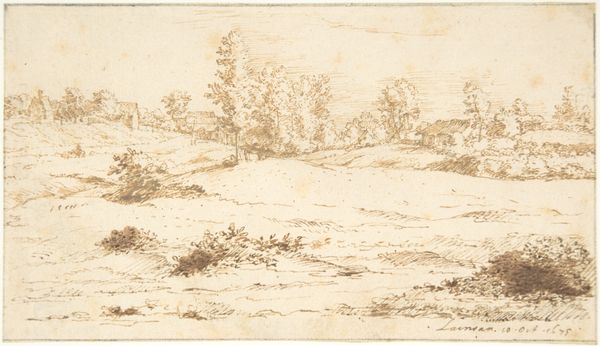
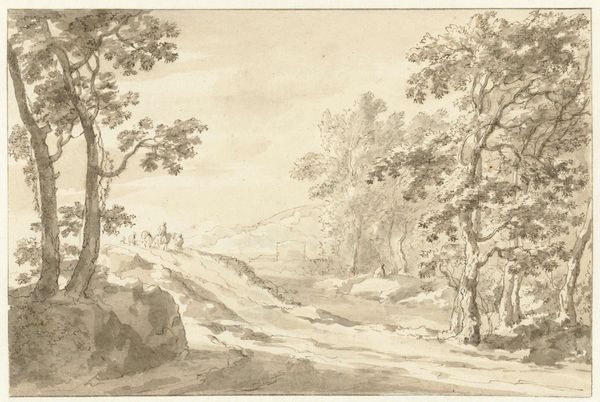
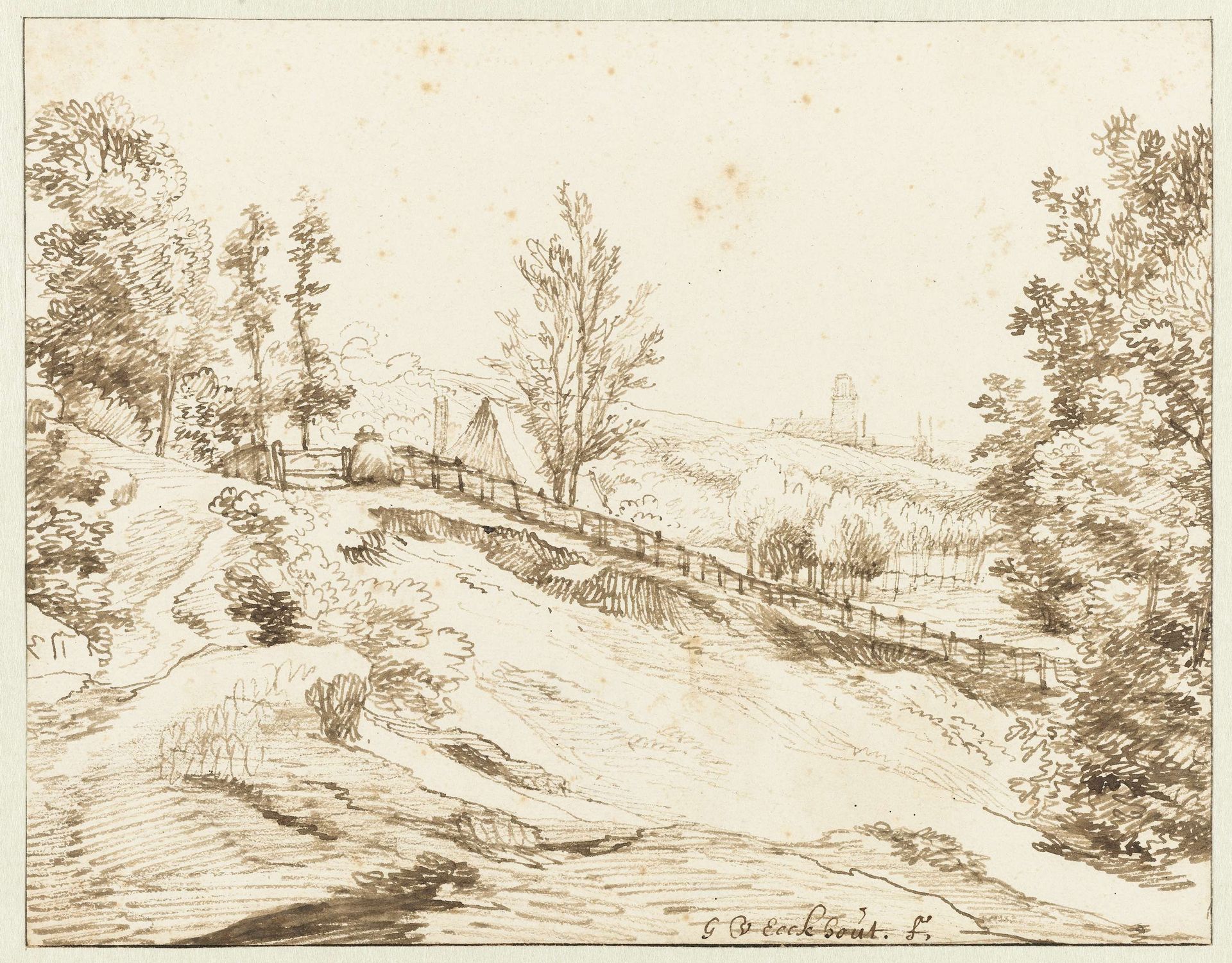
Gerbrand van den Eeckhout made this drawing, "Undulating Landscape with Arnhem in the Distance," using pen and brown ink in the 17th century. The Dutch Golden Age, marked by unprecedented economic growth and cultural flourishing, provided the backdrop for van den Eeckhout’s artistic career. As the Dutch Republic expanded its global reach through trade and colonization, landscape painting emerged as a powerful means of asserting national identity and celebrating the perceived abundance of the land. Yet, this idyllic image obscures the social realities of the time. Colonial exploitation and the labor of enslaved peoples were essential to the Republic's wealth. The tranquil landscape, dotted with distant signs of civilization, invites us to consider what stories are left untold. This tension – between the aesthetic appeal of the landscape and the historical context of inequality – invites a deeper reflection on how national narratives are constructed.
Undulating Landscape with Arnhem in the Distance c. 1651 - 1653

Gerbrand van den Eeckhout
1621 - 1674Location
RijksmuseumArtwork details
- Medium
- drawing, paper, ink
- Dimensions
- height 193 mm, width 247 mm
- Location
- Rijksmuseum
- Copyright
- Rijks Museum: Open Domain
Tags
drawing
dutch-golden-age
landscape
etching
paper
ink
line
genre-painting
realism
Comments
No comments
About this artwork
Gerbrand van den Eeckhout made this drawing, "Undulating Landscape with Arnhem in the Distance," using pen and brown ink in the 17th century. The Dutch Golden Age, marked by unprecedented economic growth and cultural flourishing, provided the backdrop for van den Eeckhout’s artistic career. As the Dutch Republic expanded its global reach through trade and colonization, landscape painting emerged as a powerful means of asserting national identity and celebrating the perceived abundance of the land. Yet, this idyllic image obscures the social realities of the time. Colonial exploitation and the labor of enslaved peoples were essential to the Republic's wealth. The tranquil landscape, dotted with distant signs of civilization, invites us to consider what stories are left untold. This tension – between the aesthetic appeal of the landscape and the historical context of inequality – invites a deeper reflection on how national narratives are constructed.
Comments
No comments