drawing, coloured-pencil, watercolor
drawing
coloured-pencil
water colours
watercolor
coloured pencil
decorative-art
Dimensions: overall: 38.1 x 50.4 cm (15 x 19 13/16 in.)
Copyright: National Gallery of Art: CC0 1.0
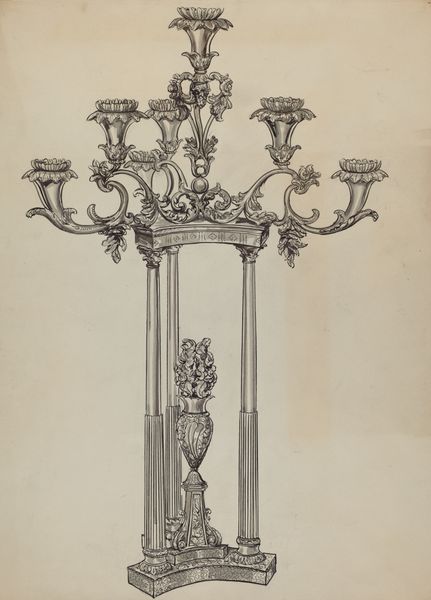
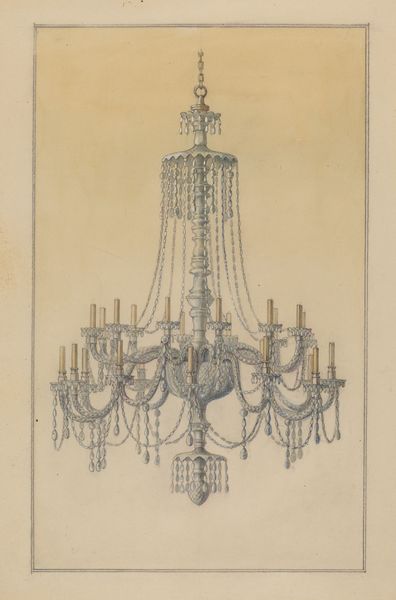
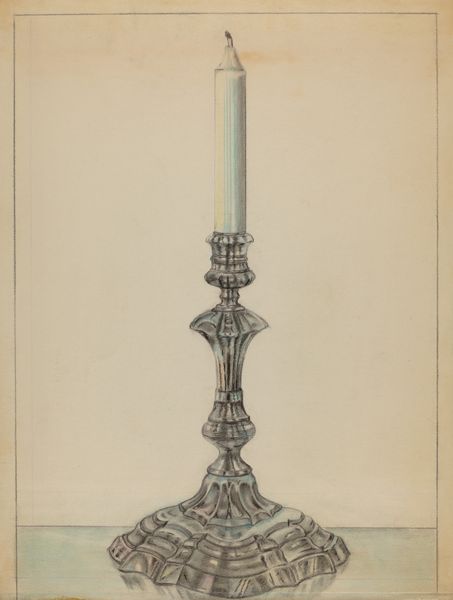
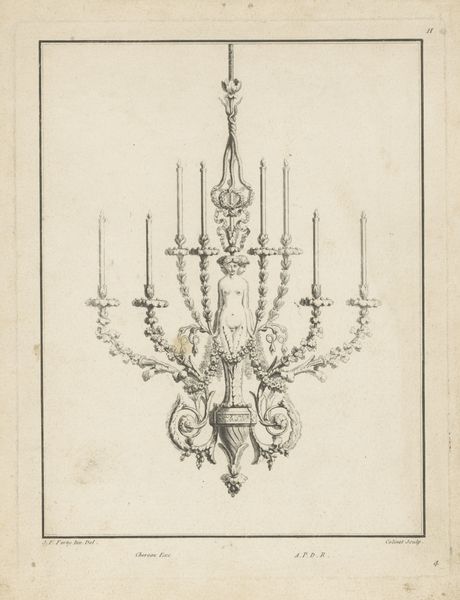
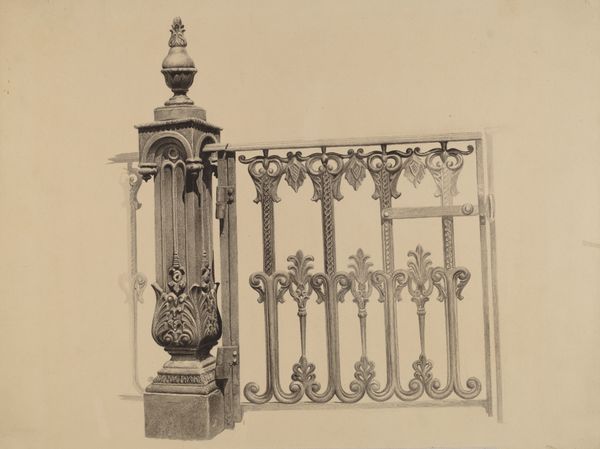
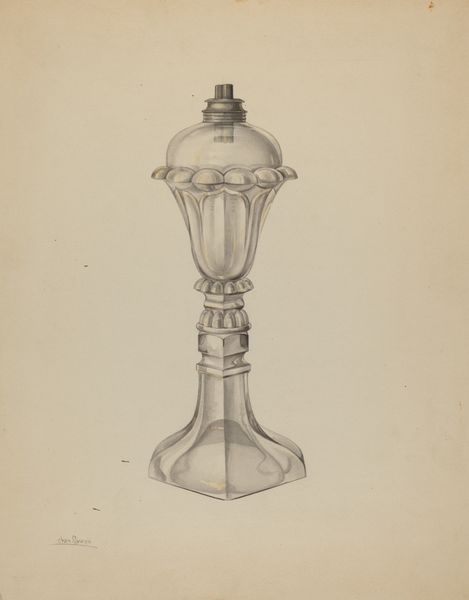
Curator: Here we have Walter Hochstrasser’s "Candelabra," a watercolor and colored-pencil drawing from around 1938. Editor: Well, right off the bat, I’m struck by the art deco sensibility, and it also feels strangely ghostly—as if we are seeing a luxurious artifact from the past, faded in time. Curator: That's interesting. Hochstrasser worked quite a bit with interior design renderings; it gives us a look into the kind of decor popular then, the emphasis on ornamental flourishes and luxury that spoke to social aspirations of the time. You can see this object, perhaps intended for a specific client's residence, symbolizing status and cultivated taste. Editor: Absolutely. The materials, represented so carefully in watercolor and pencil, speak to that desire for refinement, even ostentation. It is very concerned with texture. Look at the base of the drawing. You get this incredible three-dimensionality that really conveys the marble surface. It shows how Hochstrasser saw not just the form but the making and finishing process of a luxury object. Curator: Precisely, and consider the context. The late 1930s, right before World War II—a period of immense social change. This type of art provides an important lens to how cultural elites wanted to be perceived, perhaps even holding onto older ideals as the world was drastically changing. Editor: It’s a study in contrasts. You've got the rigid geometry of the crystalline pendants juxtaposed with the organic, flowing forms of the floral decorations. The materiality represented with colored pencils softens those edges and creates visual friction. Curator: I agree. It shows how design can integrate diverse aesthetic traditions, from classical to modern. And from my perspective, pieces like this reveal a crucial relationship: between artistic vision, commercial imperatives, and wider social trends. The history is embedded in the drawing itself. Editor: Indeed, there's such incredible attention to detail here that invites you to really consider not only the object represented but also the labor of the person depicting it. The repetitive marks, building up the layers of color to create a lifelike and inviting object that someone wants to own. Curator: So it’s really this collision of artistry, commerce, and social meaning that makes this piece more than just a pretty picture. Editor: I'll leave thinking more about the quiet labor involved in creating luxury.
Comments
No comments
Be the first to comment and join the conversation on the ultimate creative platform.
 Collect
 React
React Comment
More like this