About this artwork
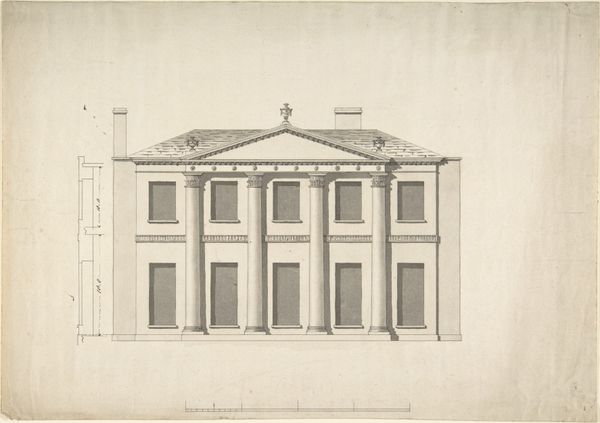
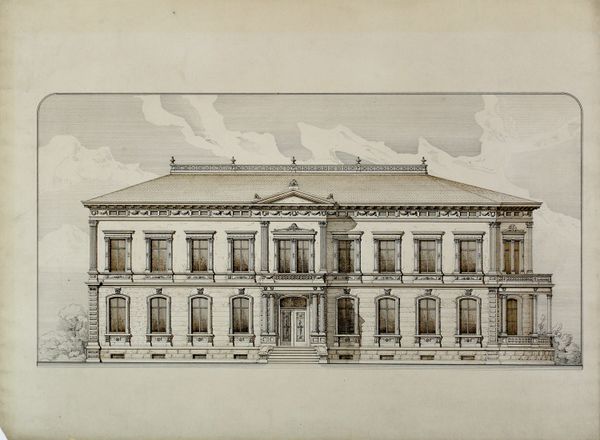
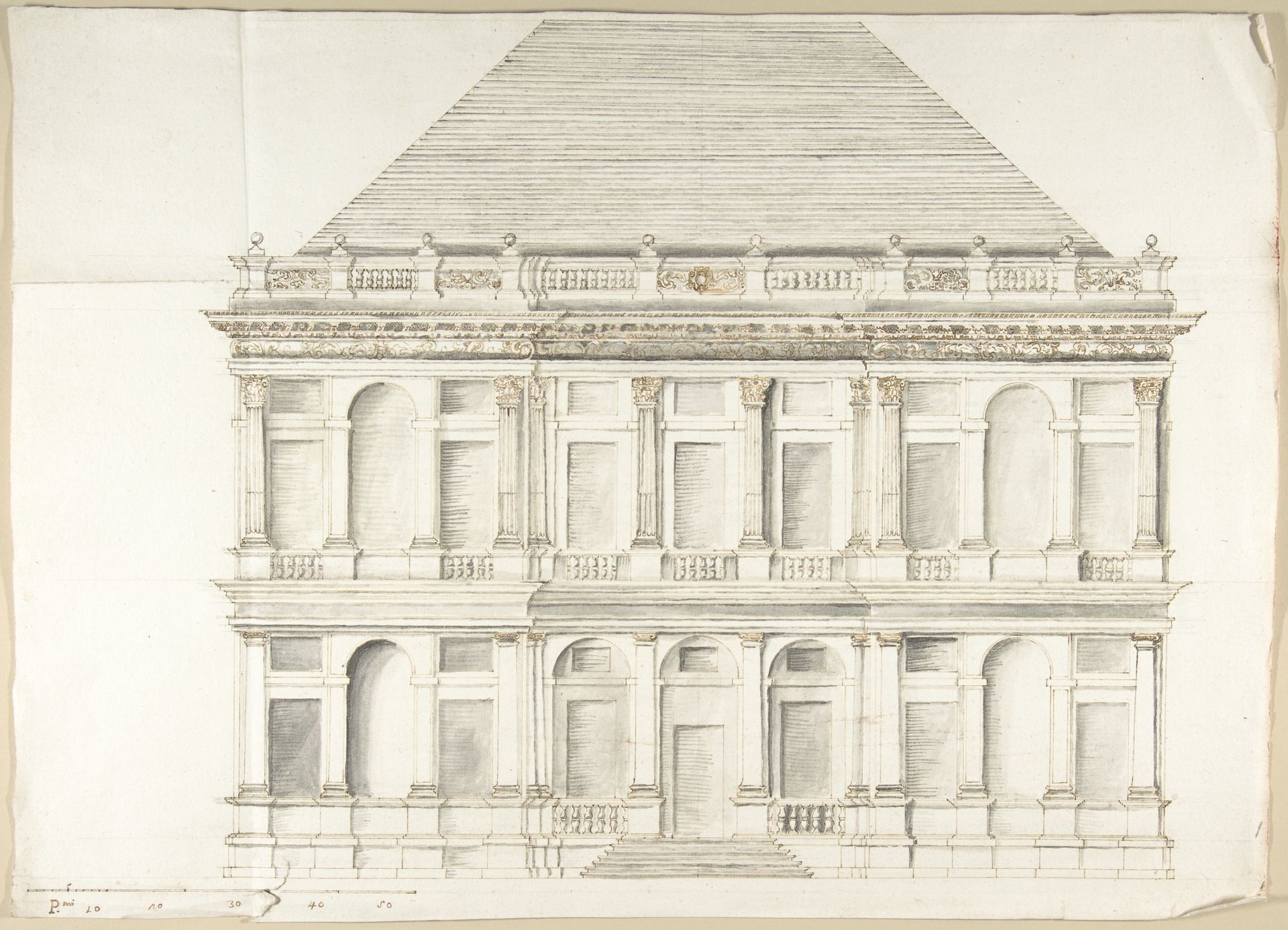
This drawing of a two-story palace facade was created by Pietro Paolo Coccetti, likely in the early 18th century, using pen and brown ink with gray wash over graphite on paper. It's fascinating to consider the labor and materials involved, even in this preparatory stage. The graphite underdrawing, the careful application of ink, and the subtle gradations of the gray wash, all speak to a process of meticulous refinement. This wasn’t just about sketching an idea; it was about visualizing a future reality, a building that would itself require tremendous amounts of labor to realize. The drawing itself is a kind of performance, mediating between the patron's aspirations, the architect's vision, and the many artisans who would ultimately bring the palace into being. It’s a reminder that even seemingly simple materials can be imbued with layers of social and cultural significance. Examining this work in terms of its materials, making, and context expands our understanding of the distinctions between fine art, design and the skilled trades.
Two-Story Facade of a Palace with a Mansard Roof
1710 - 1727

Pietro Paolo Coccetti (Cocchetti)
1710 - 1727
The Metropolitan Museum of Art
Metropolitan Museum of Art, New York, NYArtwork details
- Medium
- drawing, print, etching, paper, architecture
- Dimensions
- 13 3/4 x 19 1/8in. (34.9 x 48.6cm)
- Location
- Metropolitan Museum of Art, New York, NY
- Copyright
- Public Domain
Tags
Comments
Share your thoughts
About this artwork
This drawing of a two-story palace facade was created by Pietro Paolo Coccetti, likely in the early 18th century, using pen and brown ink with gray wash over graphite on paper. It's fascinating to consider the labor and materials involved, even in this preparatory stage. The graphite underdrawing, the careful application of ink, and the subtle gradations of the gray wash, all speak to a process of meticulous refinement. This wasn’t just about sketching an idea; it was about visualizing a future reality, a building that would itself require tremendous amounts of labor to realize. The drawing itself is a kind of performance, mediating between the patron's aspirations, the architect's vision, and the many artisans who would ultimately bring the palace into being. It’s a reminder that even seemingly simple materials can be imbued with layers of social and cultural significance. Examining this work in terms of its materials, making, and context expands our understanding of the distinctions between fine art, design and the skilled trades.
Comments
Share your thoughts