About this artwork
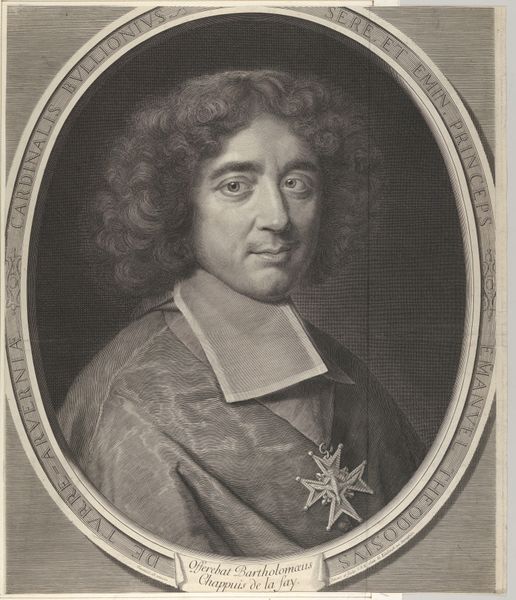
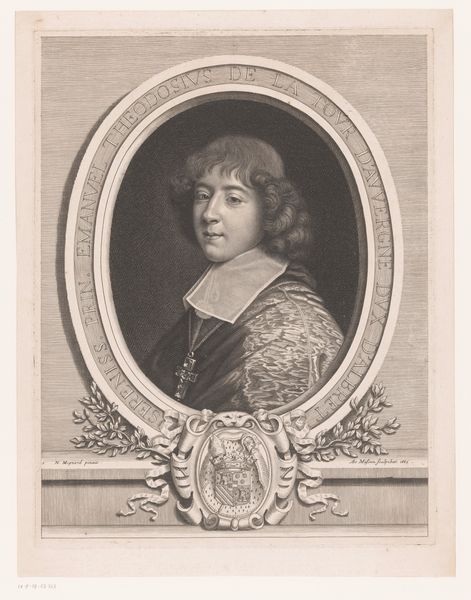
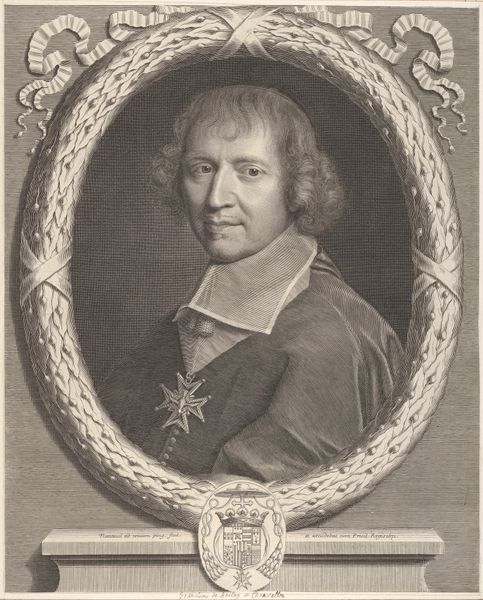
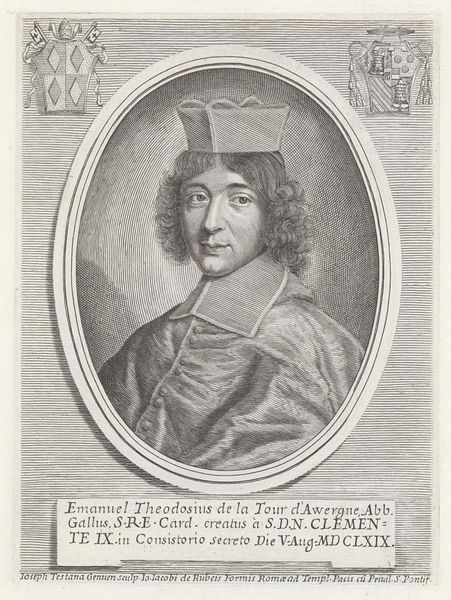
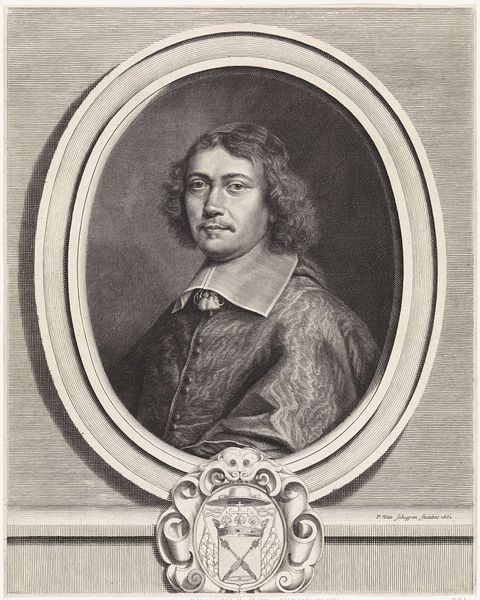
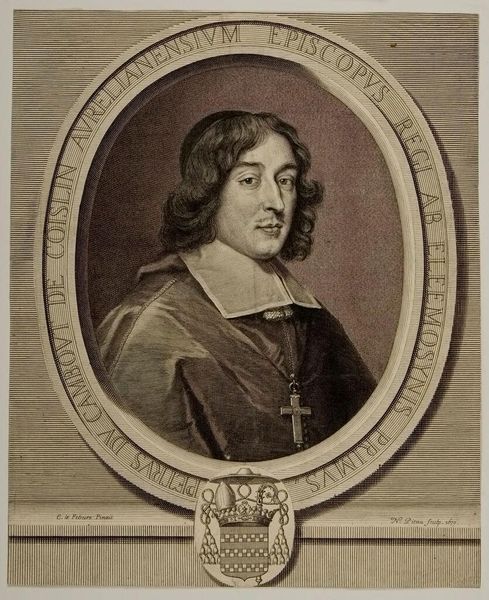
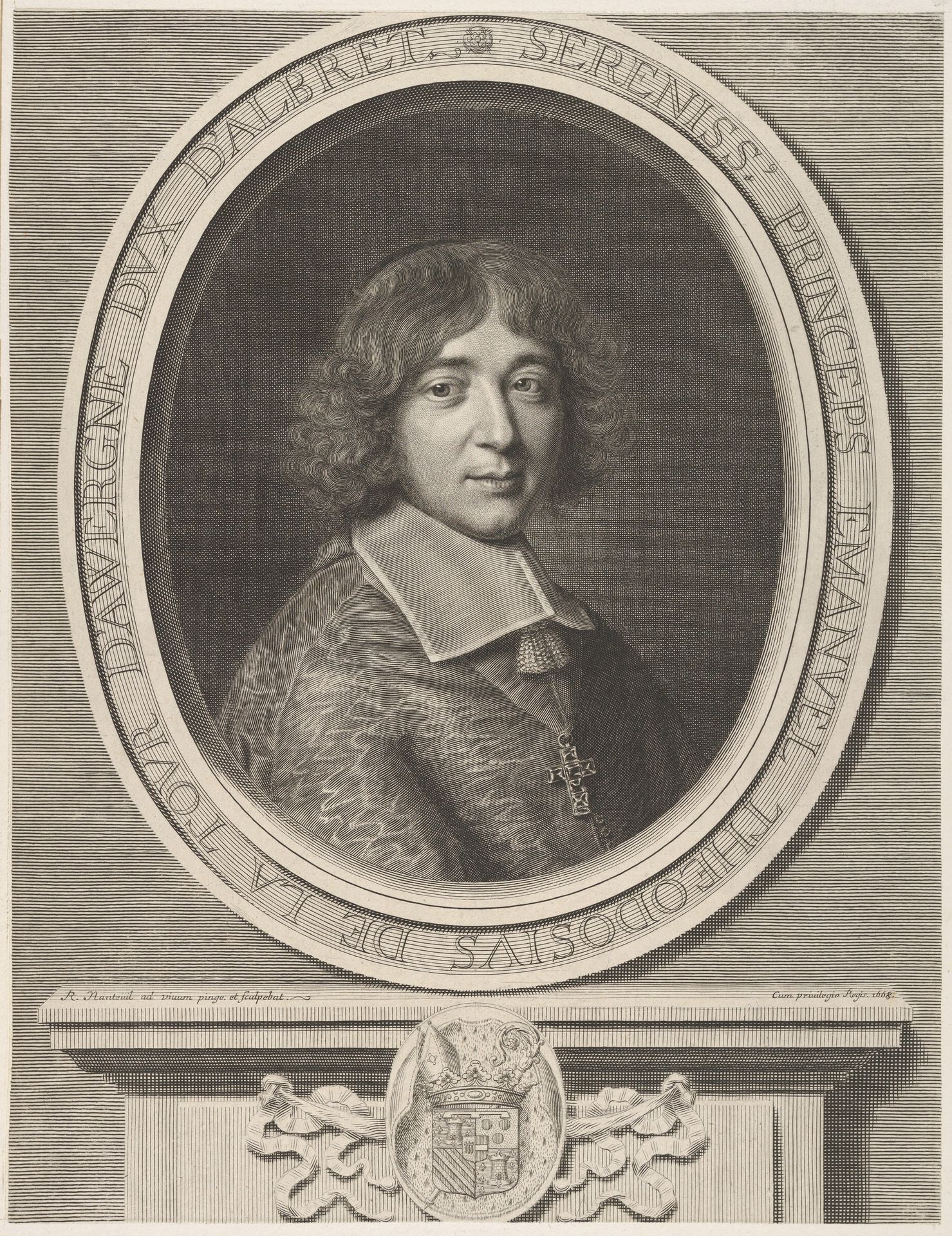
Robert Nanteuil’s portrait of Emmanuel-Théodose de La Tour d'Auvergne, the Cardinal de Bouillon, is an engraving that captures the essence of its subject through meticulous lines and structured composition. The oval frame, with its surrounding inscription, immediately draws our eyes to the Cardinal's composed figure. Nanteuil's technique employs hatching and cross-hatching to sculpt the face and drapery, creating a sense of depth and texture. The carefully rendered details like the curls of the hair, and the ornate cross hanging from his neck, offer a glimpse into the Cardinal's status. Below, an elaborate crest mounted upon what appears to be a mantel, completes the work. Nanteuil’s precise engraving technique reflects the 17th-century interest in clarity and order, resonating with broader philosophical concerns about representation and identity. The portrait, through its formal structure, communicates power and intellect, inviting us to consider how appearances can be constructed and interpreted.
Emmanuel-Théodose de La Tour d'Auvergne, Le Cardinal de Bouillon
1668


Artwork details
- Medium
- drawing, print, engraving
- Dimensions
- sheet: 13 1/2 x 10 3/8 in. (34.3 x 26.4 cm)
- Location
- Metropolitan Museum of Art, New York, NY
- Copyright
- Public Domain
Tags
Comments
Share your thoughts
About this artwork
Robert Nanteuil’s portrait of Emmanuel-Théodose de La Tour d'Auvergne, the Cardinal de Bouillon, is an engraving that captures the essence of its subject through meticulous lines and structured composition. The oval frame, with its surrounding inscription, immediately draws our eyes to the Cardinal's composed figure. Nanteuil's technique employs hatching and cross-hatching to sculpt the face and drapery, creating a sense of depth and texture. The carefully rendered details like the curls of the hair, and the ornate cross hanging from his neck, offer a glimpse into the Cardinal's status. Below, an elaborate crest mounted upon what appears to be a mantel, completes the work. Nanteuil’s precise engraving technique reflects the 17th-century interest in clarity and order, resonating with broader philosophical concerns about representation and identity. The portrait, through its formal structure, communicates power and intellect, inviting us to consider how appearances can be constructed and interpreted.
Comments
Share your thoughts