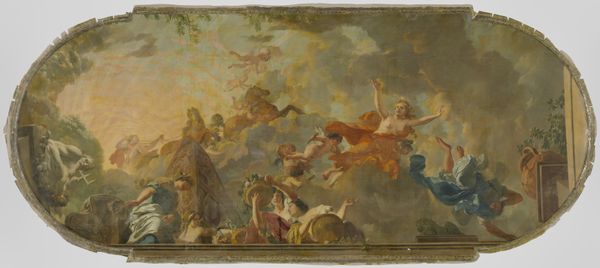
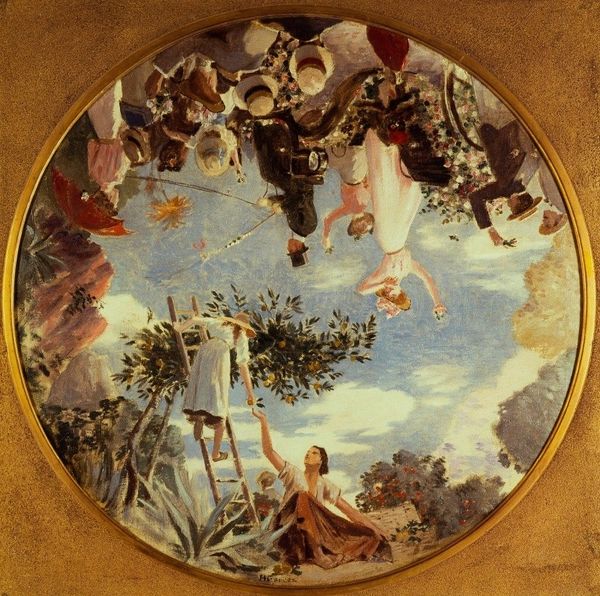
Spring Symphony 1886

nikolaosgyzis
National Art Gallery (Alexandros Soutzos Museum), Athens, Greece
Dimensions: 100 x 196 cm
Copyright: Public domain
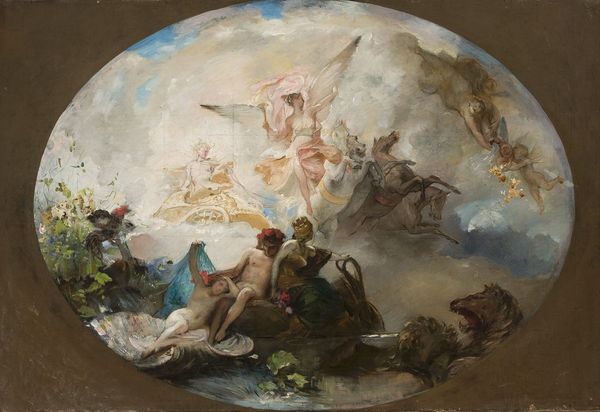
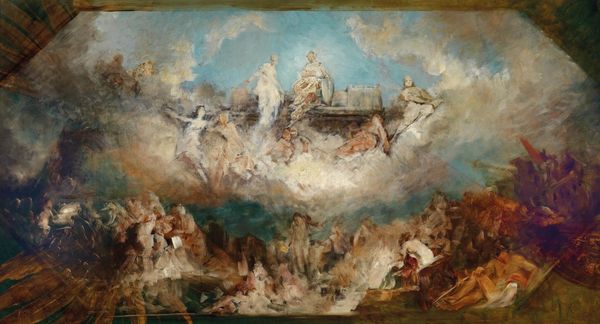
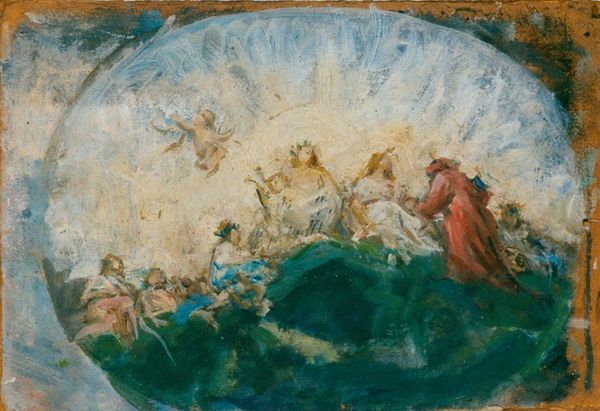
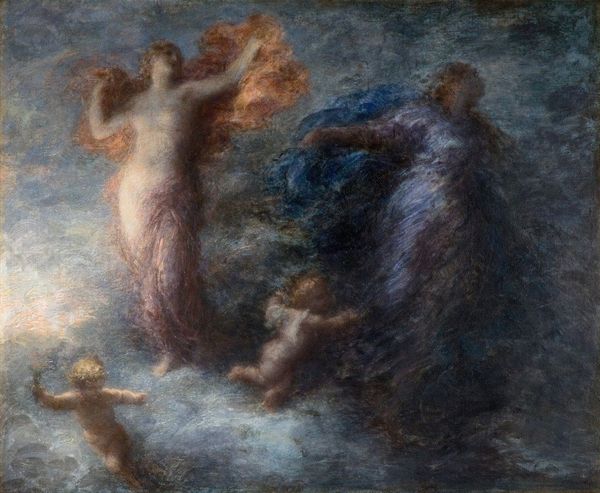
Nikolaos Gyzis captured this scene, brimming with life and ethereal beings, on canvas. The dominant visual element is the cherubic figures, recalling the ancient Greek concept of Eros, a symbol of love and desire. These winged beings echo in Renaissance art, where putti populate religious scenes, softening their original pagan connotations. But the symbol has an older, more primal resonance. Winged figures appear in Mesopotamian art, guardians and messengers between the divine and mortal realms, a potent image deeply embedded in our collective memory. Consider how Gyzis uses this motif – not as a stern deity or religious figure, but as playful, naked children. The archetype persists, but its meaning shifts to one of innocence and joy. Such transformation reminds us of the cyclical nature of symbols: they resurface, evolve, and take on new meanings in different historical contexts.
Comments
No comments
Be the first to comment and join the conversation on the ultimate creative platform.
 React
React Comment