About this artwork
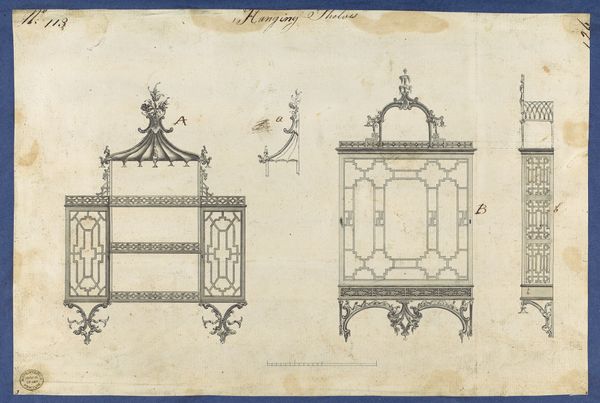
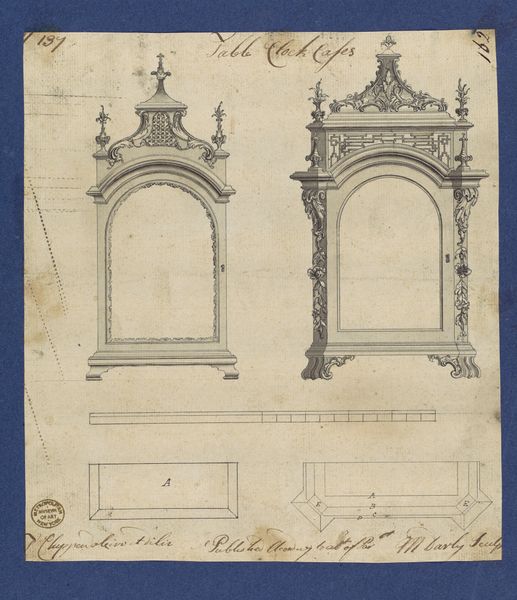
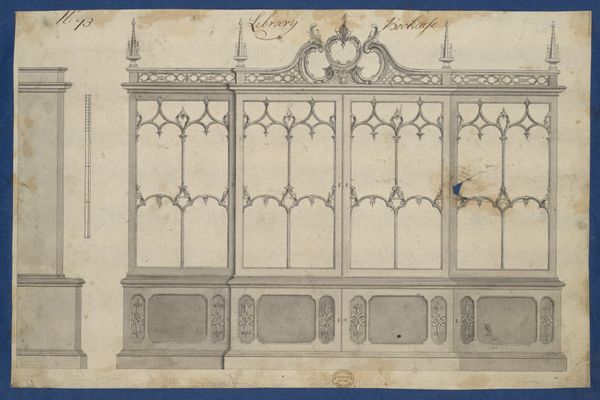
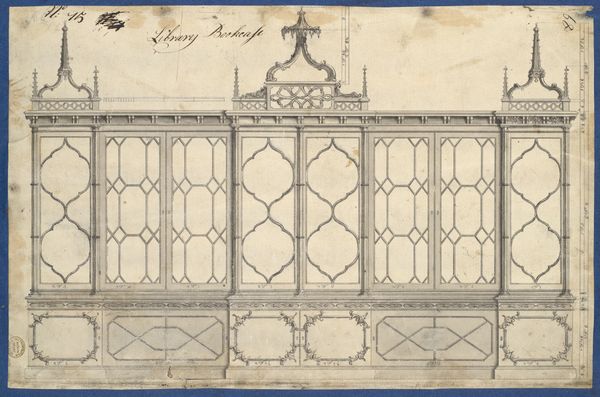
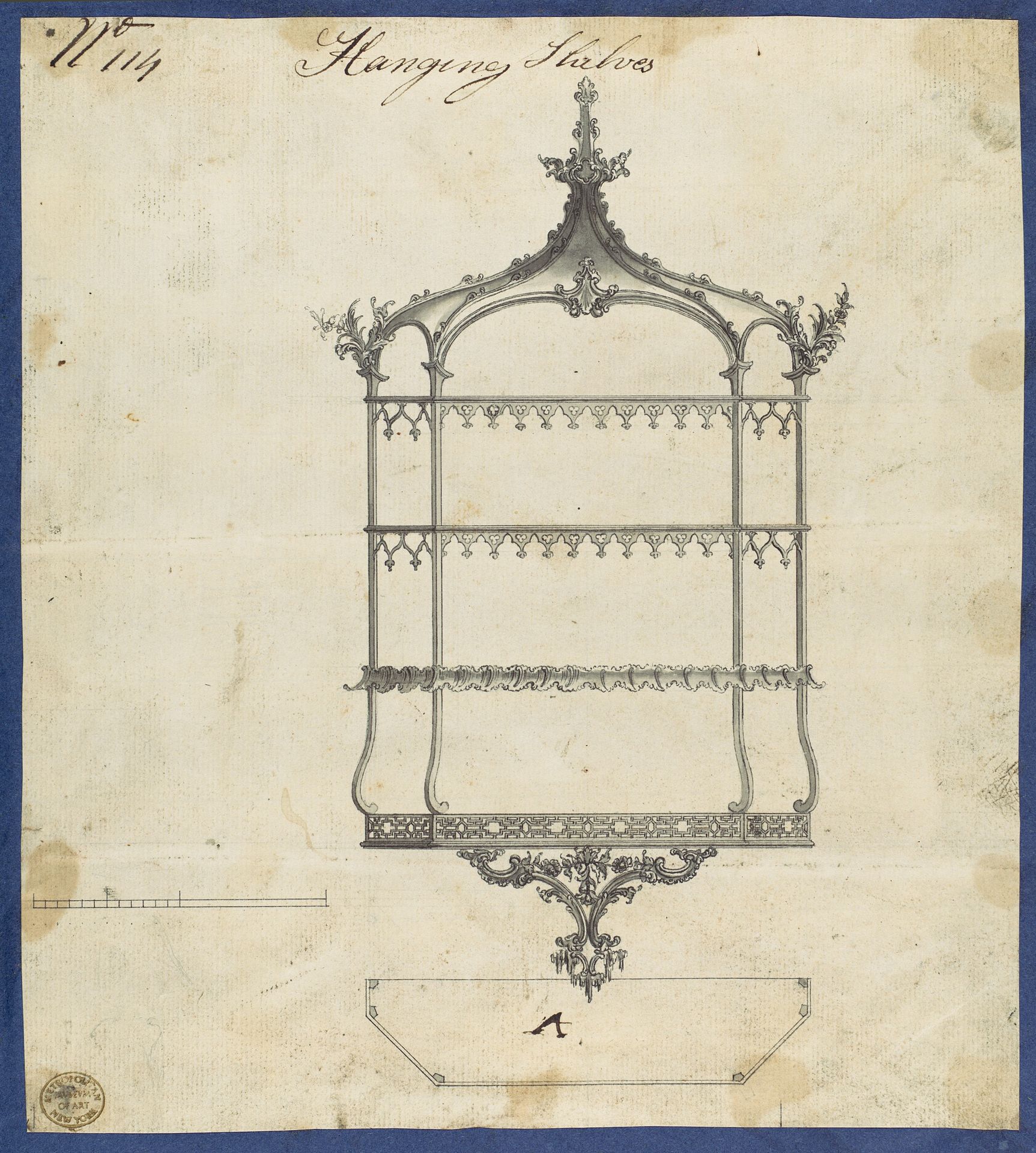
Editor: So, this is "Hanging Shelves, from Chippendale Drawings, Vol. II," made around 1754 by Thomas Chippendale. It’s a drawing and print—pencil and coloured pencil, even— showing a design for a set of shelves. The detail is amazing. I’m struck by how ornate it is. How would these shelves function in society? Curator: Precisely! Look at the date, mid-18th century. Consider what possessing such meticulously designed, non-essential objects communicated then. It speaks to class, doesn’t it? Think of the political implications of displaying wealth through decorative arts during periods of stark social inequalities. Who had access to such artistry, and who was denied? How did this visual language of opulence reinforce existing power structures? Editor: That’s a really interesting point. So it's not just a drawing of some shelves; it's an indicator of the social stratification of the time. Were these designs accessible to all cabinet makers or exclusive to Chippendale's workshop? Curator: Exactly. And furthermore, what narratives were these shelves intended to hold? Status symbols, inherited wealth perhaps? By interrogating these "simple" designs, we confront the ways material culture performs ideological work, normalizing hierarchies and shaping individual and collective identities. The decorative can become a deeply political space. Editor: It definitely gives me a new perspective to consider the objects placed on these shelves as intentional statements too. Thank you! Curator: Absolutely! Let's continue using these lenses to consider artworks – always thinking about whose stories are elevated and whose are erased through these choices.
Hanging Shelves, from Chippendale Drawings, Vol. II
1754


Artwork details
- Medium
- drawing, print, pencil, architecture
- Dimensions
- sheet: 8 11/16 x 7 13/16 in. (22.1 x 19.8 cm)
- Location
- Metropolitan Museum of Art, New York, NY
- Copyright
- Public Domain
Tags
Comments
Share your thoughts
About this artwork
Editor: So, this is "Hanging Shelves, from Chippendale Drawings, Vol. II," made around 1754 by Thomas Chippendale. It’s a drawing and print—pencil and coloured pencil, even— showing a design for a set of shelves. The detail is amazing. I’m struck by how ornate it is. How would these shelves function in society? Curator: Precisely! Look at the date, mid-18th century. Consider what possessing such meticulously designed, non-essential objects communicated then. It speaks to class, doesn’t it? Think of the political implications of displaying wealth through decorative arts during periods of stark social inequalities. Who had access to such artistry, and who was denied? How did this visual language of opulence reinforce existing power structures? Editor: That’s a really interesting point. So it's not just a drawing of some shelves; it's an indicator of the social stratification of the time. Were these designs accessible to all cabinet makers or exclusive to Chippendale's workshop? Curator: Exactly. And furthermore, what narratives were these shelves intended to hold? Status symbols, inherited wealth perhaps? By interrogating these "simple" designs, we confront the ways material culture performs ideological work, normalizing hierarchies and shaping individual and collective identities. The decorative can become a deeply political space. Editor: It definitely gives me a new perspective to consider the objects placed on these shelves as intentional statements too. Thank you! Curator: Absolutely! Let's continue using these lenses to consider artworks – always thinking about whose stories are elevated and whose are erased through these choices.
Comments
Share your thoughts