About this artwork
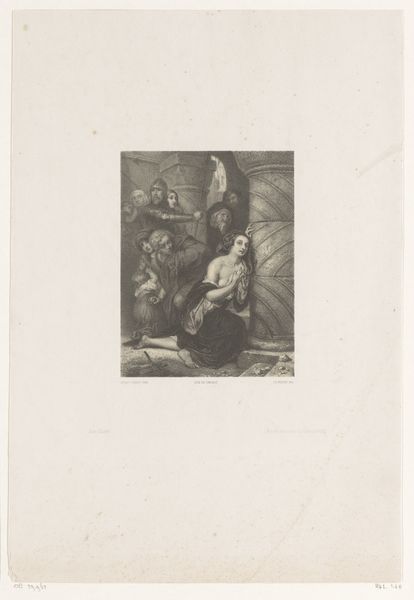
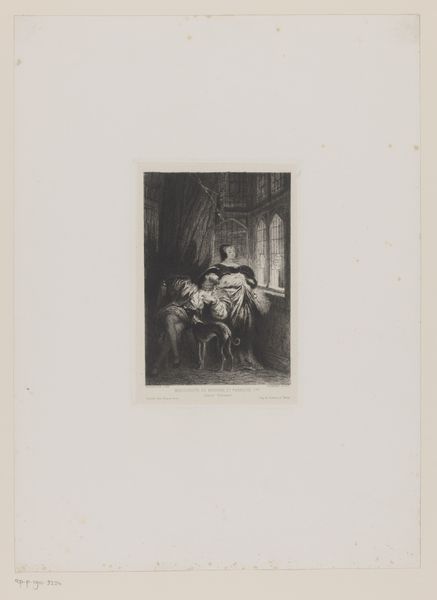
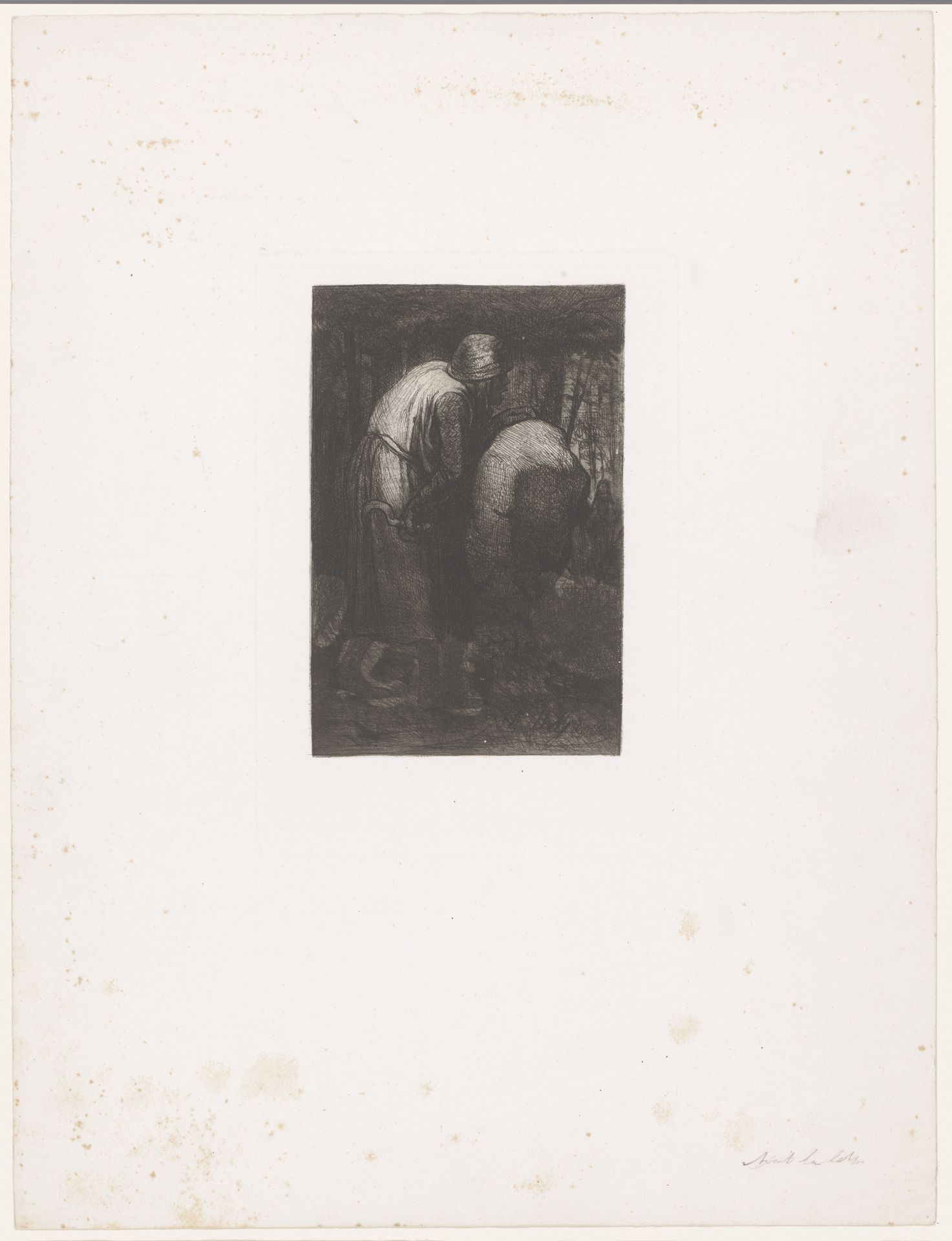
Charles De Groux etched this small artwork called 'Medieval Soldier with Sickle spying on a passing Lady from behind a Rock'. Observe the sickle, an ancient symbol, historically associated with agriculture and the harvest. Here, however, it is wielded by a soldier, transforming it into a sinister instrument of potential harm. The sickle as a tool is an ambivalent image. Consider the reappearance of the sickle in classical antiquity with Chronos or Saturn, the god of time, who used it to castrate his father. Think about the psychological implications. Doesn't this image speak to humanity's deepest fears and desires, the cyclical progression of life and death, creation and destruction? The soldier's hidden position adds a layer of intrigue. He embodies the tension between vulnerability and aggression, the hidden dangers lurking beneath the surface of everyday life.
Middeleeuwse soldaat met sikkel bespiedt van achter een rots een voorbij rijdende dame
1861

Charles De Groux
1825 - 1870Location
RijksmuseumArtwork details
- Dimensions
- height 177 mm, width 124 mm
- Location
- Rijksmuseum
- Copyright
- Rijks Museum: Open Domain
Comments
Share your thoughts
About this artwork
Charles De Groux etched this small artwork called 'Medieval Soldier with Sickle spying on a passing Lady from behind a Rock'. Observe the sickle, an ancient symbol, historically associated with agriculture and the harvest. Here, however, it is wielded by a soldier, transforming it into a sinister instrument of potential harm. The sickle as a tool is an ambivalent image. Consider the reappearance of the sickle in classical antiquity with Chronos or Saturn, the god of time, who used it to castrate his father. Think about the psychological implications. Doesn't this image speak to humanity's deepest fears and desires, the cyclical progression of life and death, creation and destruction? The soldier's hidden position adds a layer of intrigue. He embodies the tension between vulnerability and aggression, the hidden dangers lurking beneath the surface of everyday life.
Comments
Share your thoughts