About this artwork
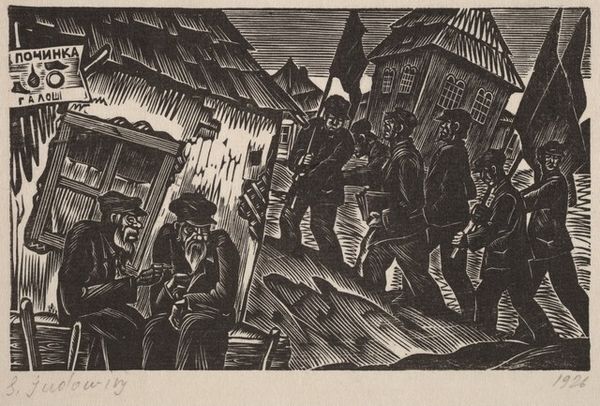
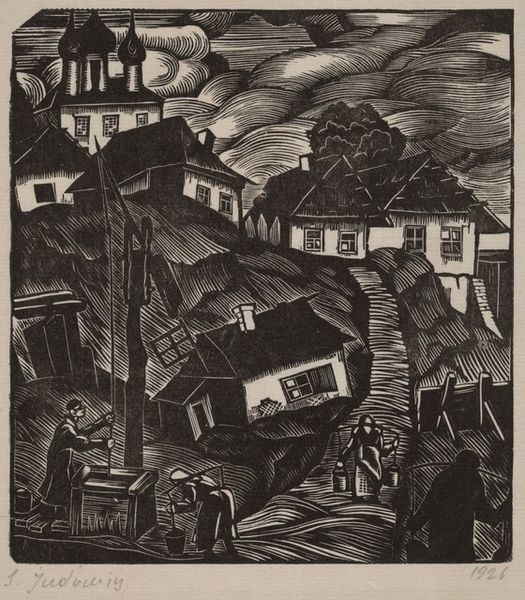
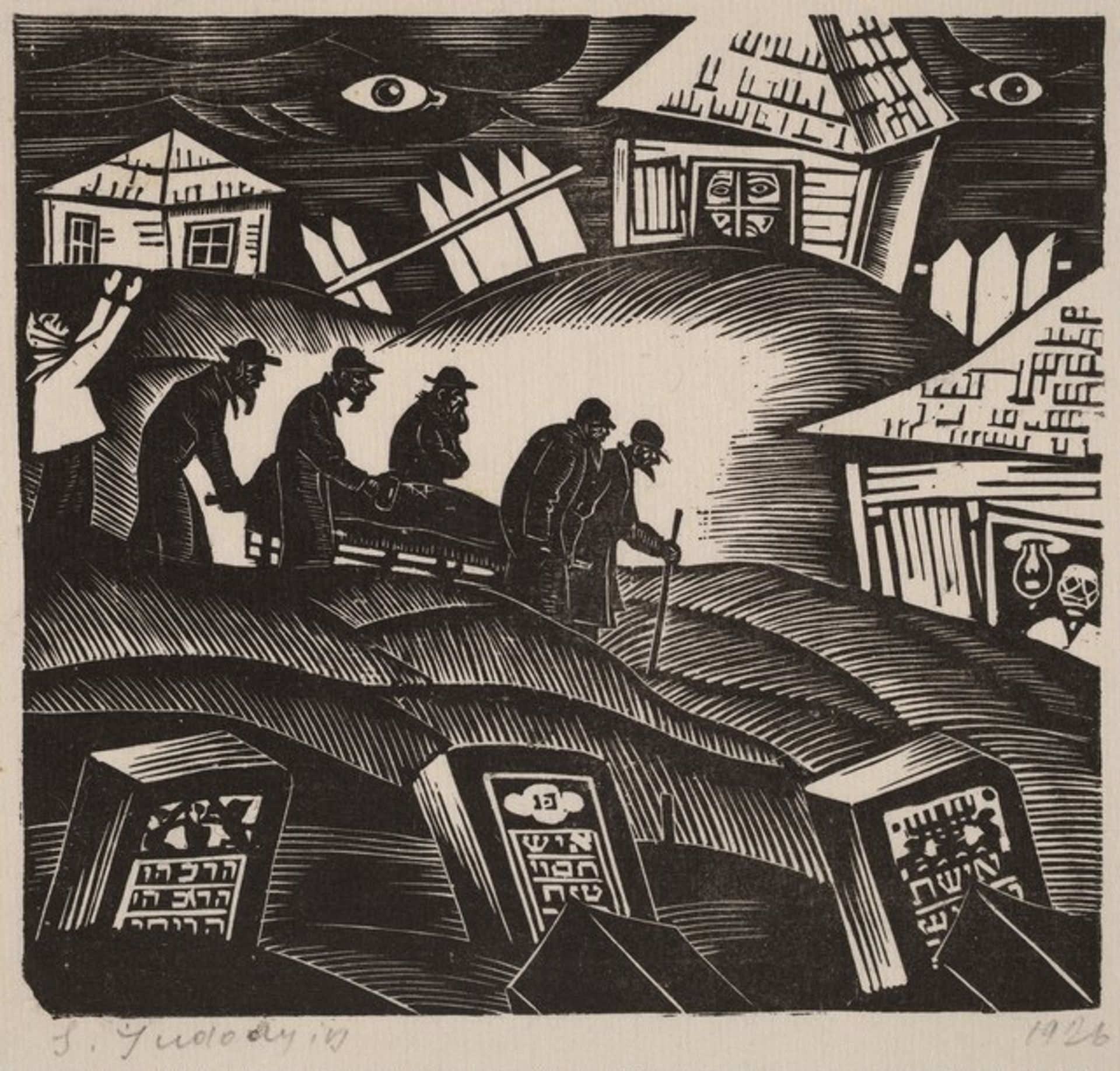
This is Funeral Procession, made as a woodcut by Solomon Borisovich Judovin in 1926. It's striking how Judovin embraced the starkness of black and white, turning the scene into a deeply felt emotional landscape. The textures created by the cuts in the wood are rough and raw, echoing the harshness of loss. Look at the sky – it's not just empty space, but a field of lines that seem to weigh down on the figures below. Those eyes up there, watching... maybe it’s about community, about how grief is witnessed and shared. The whole composition tilts and strains, like a collective struggle. It puts me in mind of some of the German Expressionist printmakers like Kathe Kollwitz, who also weren’t afraid to use the graphic power of woodcut to convey intense feelings. Art isn't about answers; it's about finding new ways to ask questions.
Funeral Procession 1926


Artwork details
- Medium
- print, woodcut
- Copyright
- National Gallery of Art: CC0 1.0
Tags
narrative-art
landscape
figuration
expressionism
woodcut
Comments
No comments
About this artwork
This is Funeral Procession, made as a woodcut by Solomon Borisovich Judovin in 1926. It's striking how Judovin embraced the starkness of black and white, turning the scene into a deeply felt emotional landscape. The textures created by the cuts in the wood are rough and raw, echoing the harshness of loss. Look at the sky – it's not just empty space, but a field of lines that seem to weigh down on the figures below. Those eyes up there, watching... maybe it’s about community, about how grief is witnessed and shared. The whole composition tilts and strains, like a collective struggle. It puts me in mind of some of the German Expressionist printmakers like Kathe Kollwitz, who also weren’t afraid to use the graphic power of woodcut to convey intense feelings. Art isn't about answers; it's about finding new ways to ask questions.
Comments
No comments