Possibly 1776 - 1779
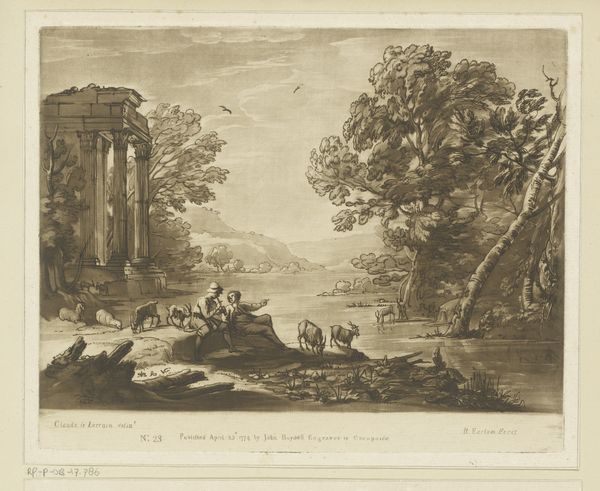
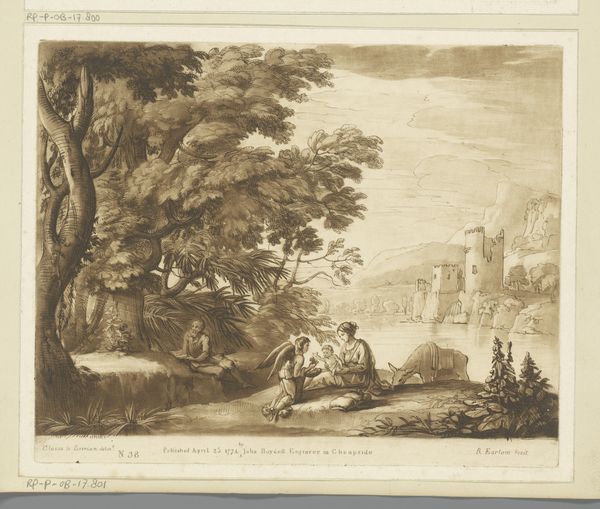
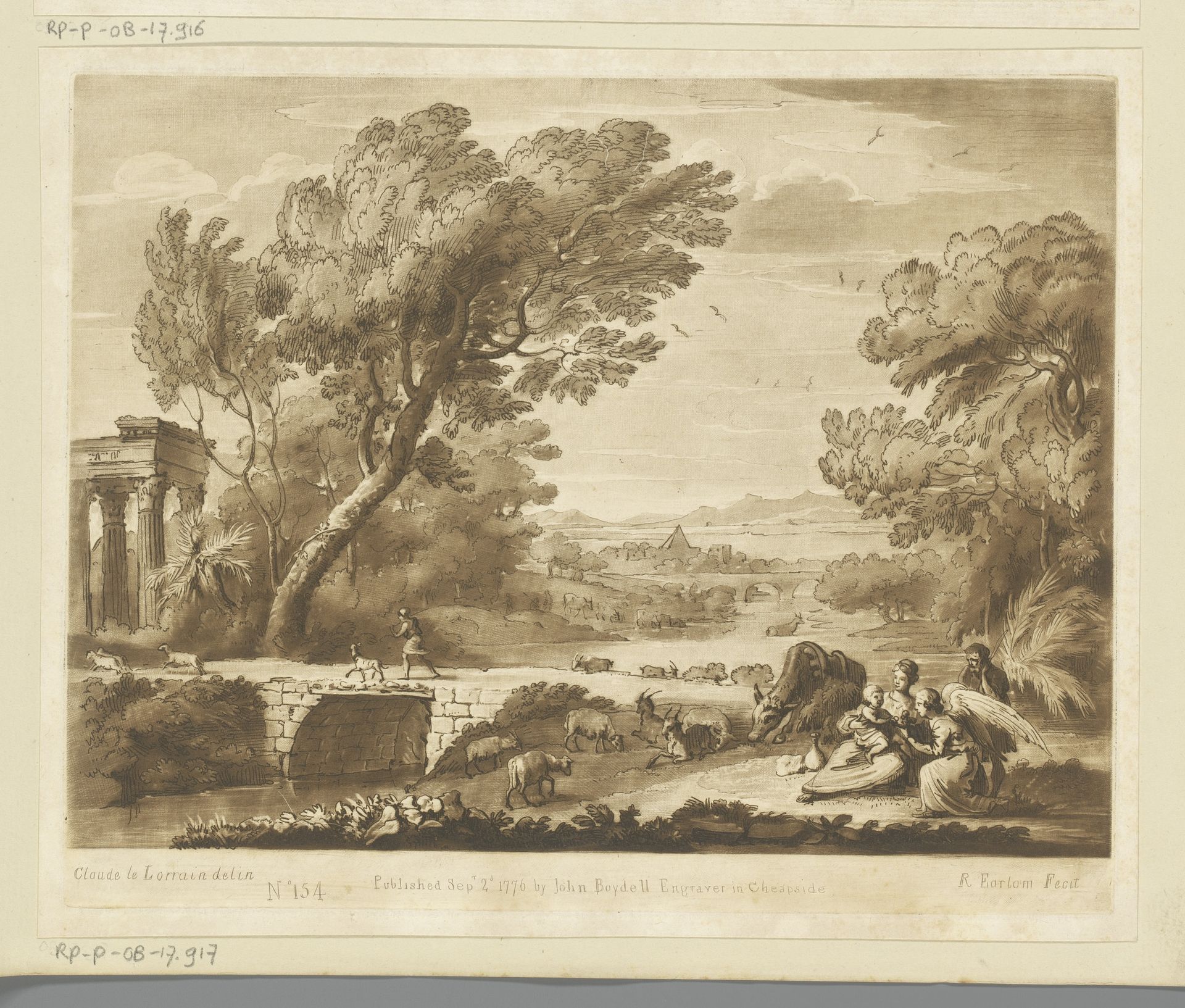
Landschap met ruïne en rust tijdens de vlucht naar Egypte

Richard Earlom
1743 - 1822Location
RijksmuseumListen to curator's interpretation
Curatorial notes
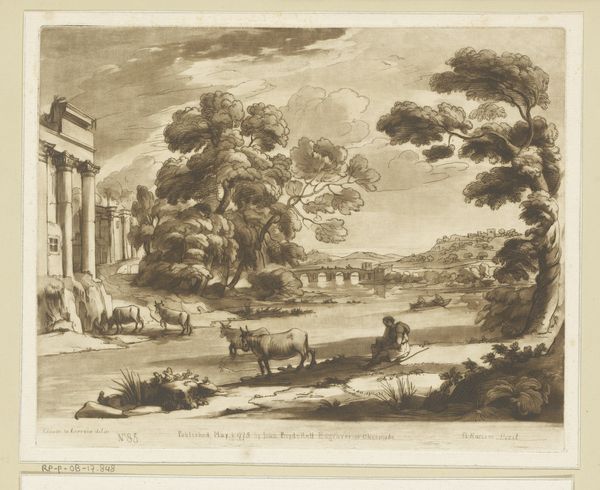
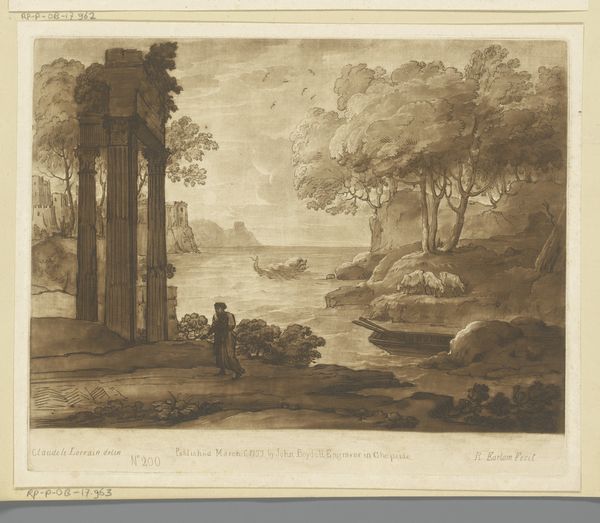
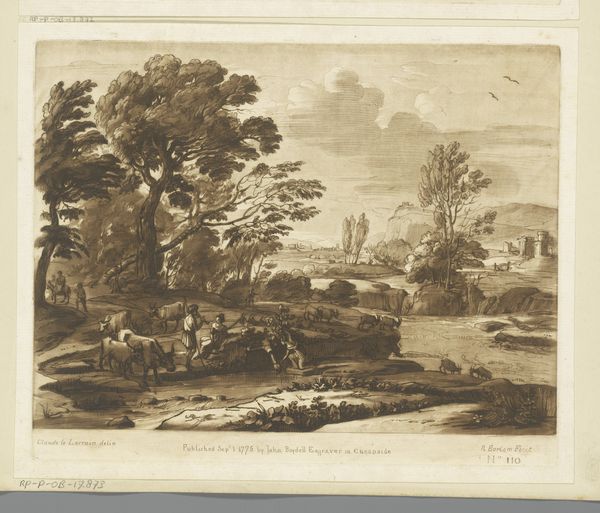
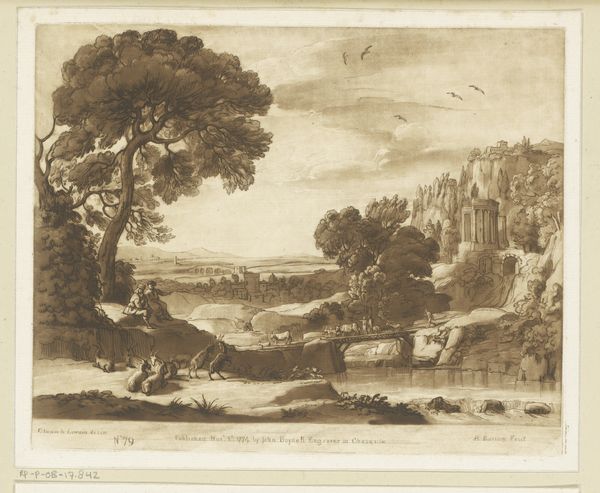
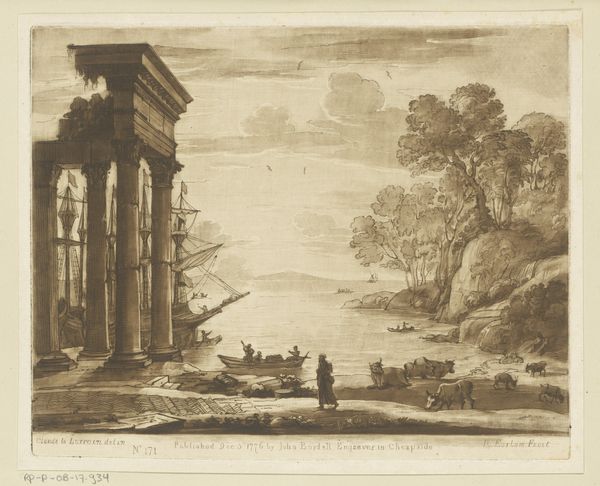
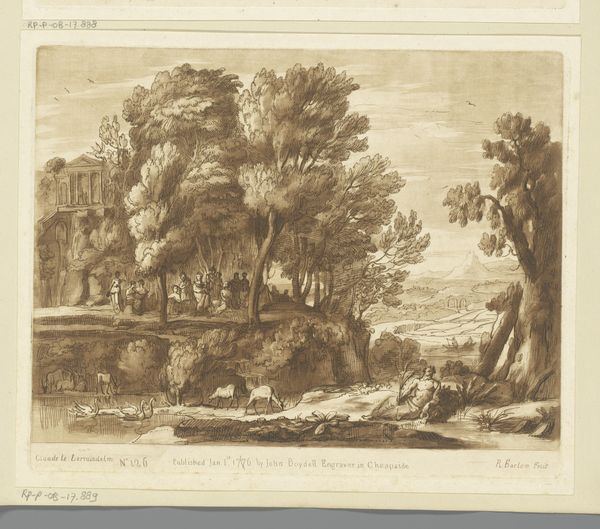
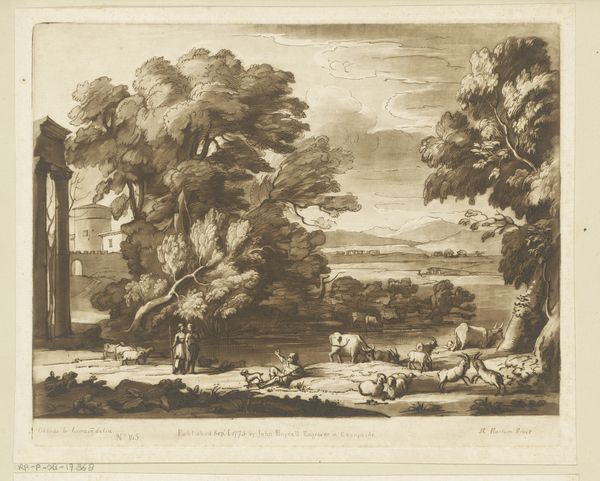
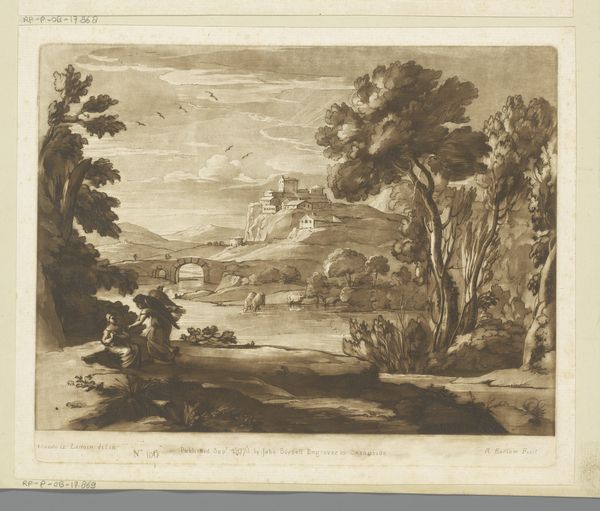
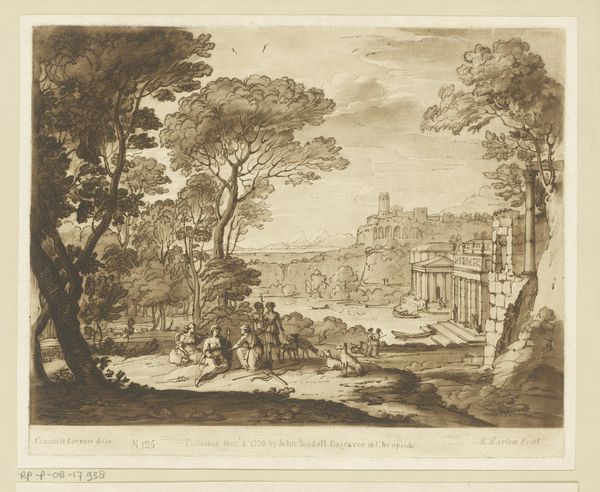
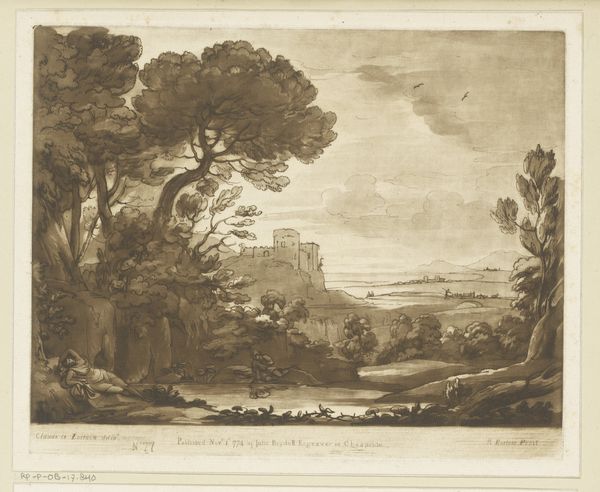
Richard Earlom created this sepia print, "Landscape with Ruins and Rest on the Flight to Egypt," now housed in the Rijksmuseum, using engraving and etching. It is characterized by its tonal range and composition, which evokes a sense of serene contemplation amidst a classical landscape. Note how Earlom masterfully uses sepia ink to create depth and texture. The foreground’s intricate details contrasts with the softer, hazier background, drawing the eye deeper into the scene. The classical ruin on the left anchors the composition, while the figures of the Holy Family on the right provide a focal point. Consider how this arrangement might challenge the traditional sacred landscape. Earlom's emphasis on landscape elements over overtly religious symbols invites viewers to interpret the scene through a personal lens, destabilizing fixed religious meanings and opening up new avenues for spiritual reflection. The artwork functions as a cultural artifact, prompting a deeper engagement with themes of refuge, history, and the natural world.