About this artwork
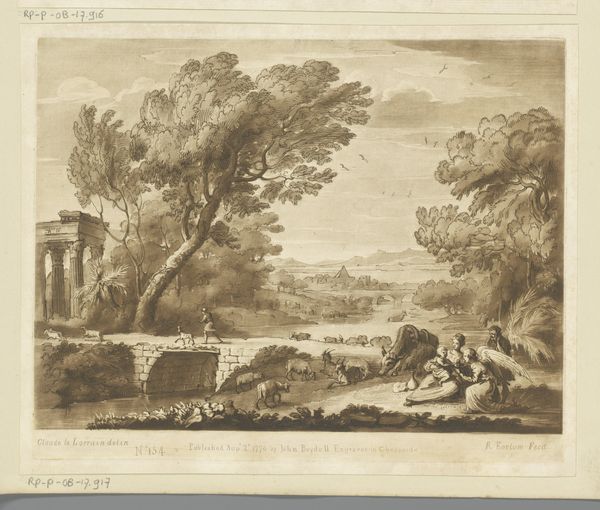
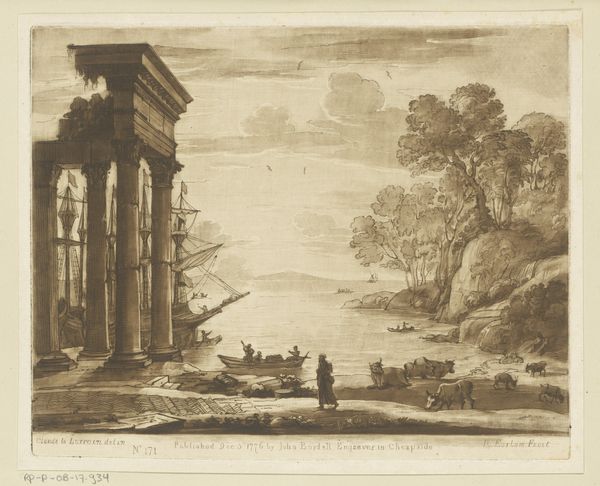
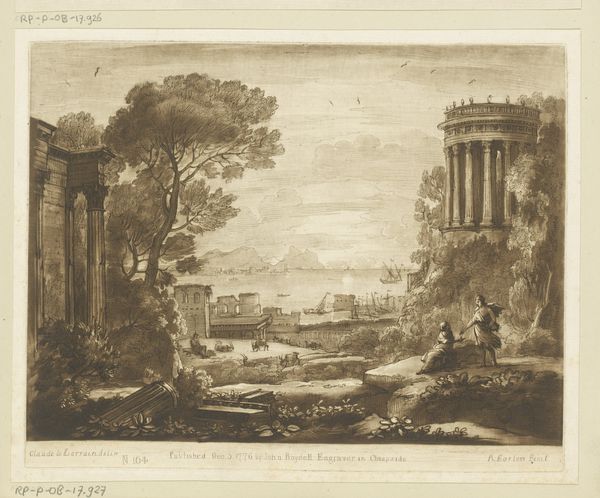
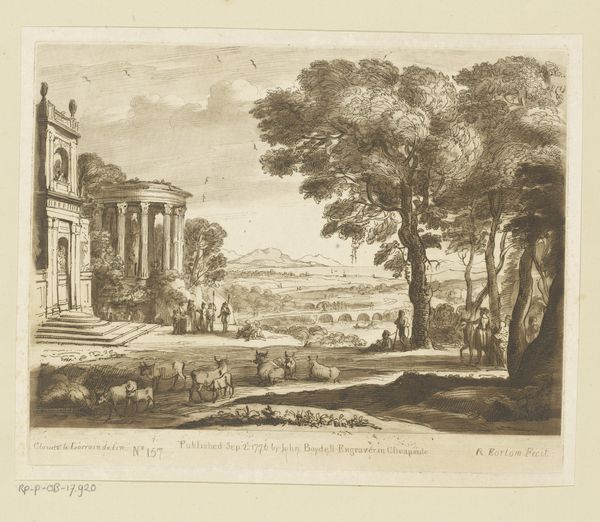
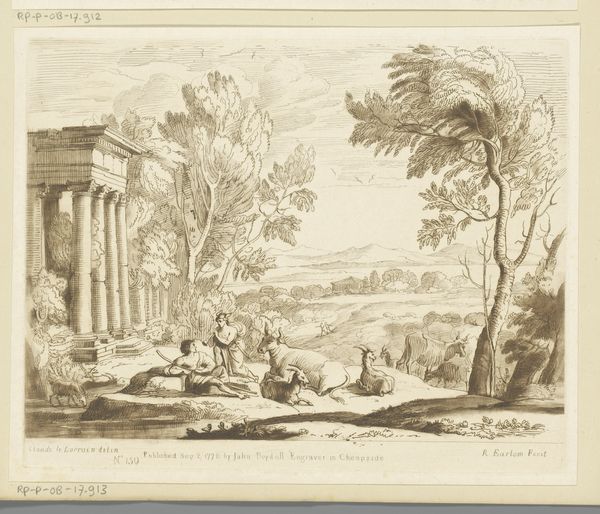
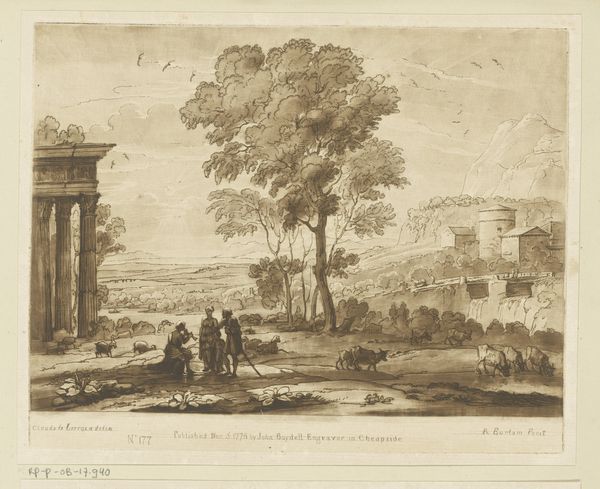
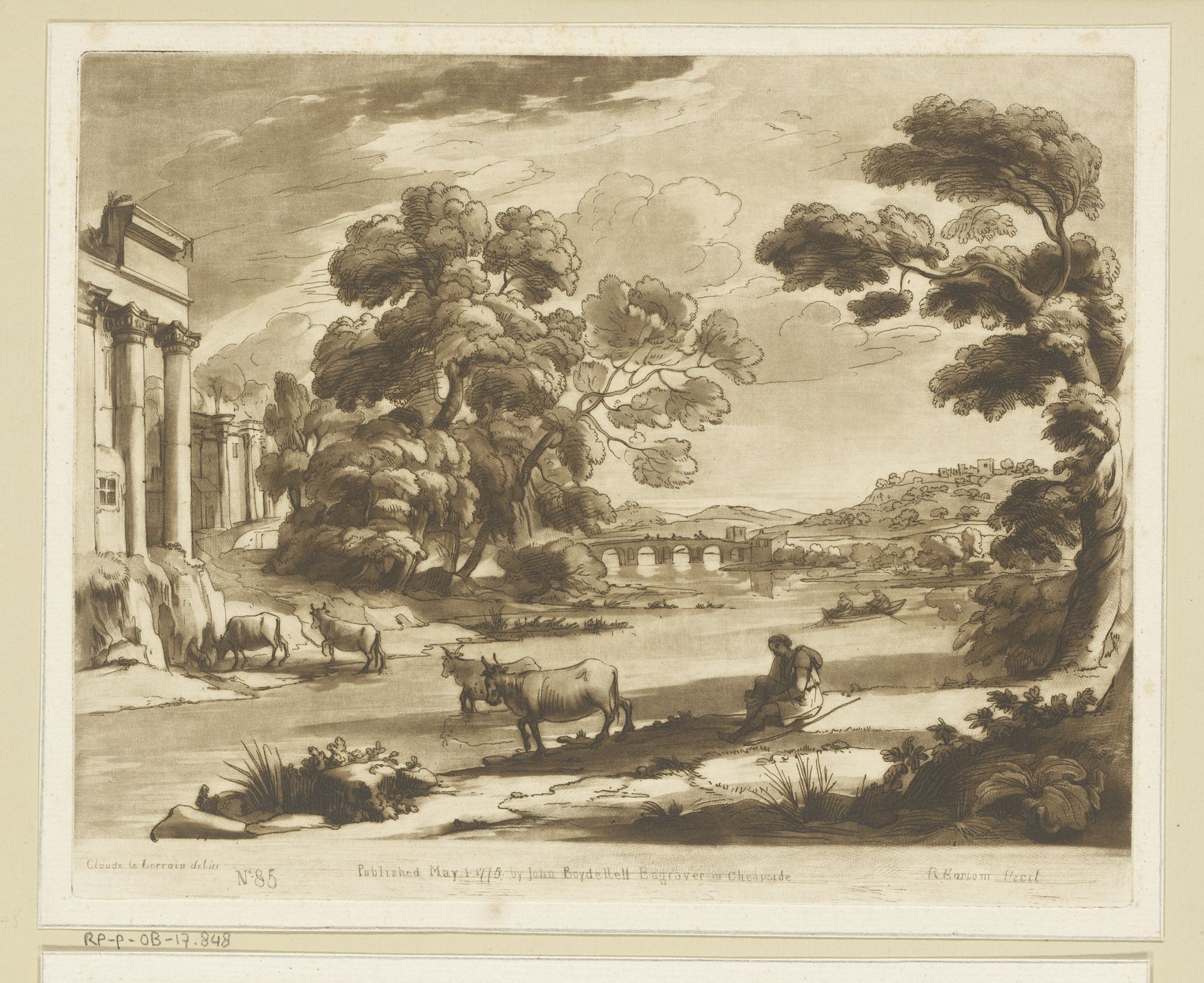
Richard Earlom created this sepia-toned etching, "Landscape with a Resting Shepherd and Four Cows Crossing a River" in 1778. This print, made in England, reflects the 18th-century fascination with pastoral scenes and the romanticized view of rural life. The image presents an intriguing view of labor and leisure. While the cows bravely cross the river, the shepherd is resting. This highlights the way labor is distributed across gender lines: the animals are feminine, while the human is masculine. How does this affect our reading of the image? By centering the shepherd, Earlom draws on classical traditions, and the image evokes a sense of idealized simplicity. Yet, the presence of classical architecture in the background infuses the scene with a certain nostalgia for the glories of the past. Consider how Earlom uses the pastoral to evoke both the harmony of nature and a longing for a bygone era. What feelings does the artwork evoke in you?
Landschap met rustende herder en vier koeien die een rivier oversteken
Possibly 1775

Richard Earlom
1743 - 1822Location
RijksmuseumArtwork details
- Medium
- drawing, print, paper, pencil, charcoal, engraving
- Dimensions
- height 206 mm, width 256 mm
- Location
- Rijksmuseum
- Copyright
- Rijks Museum: Open Domain
Tags
Comments
Share your thoughts
About this artwork
Richard Earlom created this sepia-toned etching, "Landscape with a Resting Shepherd and Four Cows Crossing a River" in 1778. This print, made in England, reflects the 18th-century fascination with pastoral scenes and the romanticized view of rural life. The image presents an intriguing view of labor and leisure. While the cows bravely cross the river, the shepherd is resting. This highlights the way labor is distributed across gender lines: the animals are feminine, while the human is masculine. How does this affect our reading of the image? By centering the shepherd, Earlom draws on classical traditions, and the image evokes a sense of idealized simplicity. Yet, the presence of classical architecture in the background infuses the scene with a certain nostalgia for the glories of the past. Consider how Earlom uses the pastoral to evoke both the harmony of nature and a longing for a bygone era. What feelings does the artwork evoke in you?
Comments
Share your thoughts