About this artwork
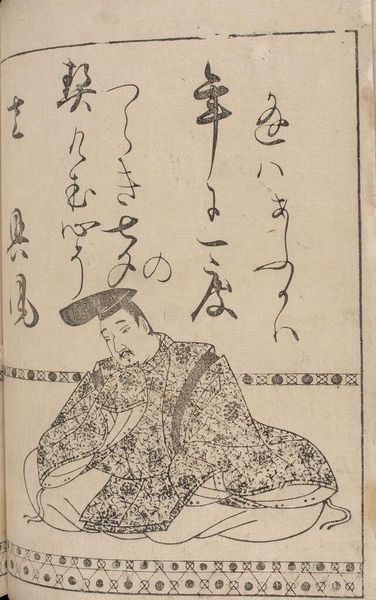
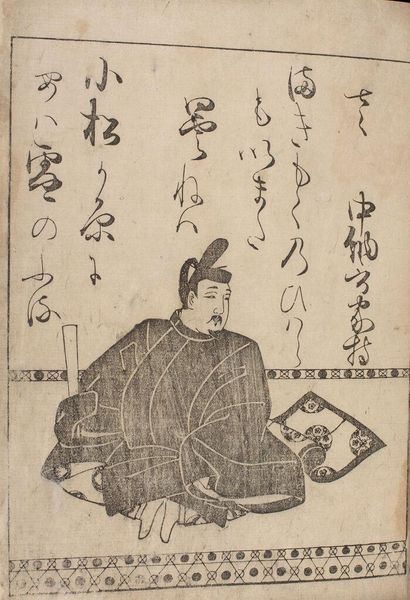
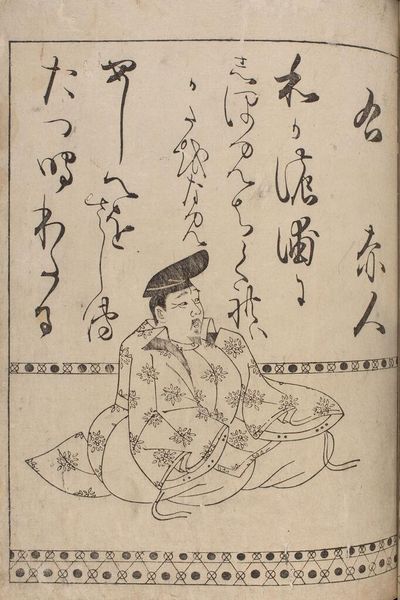
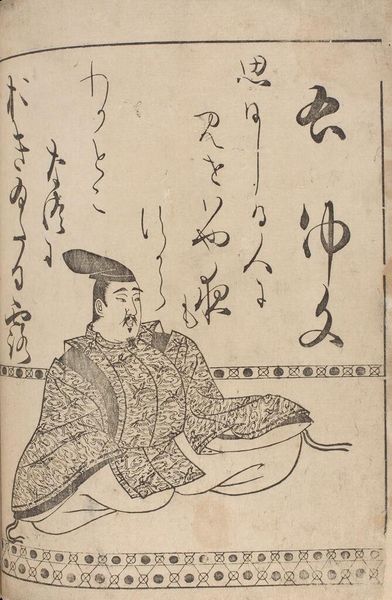
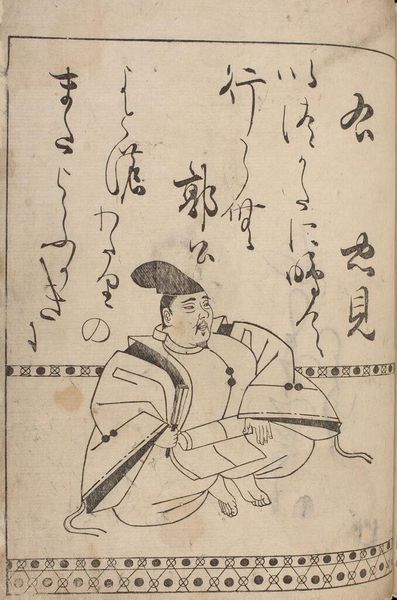
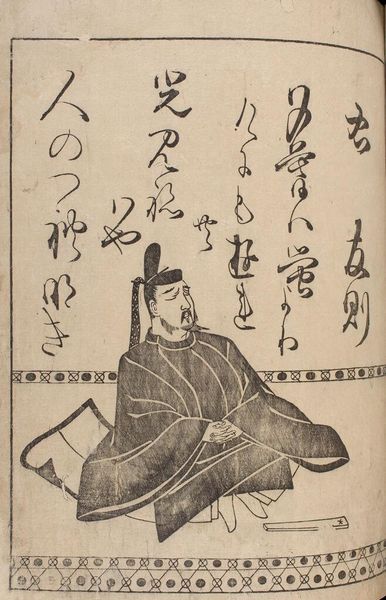
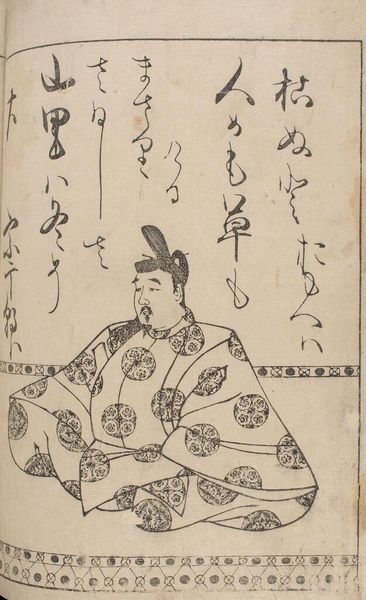
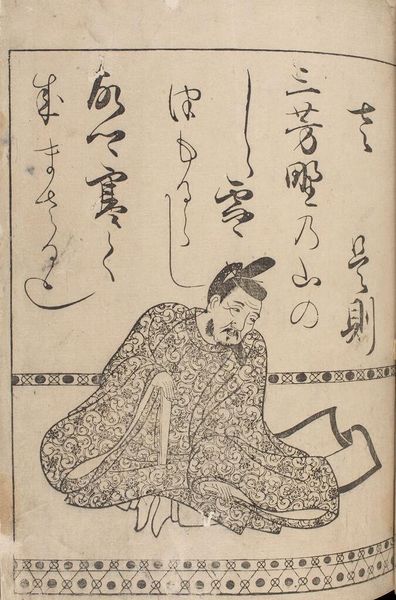
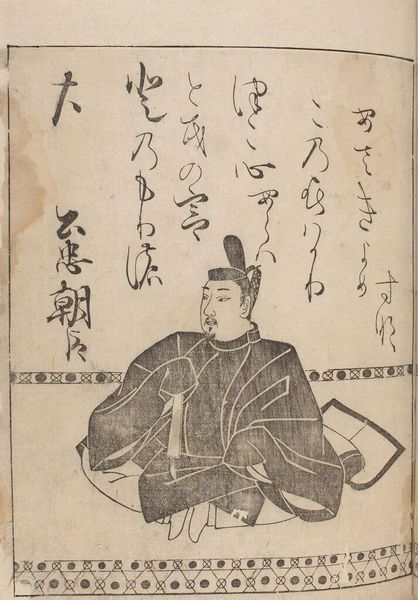
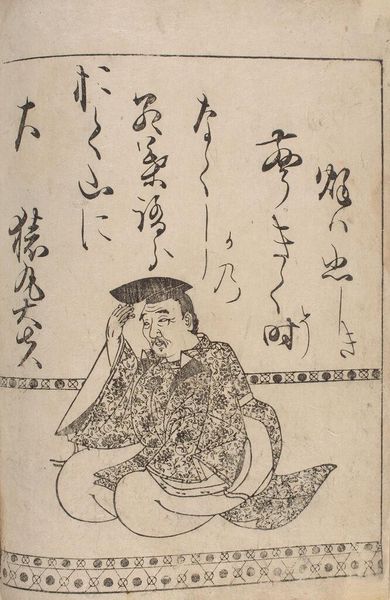
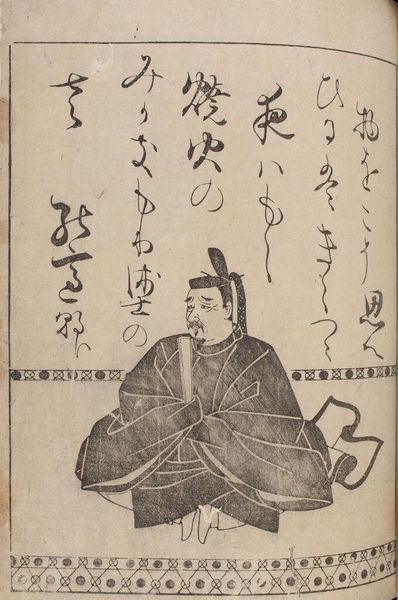
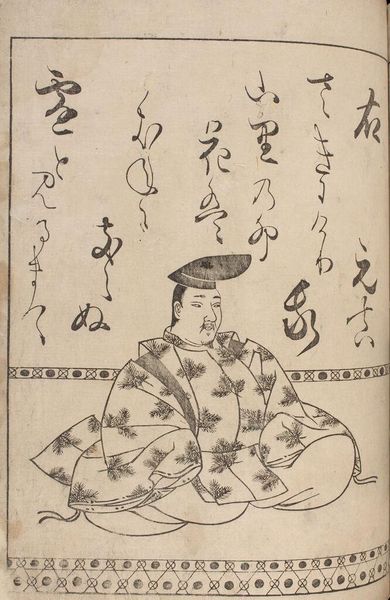
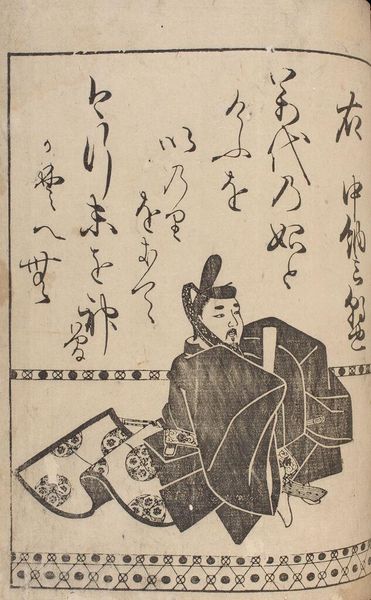
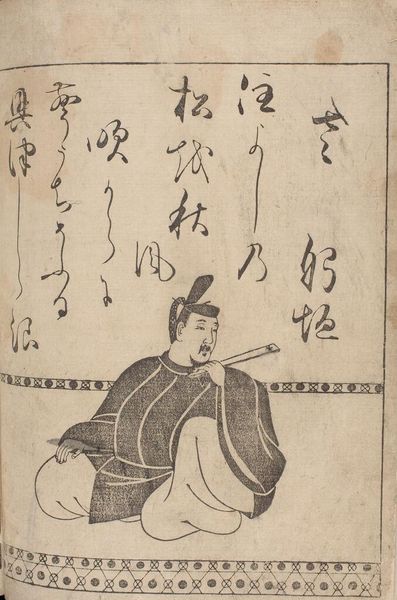
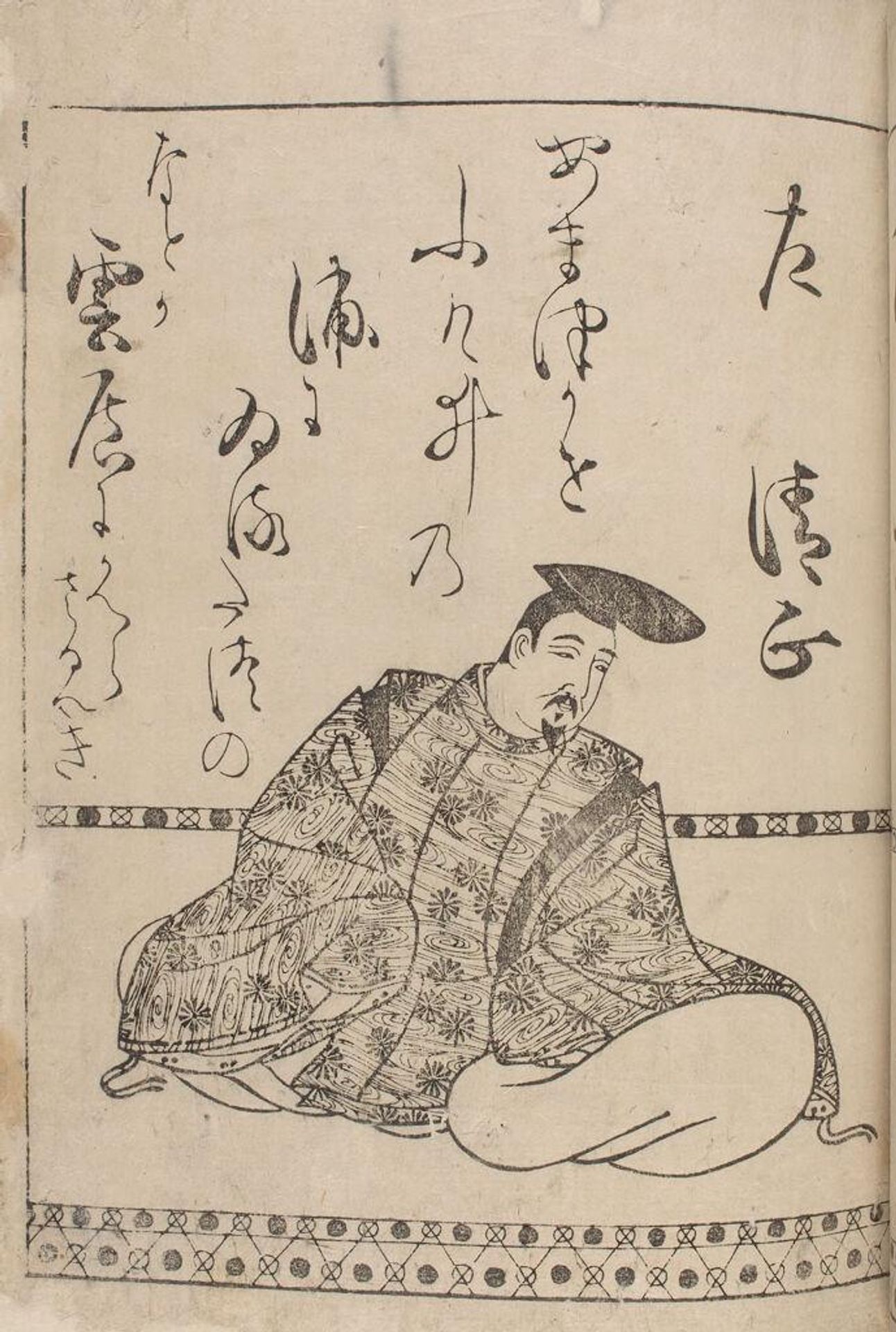
Editor: Here we have a page from the Kōetsu edition of "Thirty-Six Immortal Poets," featuring the Poet Fujiwara no Kiyotada. The calligraphy is by Hon'ami Kōetsu from the Momoyama period. I'm struck by how the figure and text seem to exist in harmony. What do you see in this piece? Curator: The poet's figure and calligraphic poem become intertwined symbols of cultural memory. The figure itself, with its patterned robe and seated posture, evokes a sense of tradition and refined artistry, while the flowing text above resonates as a visual echo of his voice and spirit. Editor: So the visual and textual elements work together to build something more than just a portrait? Curator: Precisely. The arrangement suggests a continuity of cultural ideals, reminding us that these figures weren't just individuals but symbols of a particular era and its aesthetic values. Editor: I'll definitely look closer at how symbols shape our understanding of art now. Thanks!
Poet Fujiwara no Kiyotada from page 7A of the printed book of "Thirty-Six Immortal Poets" (SanjÅ«rokkasen), KÅetsu edition
c. 1610
Calligraphy by Hon'ami KÅetsu æ¬é¿å¼¥å æ?"Momoyama period
@calligraphybyhonamikaetsuaeea1/4aaemomoyamaperiod
Harvard Art Museums
Harvard Art MuseumsArtwork details
- Dimensions
- H. 34.5 cm x W. 24.1 cm (13 9/16 x 9 1/2 in.)
- Location
- Harvard Art Museums
- Copyright
- CC0 1.0
Comments
Share your thoughts
About this artwork
Editor: Here we have a page from the Kōetsu edition of "Thirty-Six Immortal Poets," featuring the Poet Fujiwara no Kiyotada. The calligraphy is by Hon'ami Kōetsu from the Momoyama period. I'm struck by how the figure and text seem to exist in harmony. What do you see in this piece? Curator: The poet's figure and calligraphic poem become intertwined symbols of cultural memory. The figure itself, with its patterned robe and seated posture, evokes a sense of tradition and refined artistry, while the flowing text above resonates as a visual echo of his voice and spirit. Editor: So the visual and textual elements work together to build something more than just a portrait? Curator: Precisely. The arrangement suggests a continuity of cultural ideals, reminding us that these figures weren't just individuals but symbols of a particular era and its aesthetic values. Editor: I'll definitely look closer at how symbols shape our understanding of art now. Thanks!
Comments
Share your thoughts