About this artwork
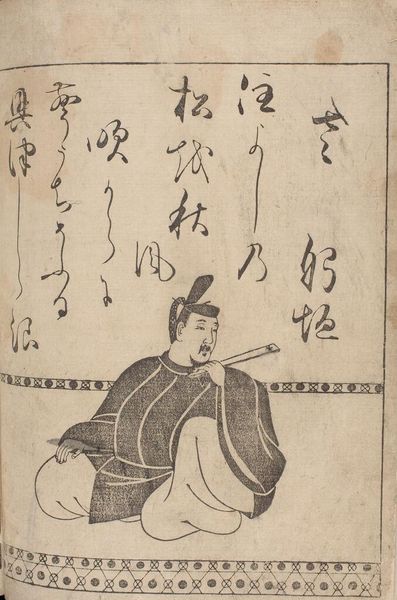
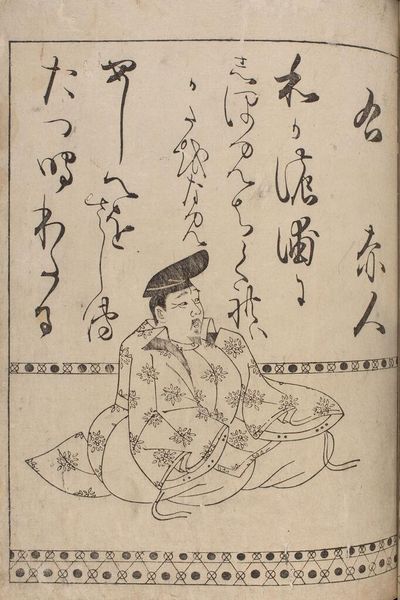
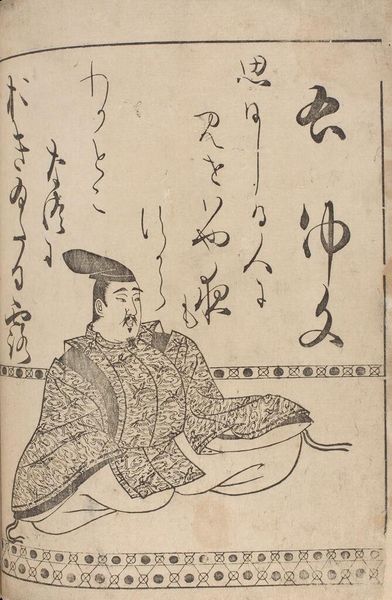
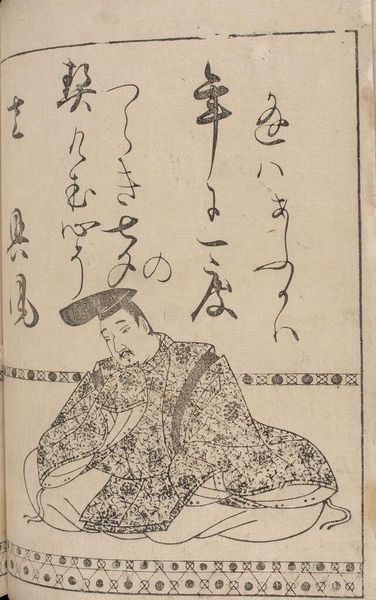
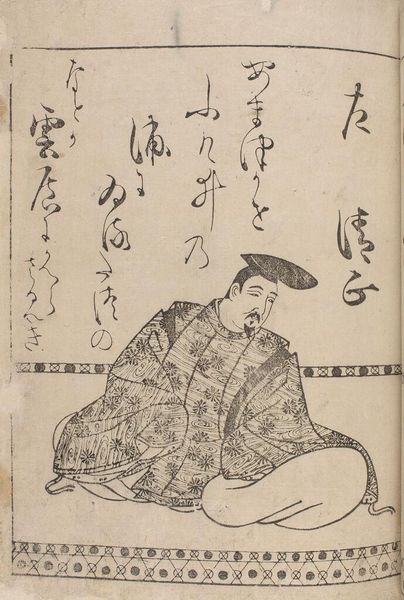
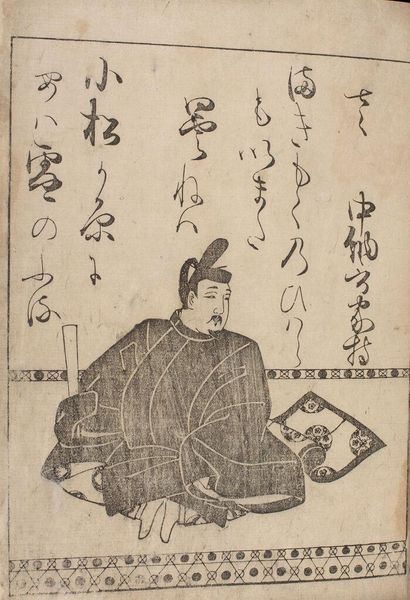
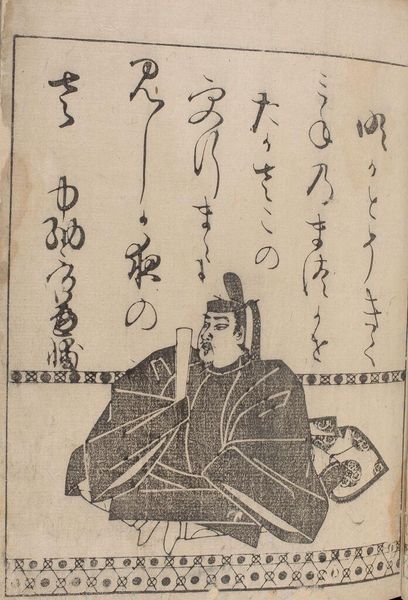
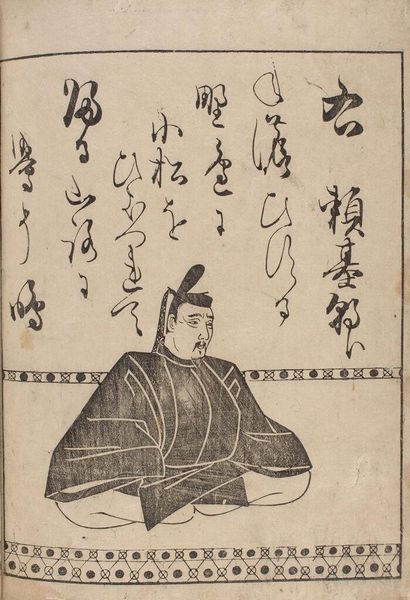
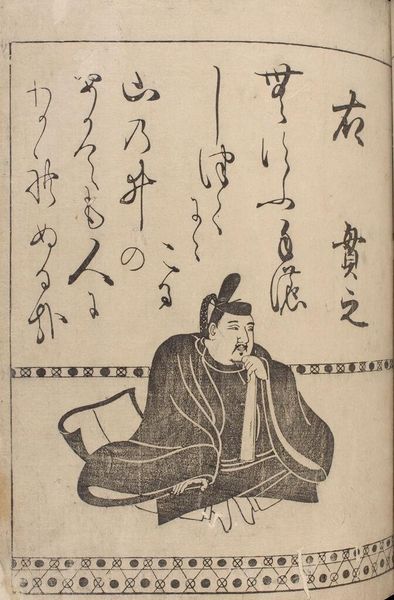
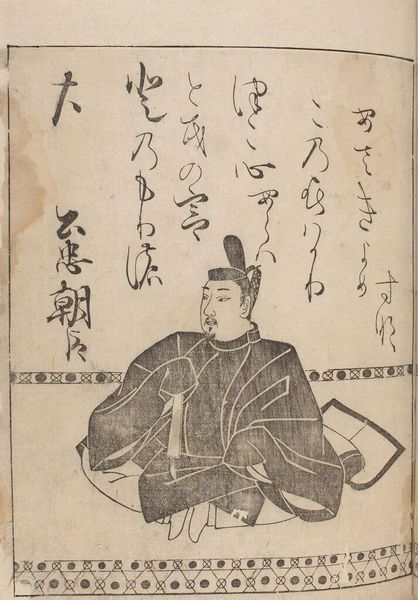
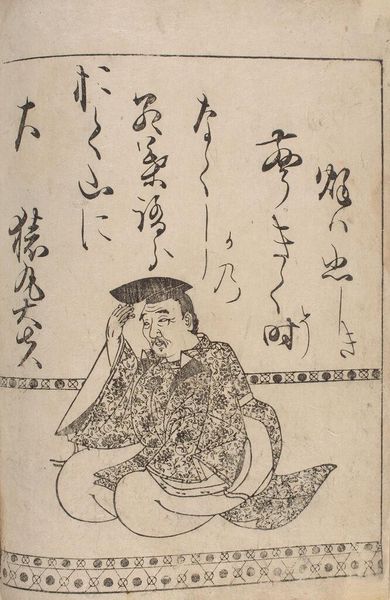
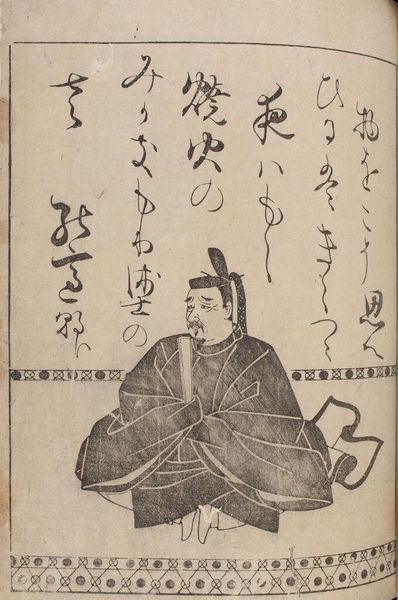
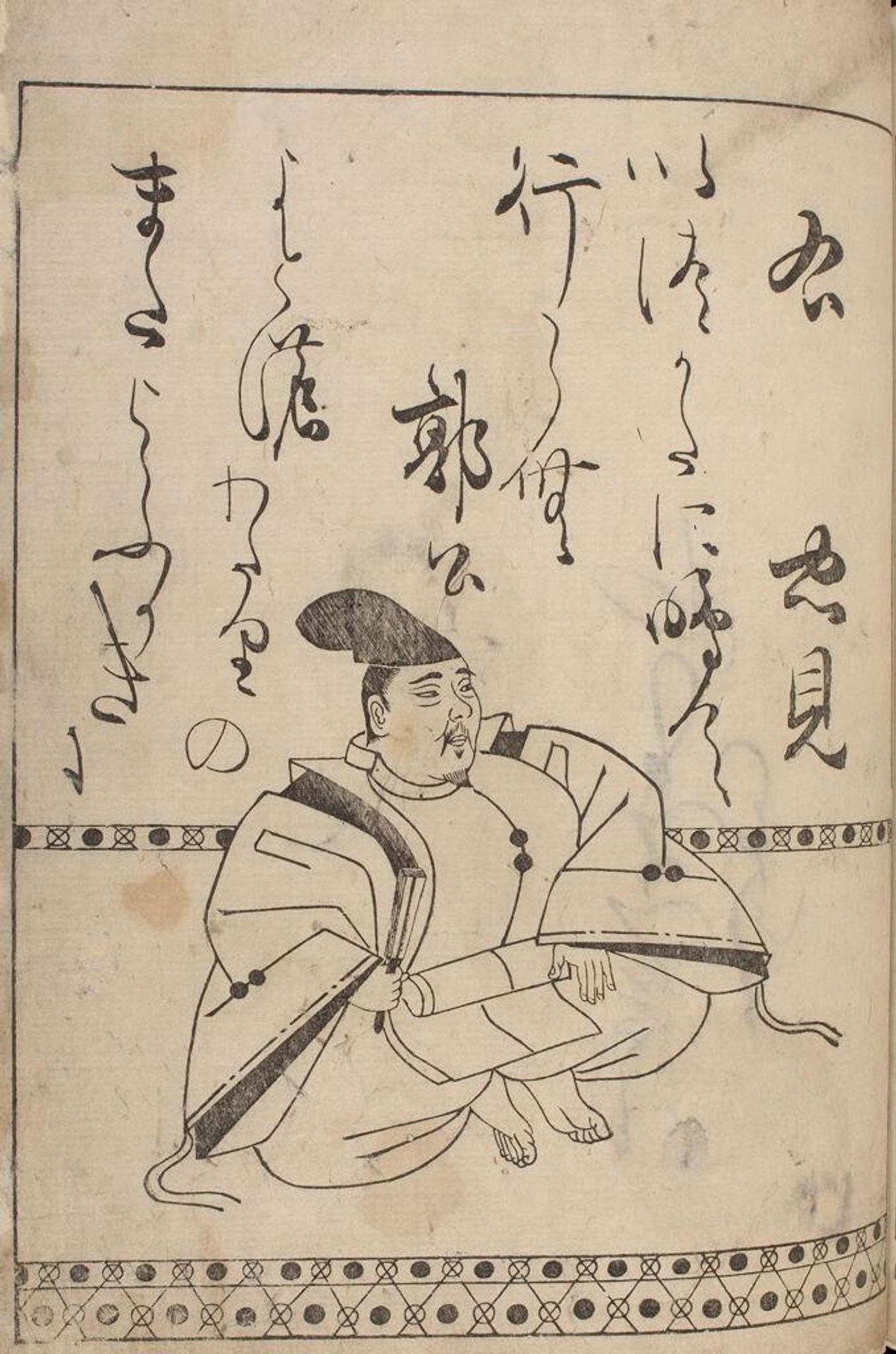
Curator: Here we have a page from Hon'ami KÅetsu's printed book "Thirty-Six Immortal Poets," featuring Mibu no Tadami. Editor: It feels so immediate, like a snapshot. The strong lines capture a sense of dignity, even amidst the cartoonish rendering of the figure. Curator: The imagery invokes the ancient tradition of court portraiture. Note how the figure of the poet is coupled with calligraphy, a visual representation of his literary contributions. Editor: The poet's robes, with their subtle patterns, hint at status and refinement. He holds a book, further emphasizing his learnedness. It's a deliberate construction of identity. Curator: Indeed. KÅetsu uses simple lines to convey a deeper sense of character and cultural identity. The composition is masterful, balancing the figurative and textual elements. Editor: I find myself drawn to how the work embodies the cultural memory of poetic and artistic achievement. It’s a beautiful homage to human creativity. Curator: It offers a fascinating insight into the artist's understanding of the power of visual representation.
Poet Mibu no Tadami from page 18A of the printed book of "Thirty-Six Immortal Poets" (SanjÅ«rokkasen), KÅetsu edition
c. 1610
Calligraphy by Hon'ami KÅetsu æ¬é¿å¼¥å æ?"Momoyama period
@calligraphybyhonamikaetsuaeea1/4aaemomoyamaperiod
Harvard Art Museums
Harvard Art MuseumsArtwork details
- Dimensions
- H. 34.5 cm x W. 24.1 cm (13 9/16 x 9 1/2 in.)
- Location
- Harvard Art Museums
- Copyright
- CC0 1.0
Comments
Share your thoughts
About this artwork
Curator: Here we have a page from Hon'ami KÅetsu's printed book "Thirty-Six Immortal Poets," featuring Mibu no Tadami. Editor: It feels so immediate, like a snapshot. The strong lines capture a sense of dignity, even amidst the cartoonish rendering of the figure. Curator: The imagery invokes the ancient tradition of court portraiture. Note how the figure of the poet is coupled with calligraphy, a visual representation of his literary contributions. Editor: The poet's robes, with their subtle patterns, hint at status and refinement. He holds a book, further emphasizing his learnedness. It's a deliberate construction of identity. Curator: Indeed. KÅetsu uses simple lines to convey a deeper sense of character and cultural identity. The composition is masterful, balancing the figurative and textual elements. Editor: I find myself drawn to how the work embodies the cultural memory of poetic and artistic achievement. It’s a beautiful homage to human creativity. Curator: It offers a fascinating insight into the artist's understanding of the power of visual representation.
Comments
Share your thoughts