About this artwork
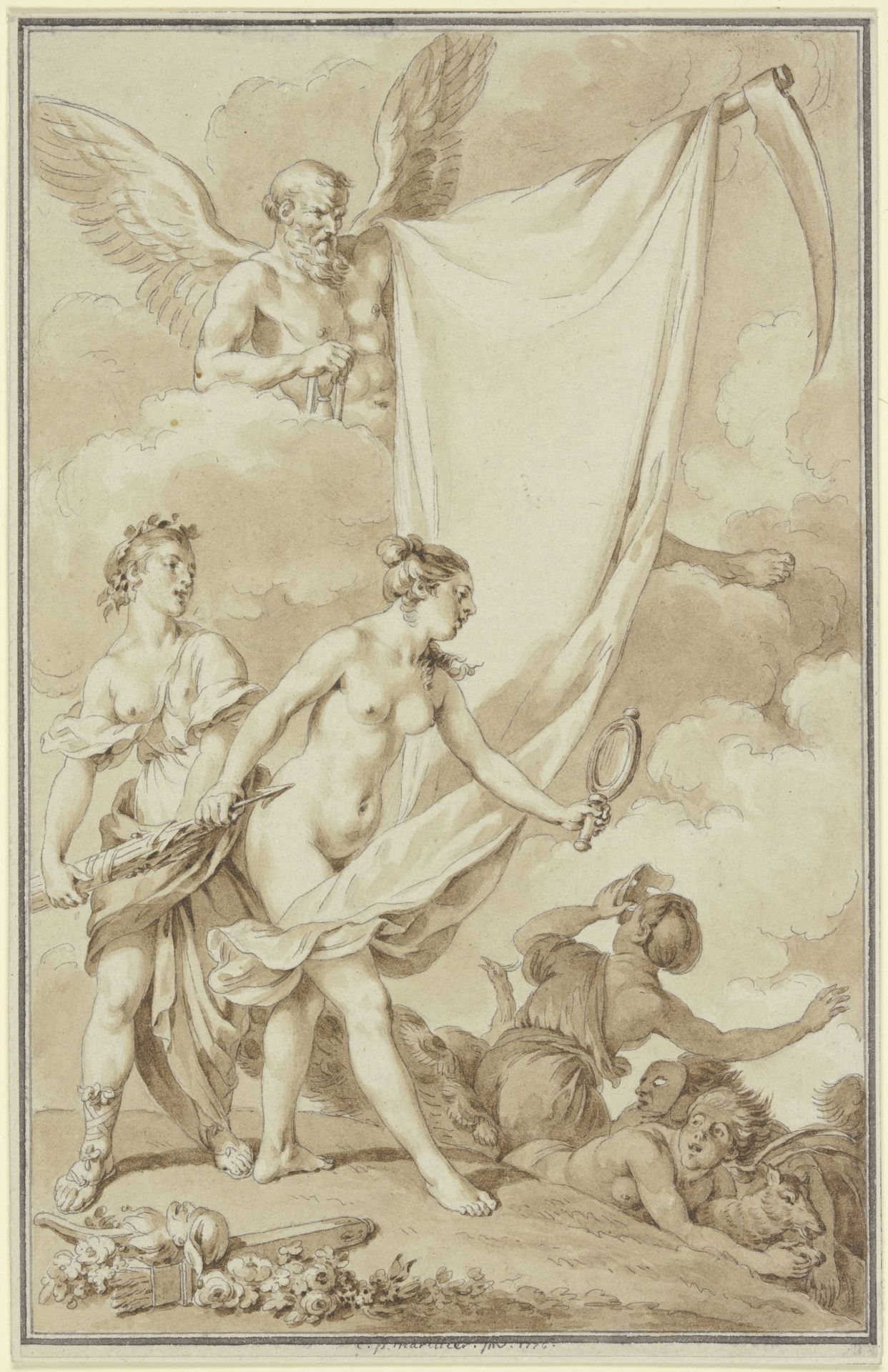
Clément Pierre Marillier created this drawing, "Die Zeit enthüllt die Wahrheit," in the late 18th century. The piece reflects the enlightenment period’s fascination with allegory and its exploration of abstract concepts like time, truth, and deception through human forms. Here, time is depicted as an aged, winged figure unveiling Truth, a nude woman holding a mirror, while other figures representing deceit and vanity are shown recoiling in dismay. It’s worth noting the contrast in the depiction of these figures: Truth is presented in natural, unadorned beauty, challenging the conventional associations of female nudity with sin or temptation. Meanwhile, the figures of deceit are rendered in chaotic disarray. Marillier’s drawing isn’t merely an exercise in classical symbolism. It invites us to reflect on the moral and ethical dimensions of truth and falsehood. It serves as a potent reminder of the importance of honesty and integrity in both our personal lives and public discourse. The emotional impact of the scene—the exposed vulnerability versus the desperate attempts to hide—adds depth to its allegorical message.
Die Zeit enthüllt die Wahrheit
1776


Artwork details
- Medium
- drawing, ink, pencil
- Location
- Städel Museum
- Copyright
- Public Domain
Tags
drawing
allegory
ink
classicism
pencil
history-painting
nude
Comments
Be the first to share your thoughts about this work.
About this artwork
Clément Pierre Marillier created this drawing, "Die Zeit enthüllt die Wahrheit," in the late 18th century. The piece reflects the enlightenment period’s fascination with allegory and its exploration of abstract concepts like time, truth, and deception through human forms. Here, time is depicted as an aged, winged figure unveiling Truth, a nude woman holding a mirror, while other figures representing deceit and vanity are shown recoiling in dismay. It’s worth noting the contrast in the depiction of these figures: Truth is presented in natural, unadorned beauty, challenging the conventional associations of female nudity with sin or temptation. Meanwhile, the figures of deceit are rendered in chaotic disarray. Marillier’s drawing isn’t merely an exercise in classical symbolism. It invites us to reflect on the moral and ethical dimensions of truth and falsehood. It serves as a potent reminder of the importance of honesty and integrity in both our personal lives and public discourse. The emotional impact of the scene—the exposed vulnerability versus the desperate attempts to hide—adds depth to its allegorical message.
Comments
Be the first to share your thoughts about this work.