About this artwork
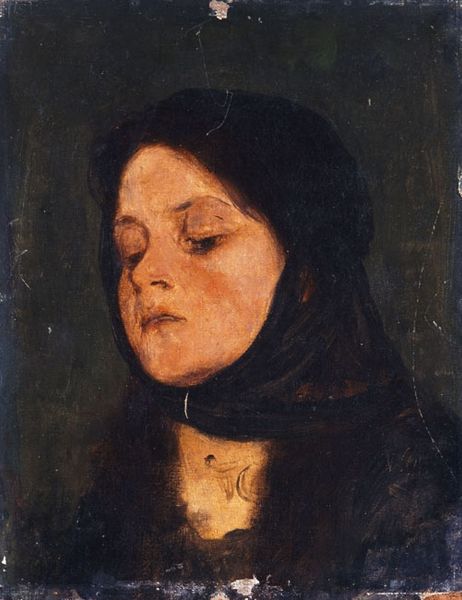
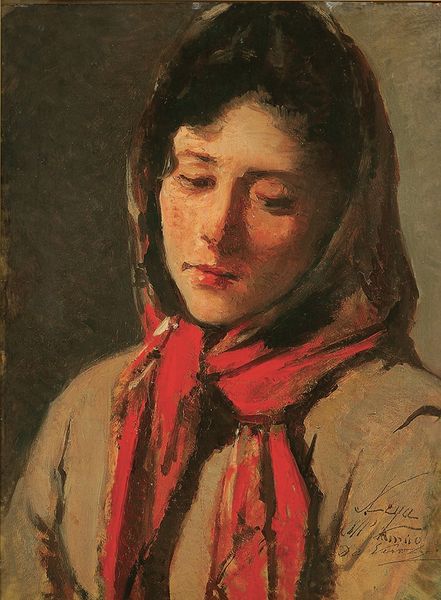
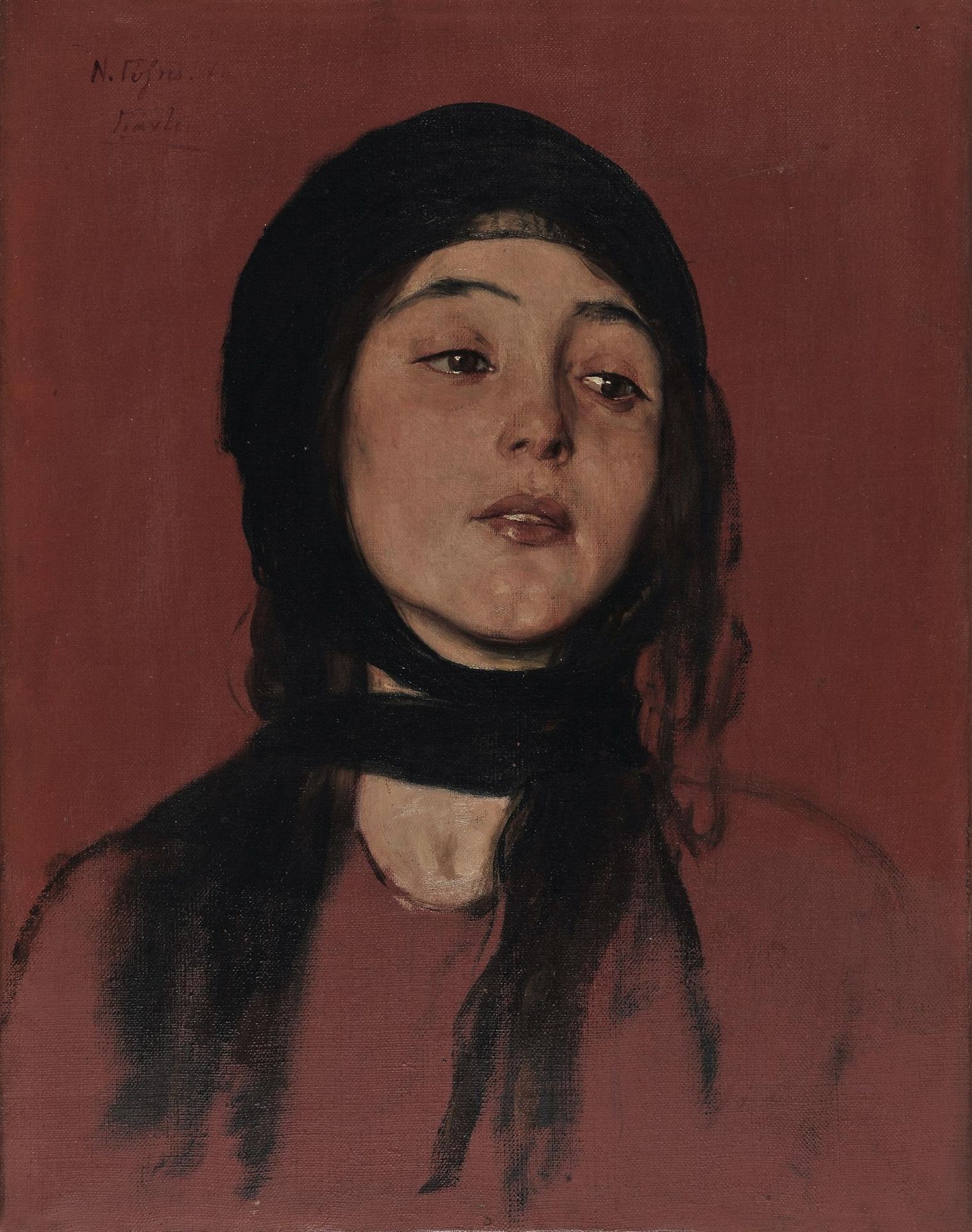
Editor: We're looking at "Wishbone," an oil painting by Nikolaos Gyzis, created in 1878. The subject's gaze is averted, creating a sense of introspection or maybe even longing. There’s something quietly powerful about this piece. What catches your eye, initially? Curator: You know, it's the contrast that grabs me. The rich, almost earthy reds playing against the stark, almost severe blacks of her headscarf and shawl. It feels both intimate and a bit melancholic. It’s as if he’s captured a fleeting moment, a half-formed thought. Don't you get that feeling? As if you’ve caught her mid-daydream? Editor: I do. It almost feels like a stolen glance. Do you think that was Gyzis's intent? To portray this candid moment? Curator: Maybe, or maybe he’s playing with the traditional portraiture of the era, injecting a bit of everyday life and interiority into a formal setting. Romanticism often delved into emotion. Notice how the light caresses her face but leaves the background rather flat? It's like isolating a precious thought from the chaos around it. Makes me wonder about her "wish," the one that's got her gazing off into the distance. Editor: That’s a lovely observation. The lighting really does isolate her, even with that bold red background. It almost feels cinematic in a way, thinking about it now. Curator: Yes, and I think the genius is in that simplicity. It leaves so much open to interpretation. The woman’s own inner life remains just out of reach, tantalizing us. You know, the more I look, the more stories I invent for her. Editor: That's beautiful. I initially saw a kind of wistful sadness, but now I see the possibility for a bit of defiant hope too, especially knowing it’s painted at a time of cultural transformation in Greece. It really invites conversation and speculation. Curator: Exactly. And that, my friend, is the beauty of art. It shifts with our gaze, echoes with our own stories.
Wishbone
1878

Nikolaos Gyzis
1842 - 1901Location
National Art Gallery (Alexandros Soutzos Museum), Athens, GreeceArtwork details
- Dimensions
- 46 x 37 cm
- Location
- National Art Gallery (Alexandros Soutzos Museum), Athens, Greece
- Copyright
- Public domain
Comments
Share your thoughts
About this artwork
Editor: We're looking at "Wishbone," an oil painting by Nikolaos Gyzis, created in 1878. The subject's gaze is averted, creating a sense of introspection or maybe even longing. There’s something quietly powerful about this piece. What catches your eye, initially? Curator: You know, it's the contrast that grabs me. The rich, almost earthy reds playing against the stark, almost severe blacks of her headscarf and shawl. It feels both intimate and a bit melancholic. It’s as if he’s captured a fleeting moment, a half-formed thought. Don't you get that feeling? As if you’ve caught her mid-daydream? Editor: I do. It almost feels like a stolen glance. Do you think that was Gyzis's intent? To portray this candid moment? Curator: Maybe, or maybe he’s playing with the traditional portraiture of the era, injecting a bit of everyday life and interiority into a formal setting. Romanticism often delved into emotion. Notice how the light caresses her face but leaves the background rather flat? It's like isolating a precious thought from the chaos around it. Makes me wonder about her "wish," the one that's got her gazing off into the distance. Editor: That’s a lovely observation. The lighting really does isolate her, even with that bold red background. It almost feels cinematic in a way, thinking about it now. Curator: Yes, and I think the genius is in that simplicity. It leaves so much open to interpretation. The woman’s own inner life remains just out of reach, tantalizing us. You know, the more I look, the more stories I invent for her. Editor: That's beautiful. I initially saw a kind of wistful sadness, but now I see the possibility for a bit of defiant hope too, especially knowing it’s painted at a time of cultural transformation in Greece. It really invites conversation and speculation. Curator: Exactly. And that, my friend, is the beauty of art. It shifts with our gaze, echoes with our own stories.
Comments
Share your thoughts