About this artwork
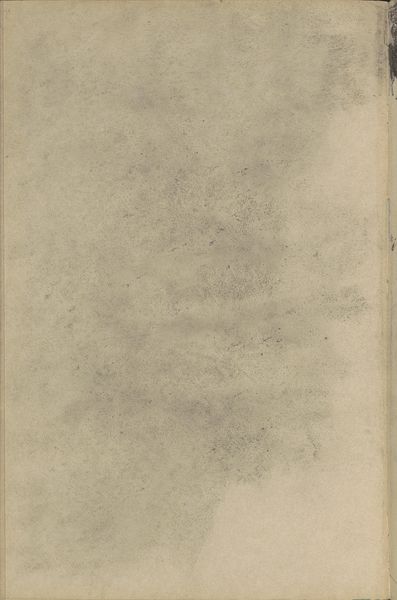
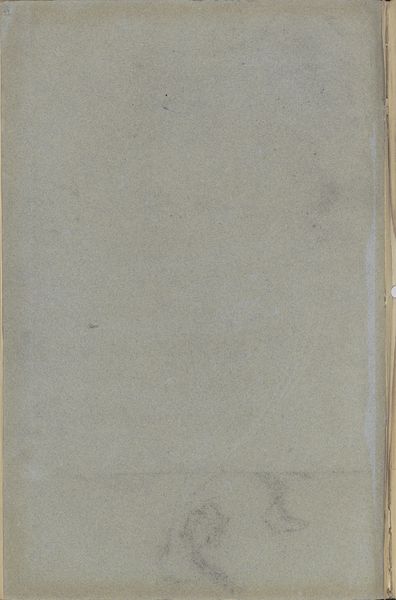
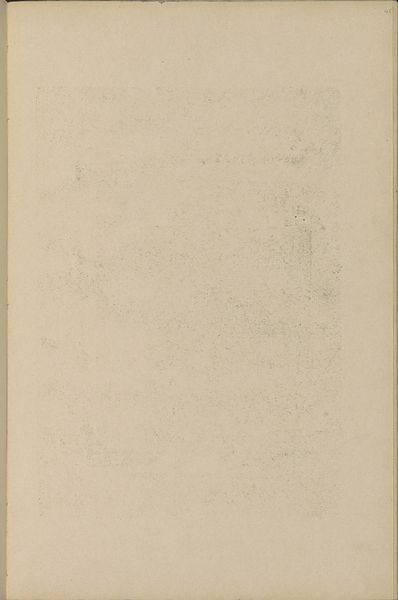
Here is Willem Witsen's 'Abklatsch van een krijttekening' at the Rijksmuseum, whose date is unknown. The work has a subdued palette, dominated by expanses of off-white paper, drawing our attention to the surface itself. An indistinct gray shape occupies the top right area. The drawing appears almost ghostly. In terms of form and structure, Witsen uses a transfer technique to create a mirror image or "Abklatsch" of an earlier drawing. The composition is starkly divided, with most of the surface untouched, emphasizing the negative space around the faint image. The minimal visual information encourages an engagement with the process of art-making itself. The act of transfer implies a deconstruction of the original form, challenging traditional notions of artistic creation and originality. The almost empty space invites you to complete the image, blurring the boundary between the artwork and the observer's perception, an idea that continually evolves with each viewing and interpretation.

Artwork details
- Medium
- drawing, paper, ink
- Location
- Rijksmuseum
- Copyright
- Rijks Museum: Open Domain
Tags
drawing
impressionism
paper
ink
Comments
No comments
About this artwork
Here is Willem Witsen's 'Abklatsch van een krijttekening' at the Rijksmuseum, whose date is unknown. The work has a subdued palette, dominated by expanses of off-white paper, drawing our attention to the surface itself. An indistinct gray shape occupies the top right area. The drawing appears almost ghostly. In terms of form and structure, Witsen uses a transfer technique to create a mirror image or "Abklatsch" of an earlier drawing. The composition is starkly divided, with most of the surface untouched, emphasizing the negative space around the faint image. The minimal visual information encourages an engagement with the process of art-making itself. The act of transfer implies a deconstruction of the original form, challenging traditional notions of artistic creation and originality. The almost empty space invites you to complete the image, blurring the boundary between the artwork and the observer's perception, an idea that continually evolves with each viewing and interpretation.
Comments
No comments