1637
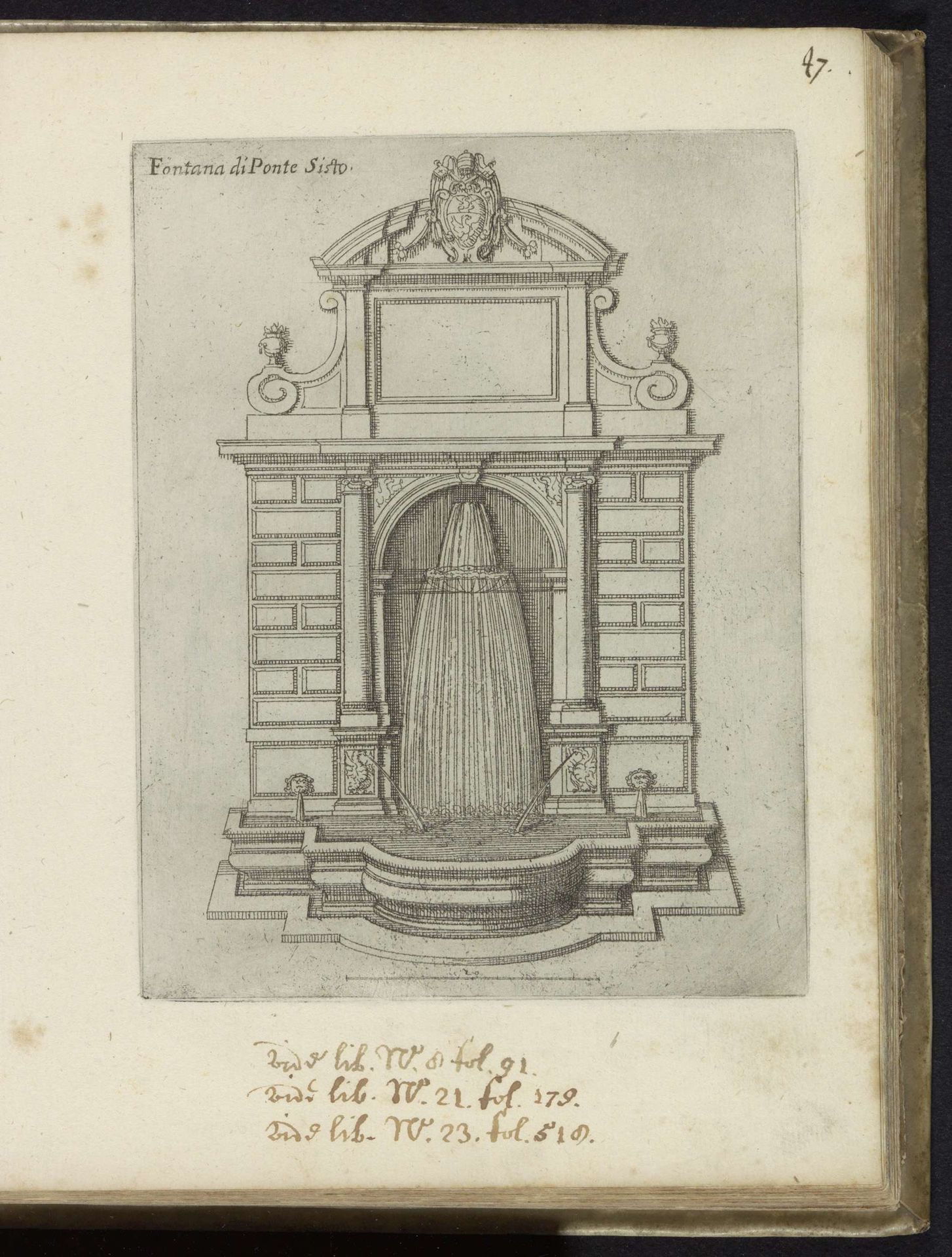
Fontana di Ponte Sisto te Rome

Listen to curator's interpretation
Curatorial notes
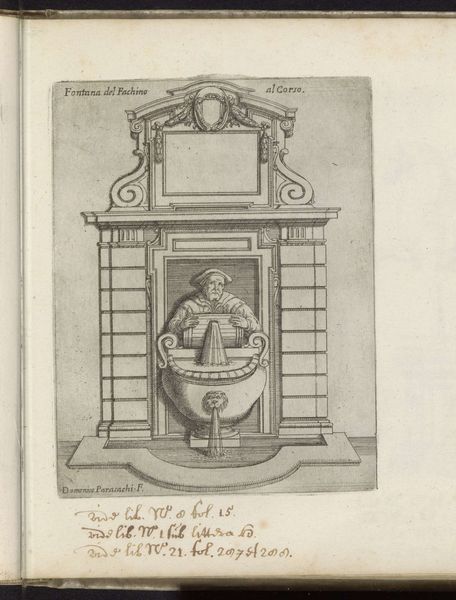
Domenico Parasacchi made this etching of the Fontana di Ponte Sisto in Rome sometime between 1600 and 1650. Notice how the cool grey lines on the light page achieve a remarkable sense of depth and volume. The artist balances the graphic representation of the fountain’s architectural elements with the fluid depiction of falling water, and in doing so, establishes a dialectic. On the one hand, we have a grid of neatly arranged rectangular blocks, while on the other, we have the curved archway and the gushing water contained within it. This tension may mirror a larger philosophical debate of the period, in which the rational order of classicism was questioned by a new interest in naturalism. Consider how the artist uses line to define the fountain’s form and its function as a conduit for water. Parasacchi's representation becomes a meditation on the intersection of art, architecture, and the natural world. The fountain is not merely depicted, it is re-imagined as a symbolic structure.