1565 - 1630
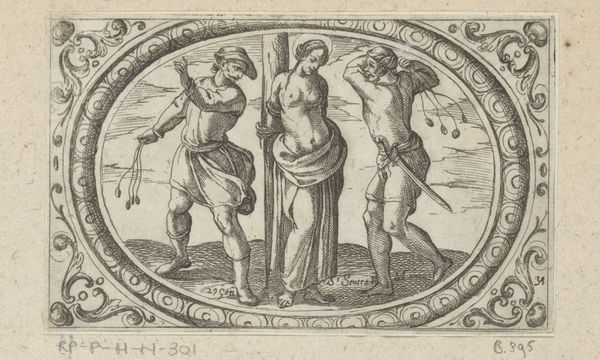
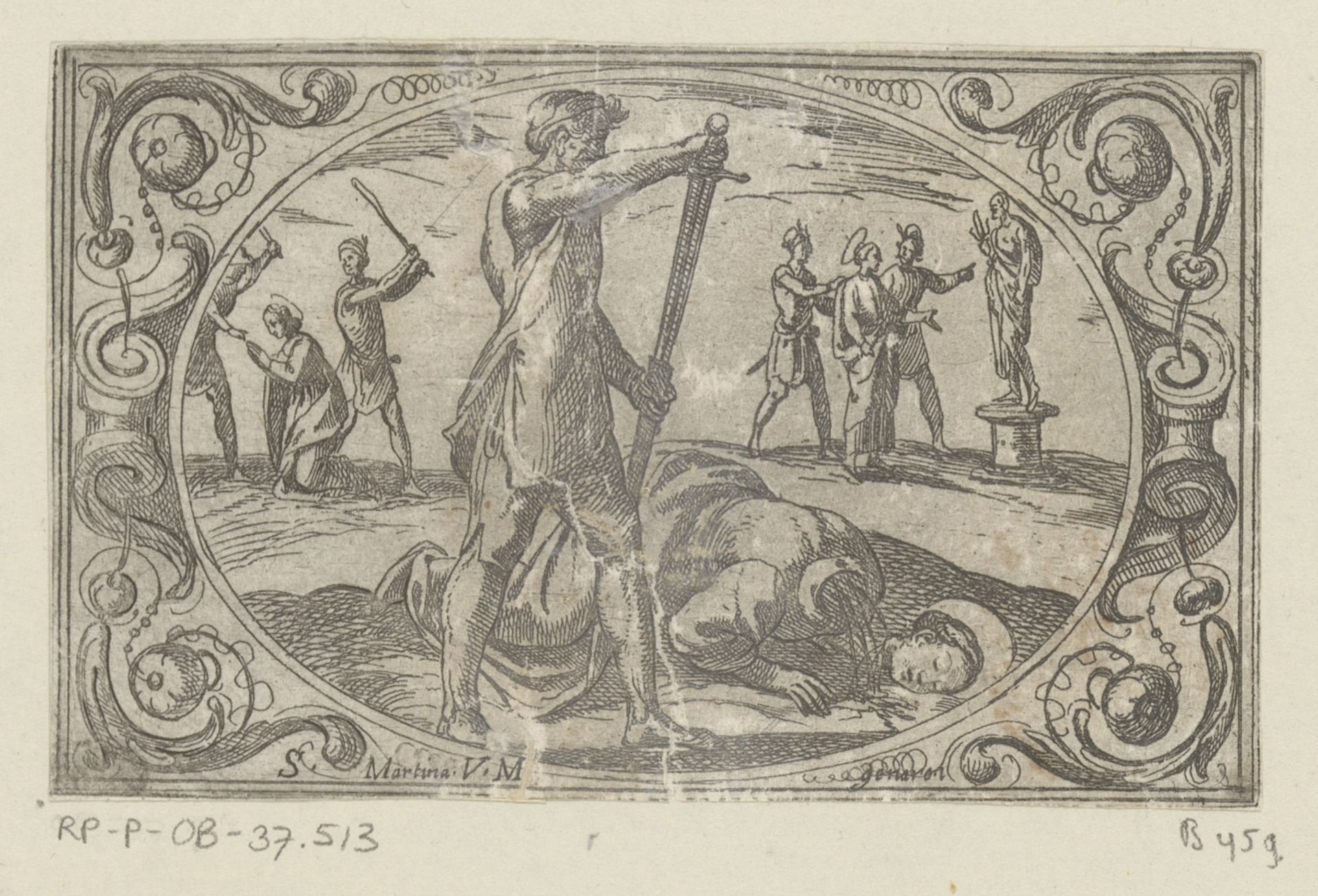
H. Martina

Antonio Tempesta
1555 - 1630Location
RijksmuseumListen to curator's interpretation
Curatorial notes
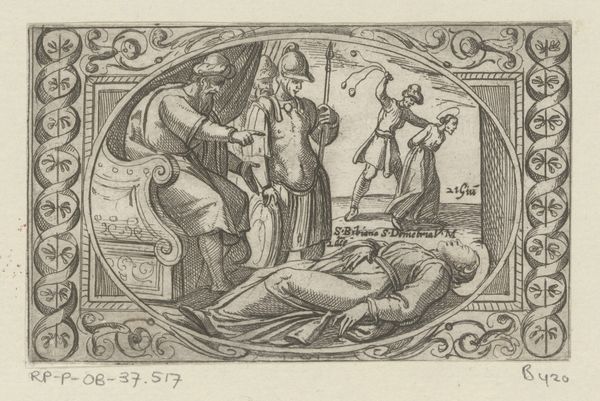
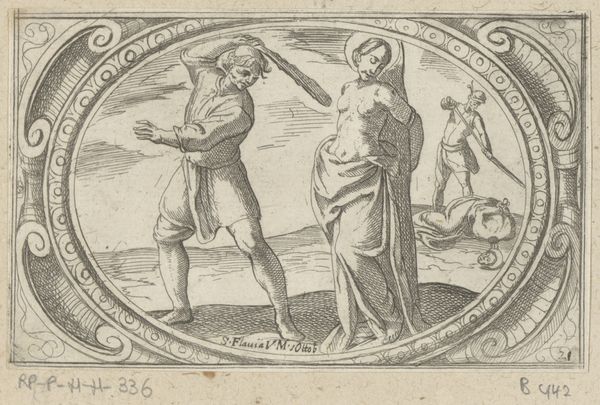
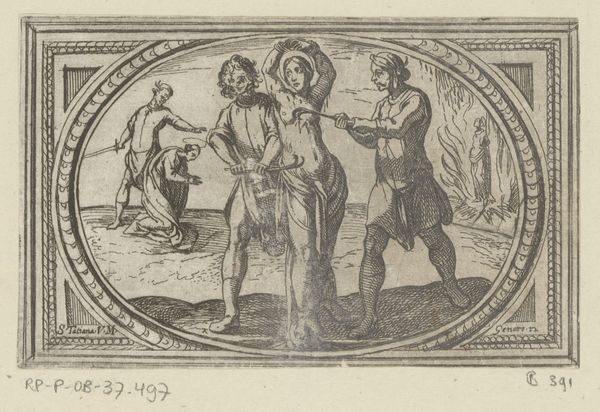
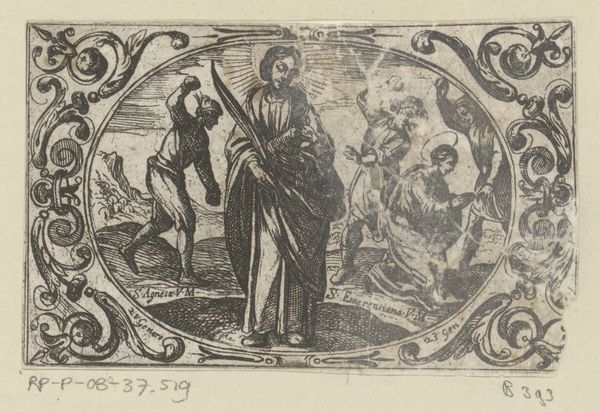
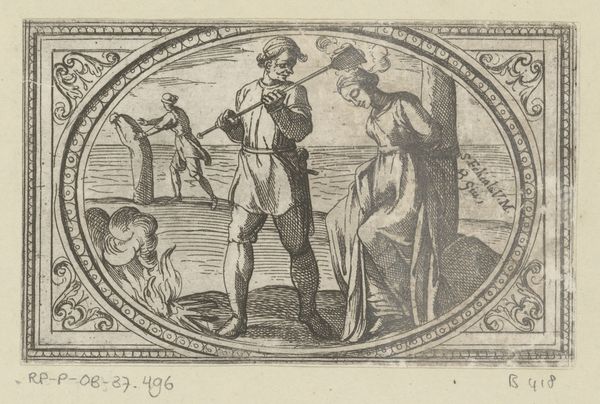
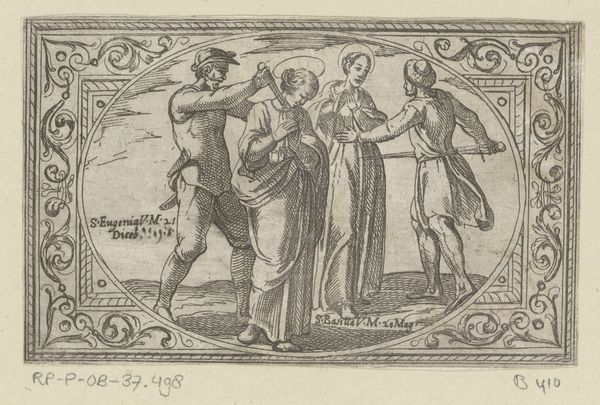
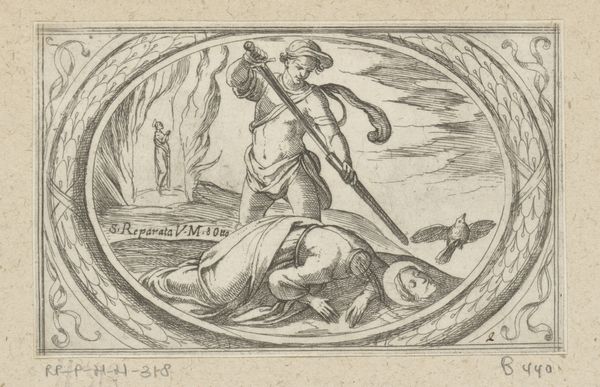
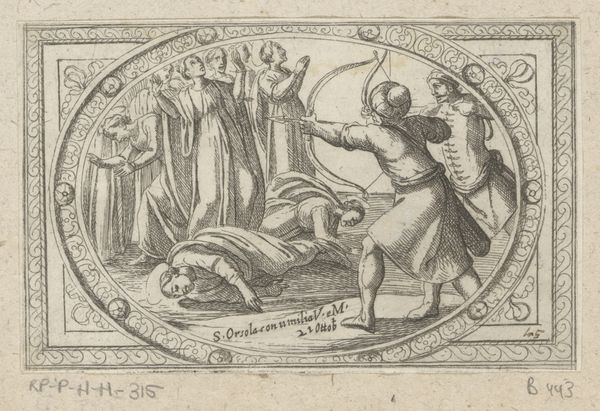
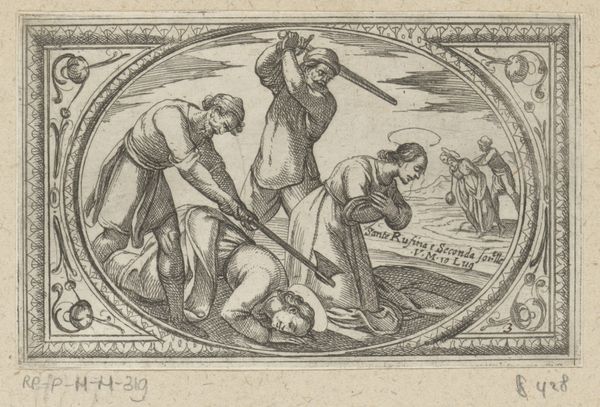
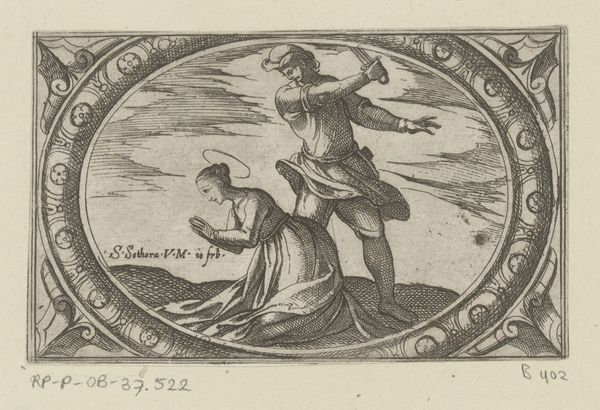
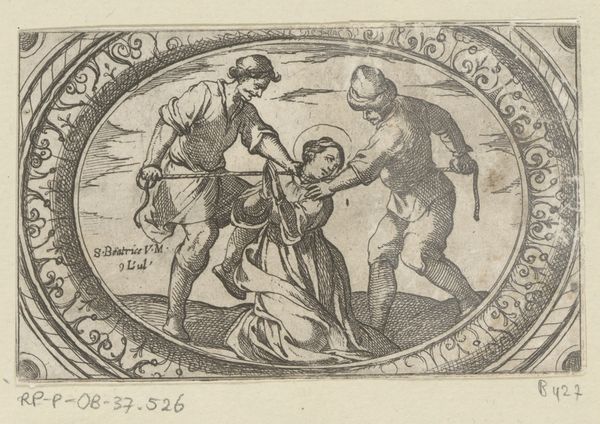
Editor: This is "H. Martina," an engraving by Antonio Tempesta, created sometime between 1565 and 1630. The scene is intense, with figures seemingly caught in a moment of violent action, all contained within this decorative oval frame. What stands out to you? Curator: What I find compelling is thinking about the production of this print. It’s an etching, an engraving, printed using ink on paper. The labor involved – the skill of the engraver to translate this dramatic scene onto a copper plate, the social context within which devotional prints were consumed, that's where the real story lies. Editor: So you're more interested in the process than the religious narrative being depicted? Curator: Precisely. The story, the supposed martyrdom, is secondary to understanding the print as a commodity. Who was commissioning these? Who was buying them? What does the accessibility of a printed image do for religious practices? How does it shape visual culture beyond elite circles? Editor: That makes me think about the accessibility of images now, compared to then. Everyone has a camera in their pocket, but an engraving like this would have been relatively rare and special. Curator: Exactly. And that rarity directly affects its meaning. Look closely at the lines – each one painstakingly etched, each impression a physical process. Consider the economic value, and the labour value in Tempesta's studio and distribution networks needed to produce multiples of it. Do you think a photograph today carries that same weight of human effort and historical context? Editor: I guess not. It's definitely changed my perspective, focusing on the physical making of the art rather than just what's being shown. I'll definitely look at prints differently now.