About this artwork
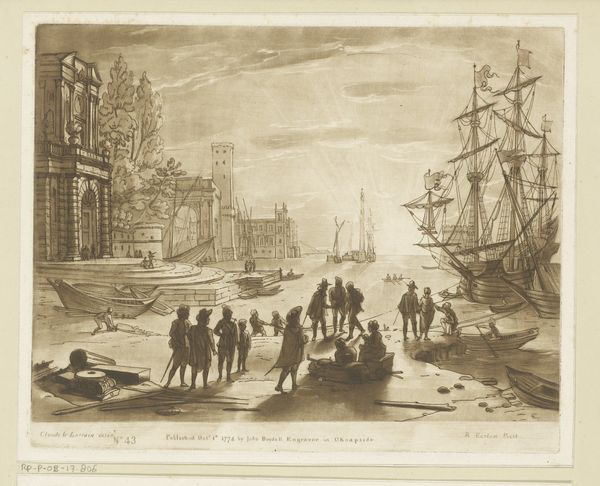
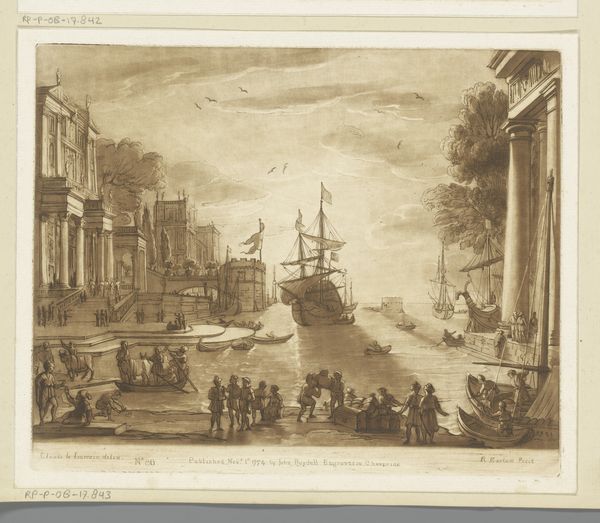
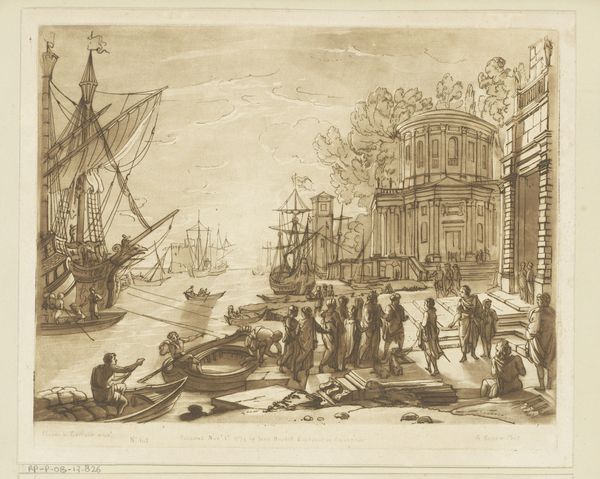
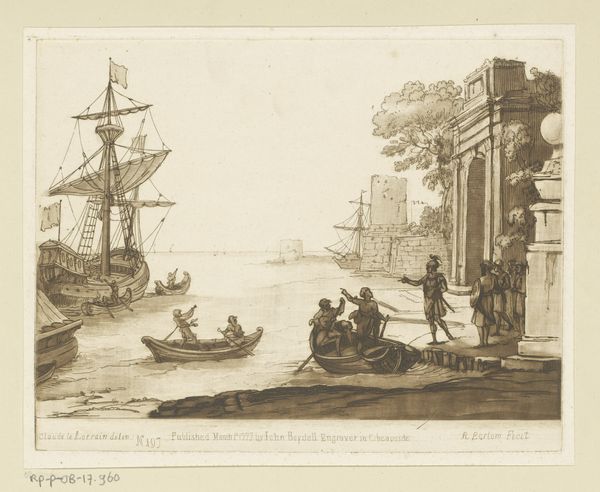
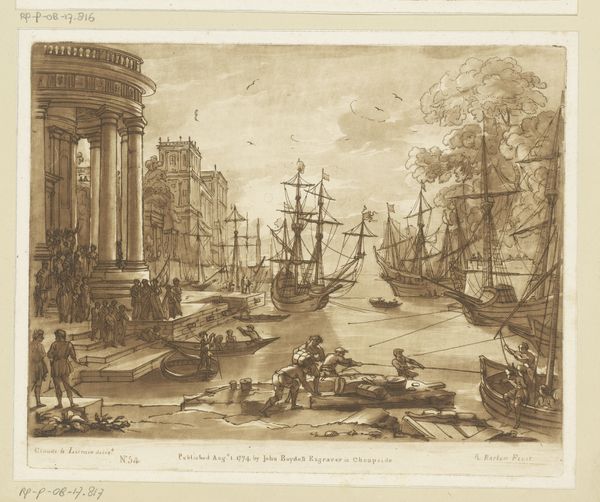
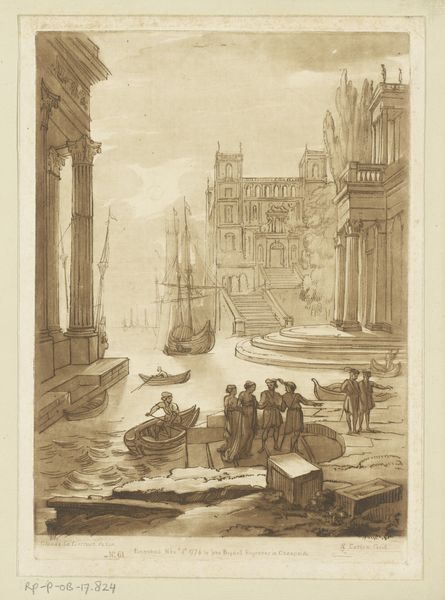
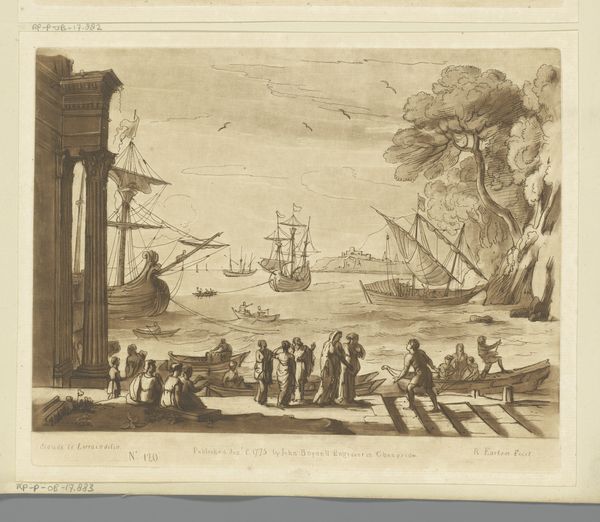
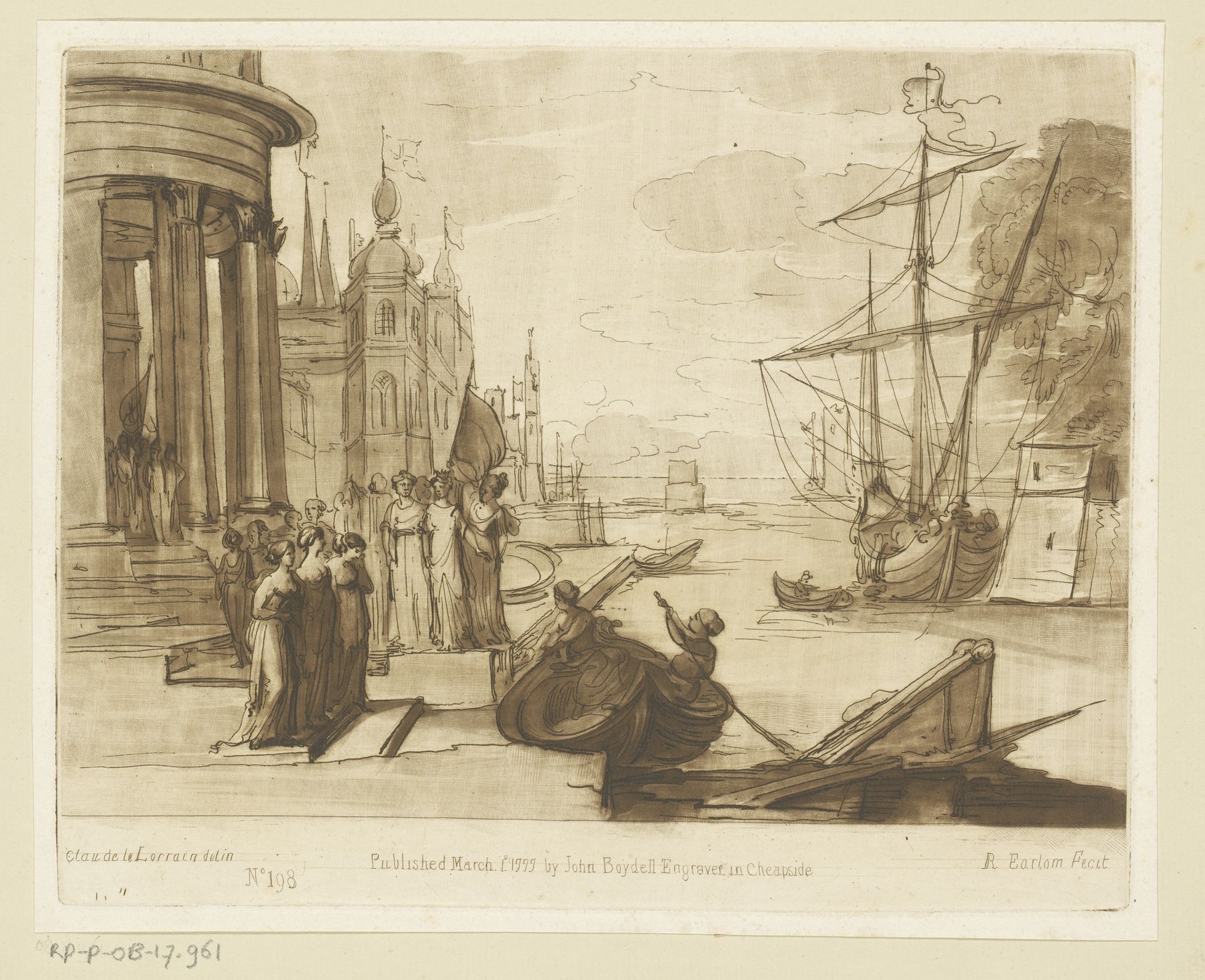
This sepia drawing by Richard Earlom, made around 1773, captures the embarkation of Saint Ursula and her virgins with delicate precision. The symmetrical arrangement, juxtaposing classical architecture on the left with a majestic ship on the right, suggests a world in poised equilibrium. Earlom's technique is crucial to our understanding here. Notice how the delicate lines and shading create a sense of depth and atmosphere, drawing the viewer into the scene. The figures, rendered with subtle variations in tone, seem poised between the earthly and the ethereal, their forms emerging from the muted palette. This careful manipulation of light and shadow lends the piece a dreamlike quality, as if we are witnessing a vision rather than a historical event. The linear quality in this composition, where buildings and ship converge, offers a structured perspective. Earlom employs visual elements to create not just a picture, but a narrative that prompts contemplation on faith, destiny, and the passage of time. It exemplifies how formal constraints can serve as a conduit for deeper intellectual and emotional engagement.
Zeehaven met inscheping van H. Ursula en haar maagden
Possibly 1777

Richard Earlom
1743 - 1822Location
RijksmuseumArtwork details
- Dimensions
- height 208 mm, width 260 mm
- Location
- Rijksmuseum
- Copyright
- Rijks Museum: Open Domain
Comments
Share your thoughts
About this artwork
This sepia drawing by Richard Earlom, made around 1773, captures the embarkation of Saint Ursula and her virgins with delicate precision. The symmetrical arrangement, juxtaposing classical architecture on the left with a majestic ship on the right, suggests a world in poised equilibrium. Earlom's technique is crucial to our understanding here. Notice how the delicate lines and shading create a sense of depth and atmosphere, drawing the viewer into the scene. The figures, rendered with subtle variations in tone, seem poised between the earthly and the ethereal, their forms emerging from the muted palette. This careful manipulation of light and shadow lends the piece a dreamlike quality, as if we are witnessing a vision rather than a historical event. The linear quality in this composition, where buildings and ship converge, offers a structured perspective. Earlom employs visual elements to create not just a picture, but a narrative that prompts contemplation on faith, destiny, and the passage of time. It exemplifies how formal constraints can serve as a conduit for deeper intellectual and emotional engagement.
Comments
Share your thoughts