![Untitled [portrait of a seated gentleman] by Jeremiah Gurney](/_next/image?url=https%3A%2F%2Fd2w8kbdekdi1gv.cloudfront.net%2FeyJidWNrZXQiOiAiYXJ0ZXJhLWltYWdlcy1idWNrZXQiLCAia2V5IjogImFydHdvcmtzL2Y4MmJjZTIwLWI4NWUtNDVhNC05MmY1LTBjZjdhMGYzMTgwNi9mODJiY2UyMC1iODVlLTQ1YTQtOTJmNS0wY2Y3YTBmMzE4MDZfZnVsbC5qcGciLCAiZWRpdHMiOiB7InJlc2l6ZSI6IHsid2lkdGgiOiAxOTIwLCAiaGVpZ2h0IjogMTkyMCwgImZpdCI6ICJpbnNpZGUifX19&w=3840&q=75)
Untitled [portrait of a seated gentleman] 1852 - 1858
0:00
0:00


daguerreotype, photography
#
portrait
#
sculpture
#
daguerreotype
#
photography
#
united-states
#
decorative art
Dimensions: 5 1/2 x 4 1/4 in. (13.97 x 10.8 cm) (image)5 15/16 x 4 11/16 x 3/4 in. (15.08 x 11.91 x 1.91 cm) (mount)
Copyright: Public Domain
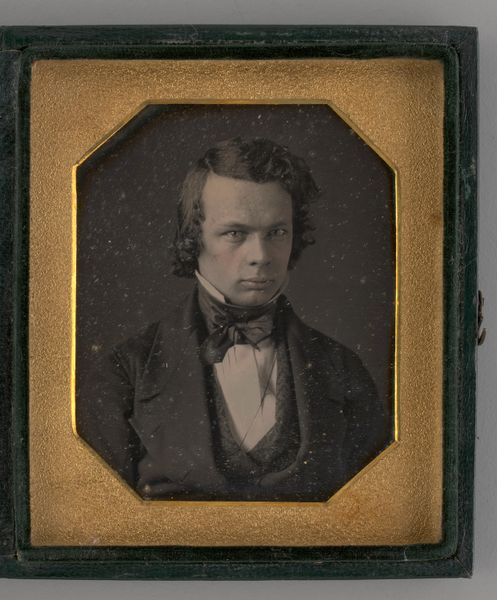
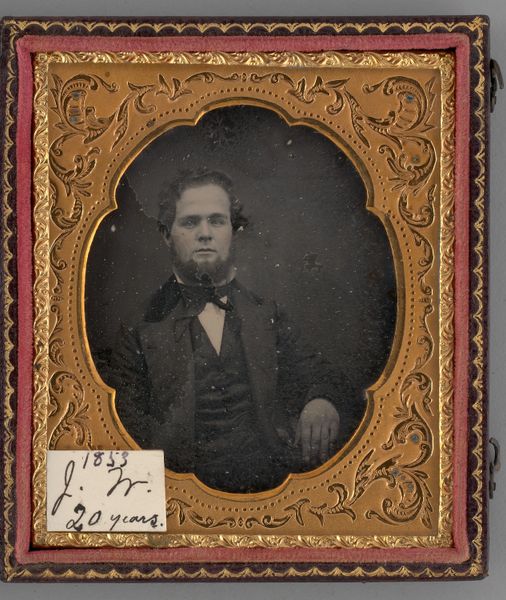
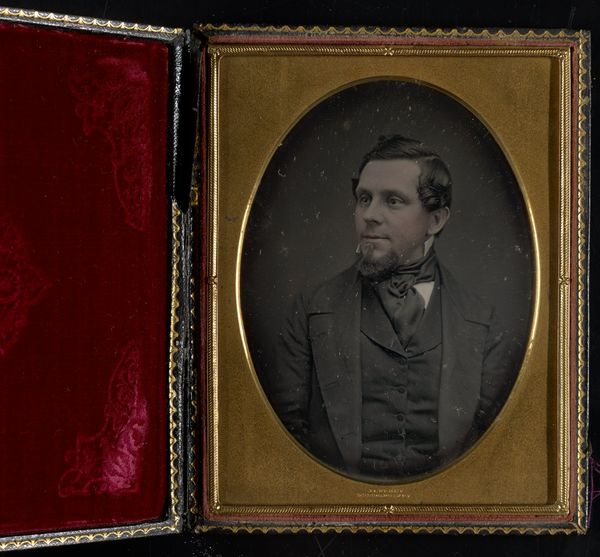
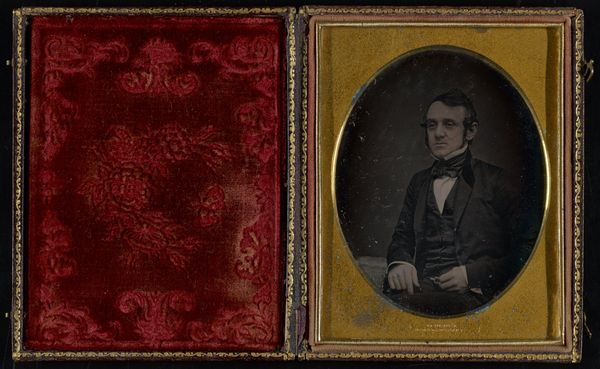
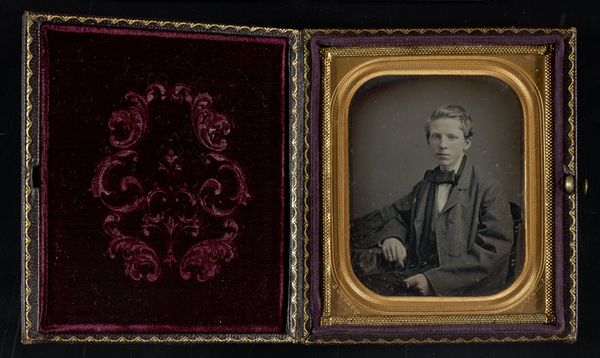
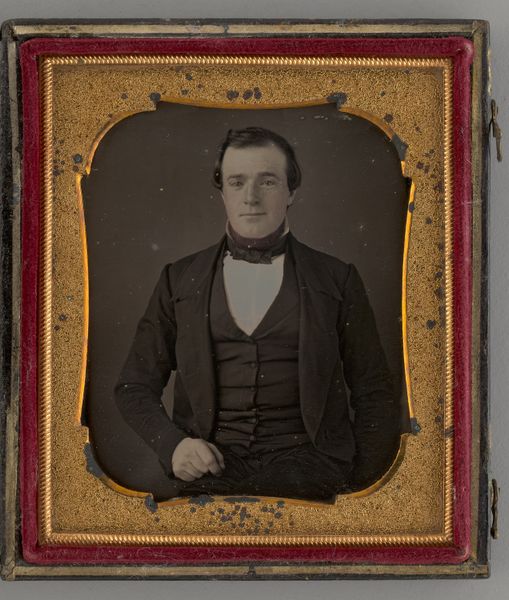
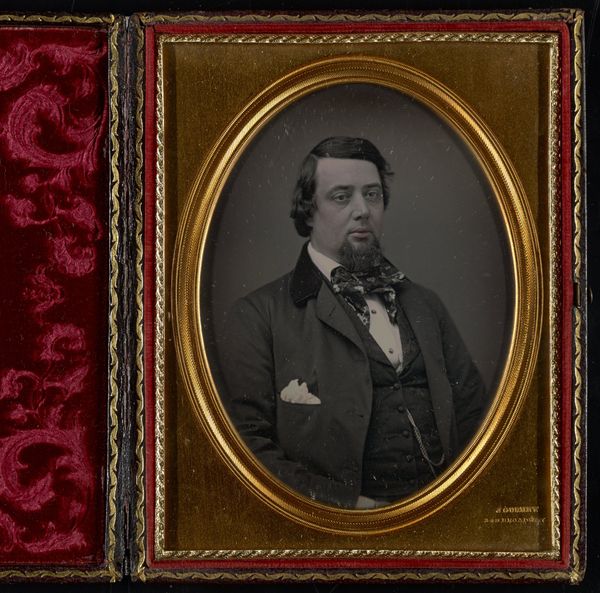
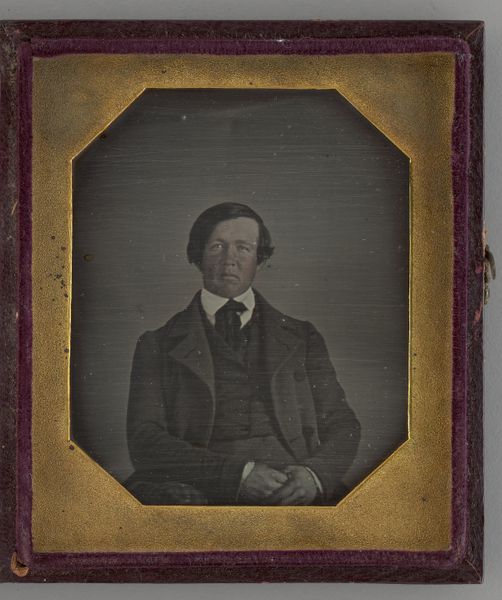
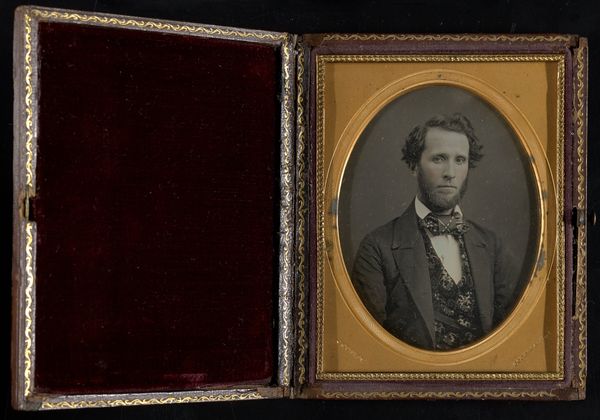
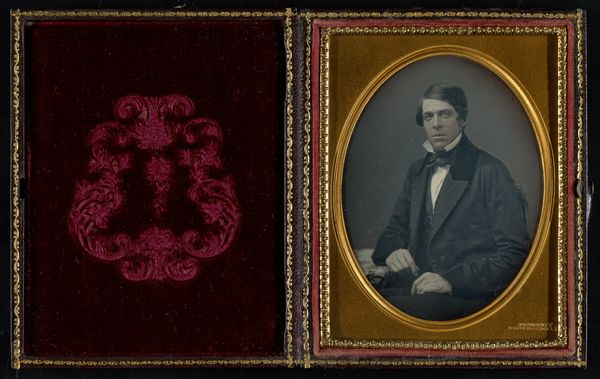
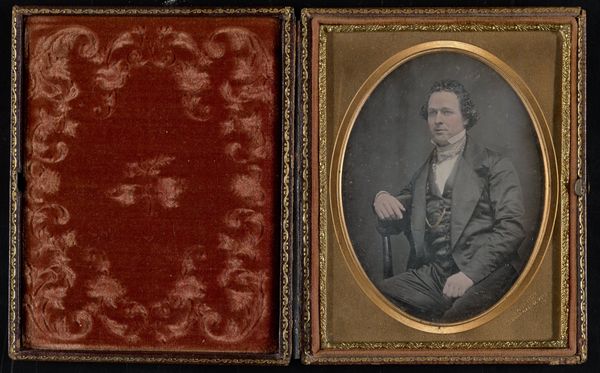
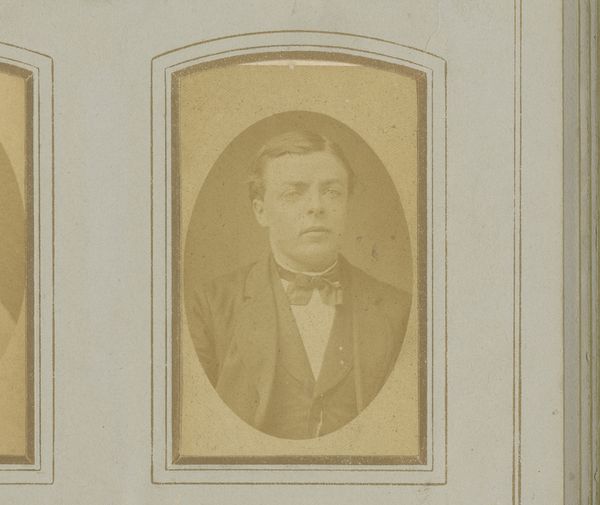
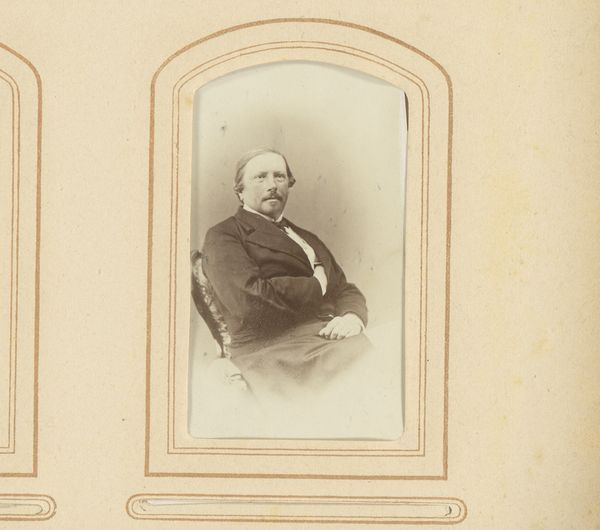
Curator: Standing before us, we have an untitled daguerreotype, likely created between 1852 and 1858. The artist is Jeremiah Gurney, and it’s currently housed here at the Minneapolis Institute of Art. It presents a seated gentleman. Editor: My first thought? What a formidable presence! There's a stark, almost haunting quality. The way the light catches, or doesn't, in those deep-set eyes… Makes me wonder what story is hiding behind that buttoned-up jacket. Curator: Right, the process itself lends to that severity. Daguerreotypes were incredibly meticulous. Polished silver-plated copper, fumes of iodine, mercury vapor to develop the image… a complex and often perilous dance with chemistry to create these portraits. Each one unique, unrepeatable. Editor: And there’s a preciousness to it, right? That the image exists almost locked away, shielded within the decorative case lined with this luscious, dark red velvet—that case being its context, I think. As though it’s protecting a memory too fragile to be exposed. Curator: Absolutely, that presentation is crucial. It speaks to the sitter's status and the value placed on image making during this era, and the emerging merchant class employing photography as means of memorializing themselves, participating in cultural activities from which they were previously excluded.. Editor: Makes you wonder about labor though—that jacket itself speaks of work, but who made it? Who mined the silver for the plate? Who crafted the velvet? There’s a lot happening beyond just this man’s expression. Curator: Precisely! The materials, the making… it all connects to a network of production. The rise of photography coincides with massive industrial shifts, new forms of labor and consumption and memorial culture... Daguerreotypes aren't just artworks, they’re artifacts of a changing world, accessible to more middle class consumers than traditional painting had been. Editor: Which leads me to consider: he seems rather burdened, or self conscious? All these layers—the metal, the glass, the formality of the suit, this social expectation... you can almost feel him wanting to breathe, wanting to simply be. Maybe that makes this image powerful, seeing that quiet struggle in such stark clarity. Curator: An excellent observation. I hadn't considered that the sitter seems burdened by the image itself. This has been really helpful to bring fresh ideas to older objects! Editor: Yes, it has; this was a wonderful object to spark insight. Thank you for sharing these insights!
Comments
No comments
Be the first to comment and join the conversation on the ultimate creative platform.
 Collect
 React
React Comment
More like this