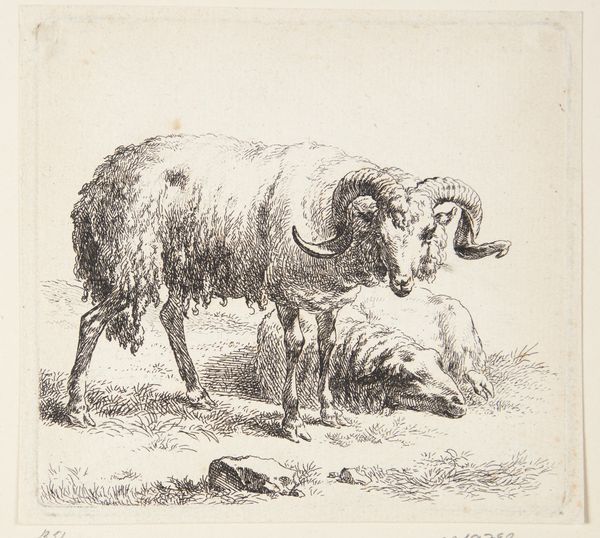
etching
#
etching
#
landscape
#
genre-painting
#
realism
Dimensions: height 118 mm, width 175 mm
Copyright: Rijks Museum: Open Domain
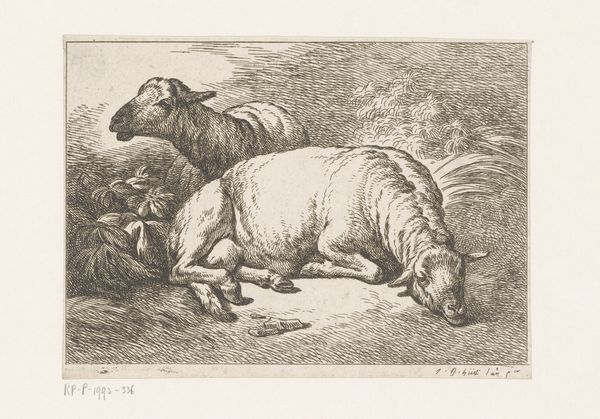
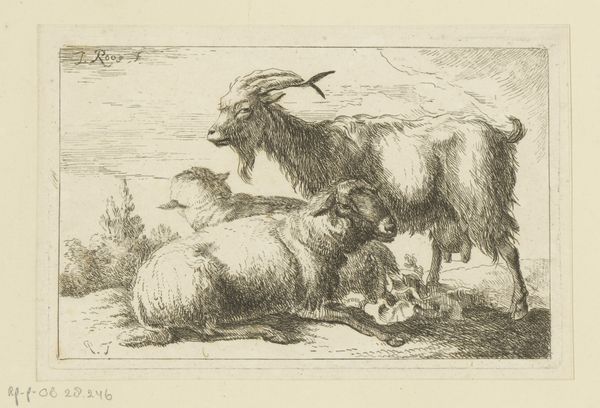
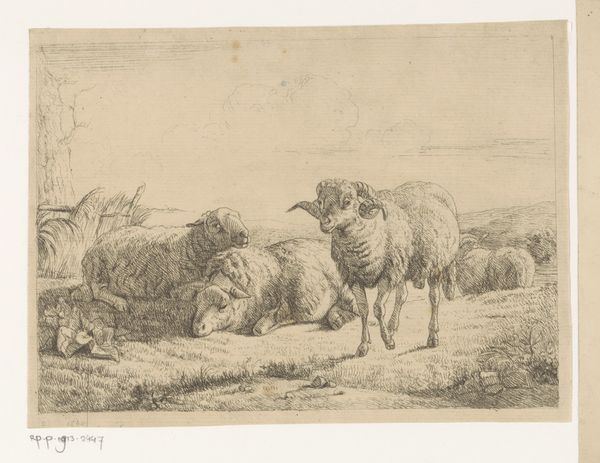
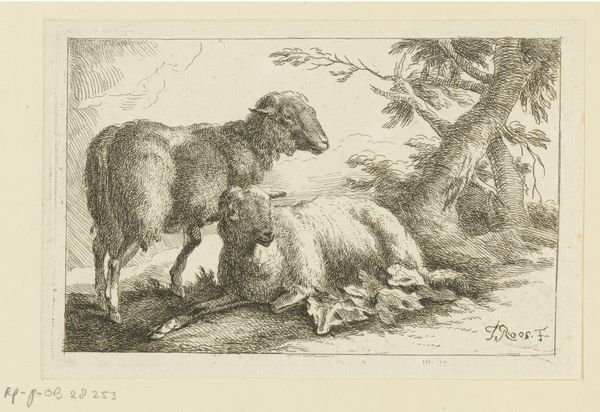
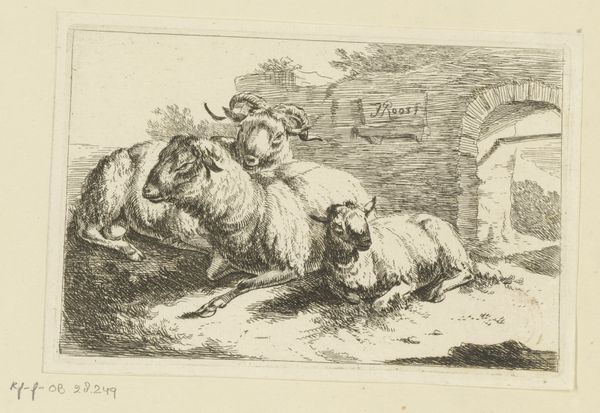
Editor: We’re looking at “Schaap en een ram,” or “Sheep and a Ram,” an etching made in 1754 by Joseph Roos. It has this pastoral, almost calming feel. I'm curious though; beyond just depicting farm animals, what stories do you see within the lines of this print? Curator: Considering Roos’s print from a materialist perspective pushes us to investigate the processes of artistic creation in eighteenth-century Europe. Etching itself involves skilled labor, manipulating metal and acid. This image likely reflects a growing market for such prints – mass-produced, affordable art distributed beyond the elite. Where did Roos source his materials? Who acquired and viewed these images? These questions lead us to a wider understanding of artistic practice, production, and consumption. Editor: So, the choice of etching itself, the ability to replicate and distribute the artwork, that's the key here? Curator: Exactly. Think about the role of the sheep in this era: agricultural resources, commodity, and subject. Consider also how Roos crafts the image. He highlights texture through the marks left by the etching tools. He forces us to ask ourselves why a growing urban audience were desiring images of an idealised countryside, consuming printed representations of rural life even as their economic systems become industrial. Editor: It sounds like the artwork becomes part of the commodity chain. By examining this we're getting a glimpse into the lives of both the artists and consumers in the 1700's. I will certainly look at the etching in more depth after our conversation. Curator: Absolutely. Understanding the conditions in which art is made gives us valuable insight into both social context and historical perception.
Comments
No comments
Be the first to comment and join the conversation on the ultimate creative platform.
 Collect
 React
React Comment
More like this