drawing, print, engraving
#
portrait
#
drawing
#
neoclacissism
# print
#
caricature
#
genre-painting
#
engraving
Dimensions: 5 5/16 x 4 5/16 in. (13.5 x 11 cm) (image) 7 1/2 x 5 11/16 in. (19 x 14.5 cm) (sheet)
Copyright: Public Domain
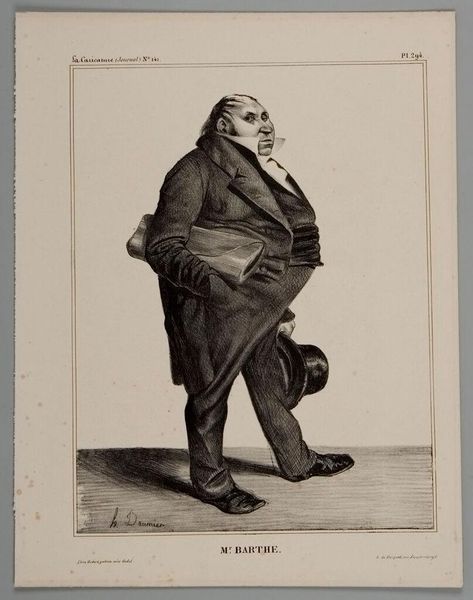
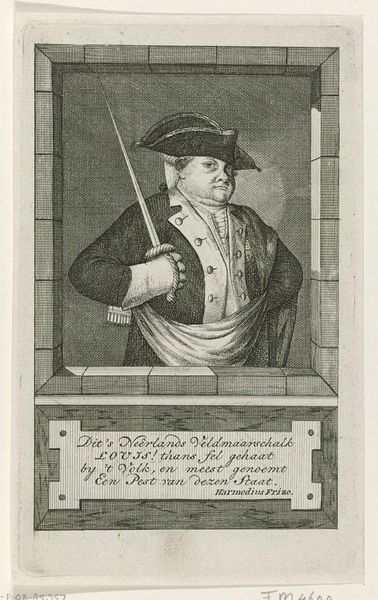
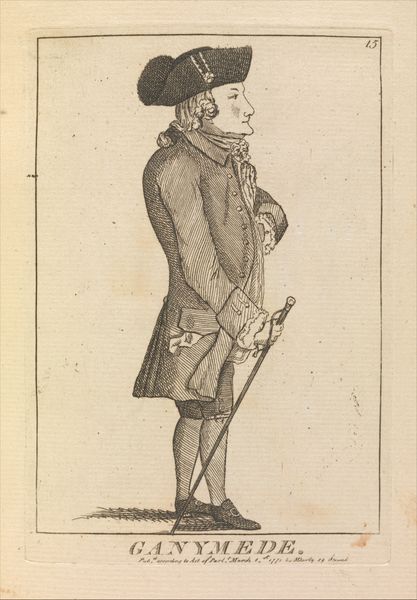
Editor: So, this print is called "I've Got de Monish", dating back to 1792. It's a black and white engraving. I'm immediately struck by the stark caricature and that phrase—"I've got de Monish"—how do you interpret that in terms of its historical context? Curator: The caricature points towards a critical, likely satirical commentary on social status, possibly tied to financial standing. The broken English title, "I've Got de Monish," hints at a deliberate mocking, maybe reflecting stereotypes of newly wealthy individuals trying to flaunt their position, but being seen as vulgar or unsophisticated by established society. It’s crucial to consider how prints like these functioned in the public sphere. Who do you think was the target audience for such imagery? Editor: I'd guess the middle class, maybe? People who would understand the satire. Was this type of social commentary common through art? Curator: Exactly. Prints like this circulated widely and were relatively accessible, fueling public discourse. They tapped into existing anxieties around wealth, class mobility, and cultural identity. Consider how anxieties about "new money" have played out throughout history. This print, in its visual and textual language, becomes a record of those tensions, reflecting both the reality and the perceptions of social change. Editor: That’s fascinating! It makes me think about how even satirical art can unintentionally reinforce harmful stereotypes while commenting on them. Curator: Precisely. The image itself plays into caricatured tropes that likely existed already; prints like these are therefore essential when examining art, and understanding art’s effect and affect on a wider population and its thought. Now looking at the print, what do you see beyond the historical context, as far as his portrayal, the face? Editor: Now looking closer at the artwork, his large nose, grimace, heavy coat, I can certainly perceive a stereotype with clear purpose and potentially bad intent, but regardless that the artist aimed to reveal the faults within the public figure it comes from! I hadn’t quite thought of that before! Curator: And that critical engagement, that’s the heart of art history! We unravel not just what the artist intended, but what the work did, and what it continues to do.
Comments
No comments
Be the first to comment and join the conversation on the ultimate creative platform.
 Collect
 React
React Comment
More like this