
Curatorial notes
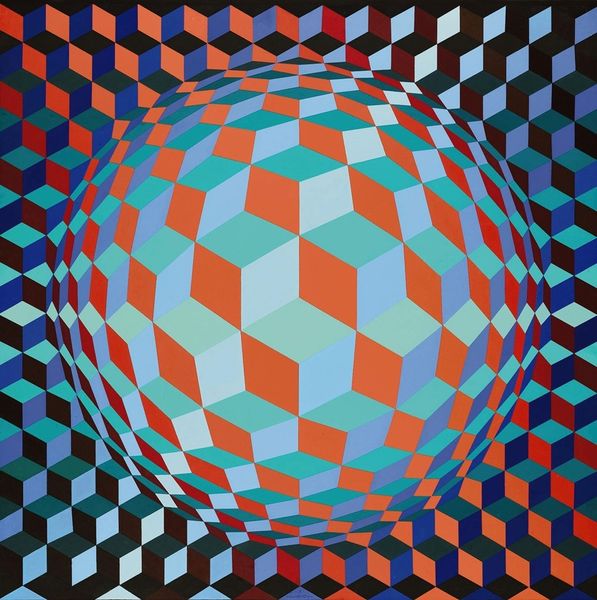
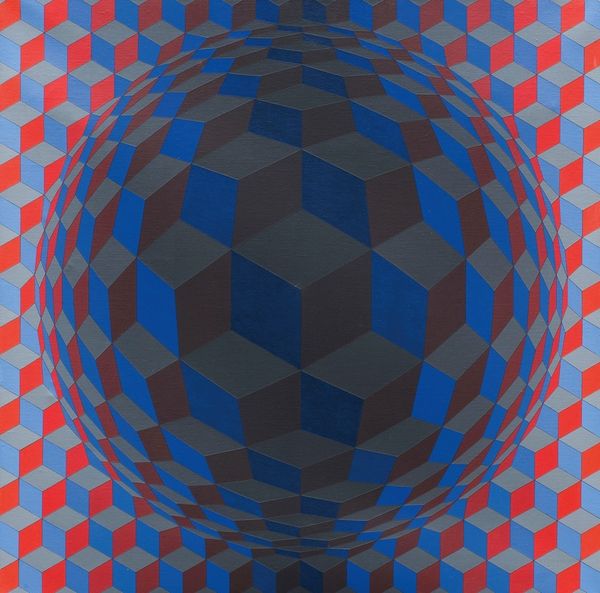
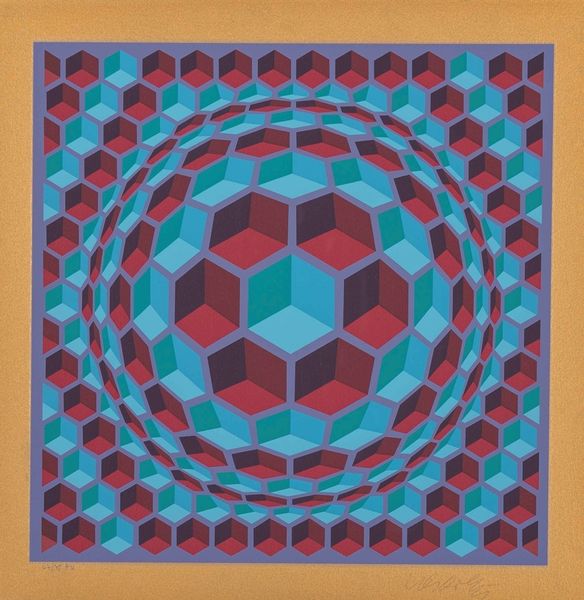
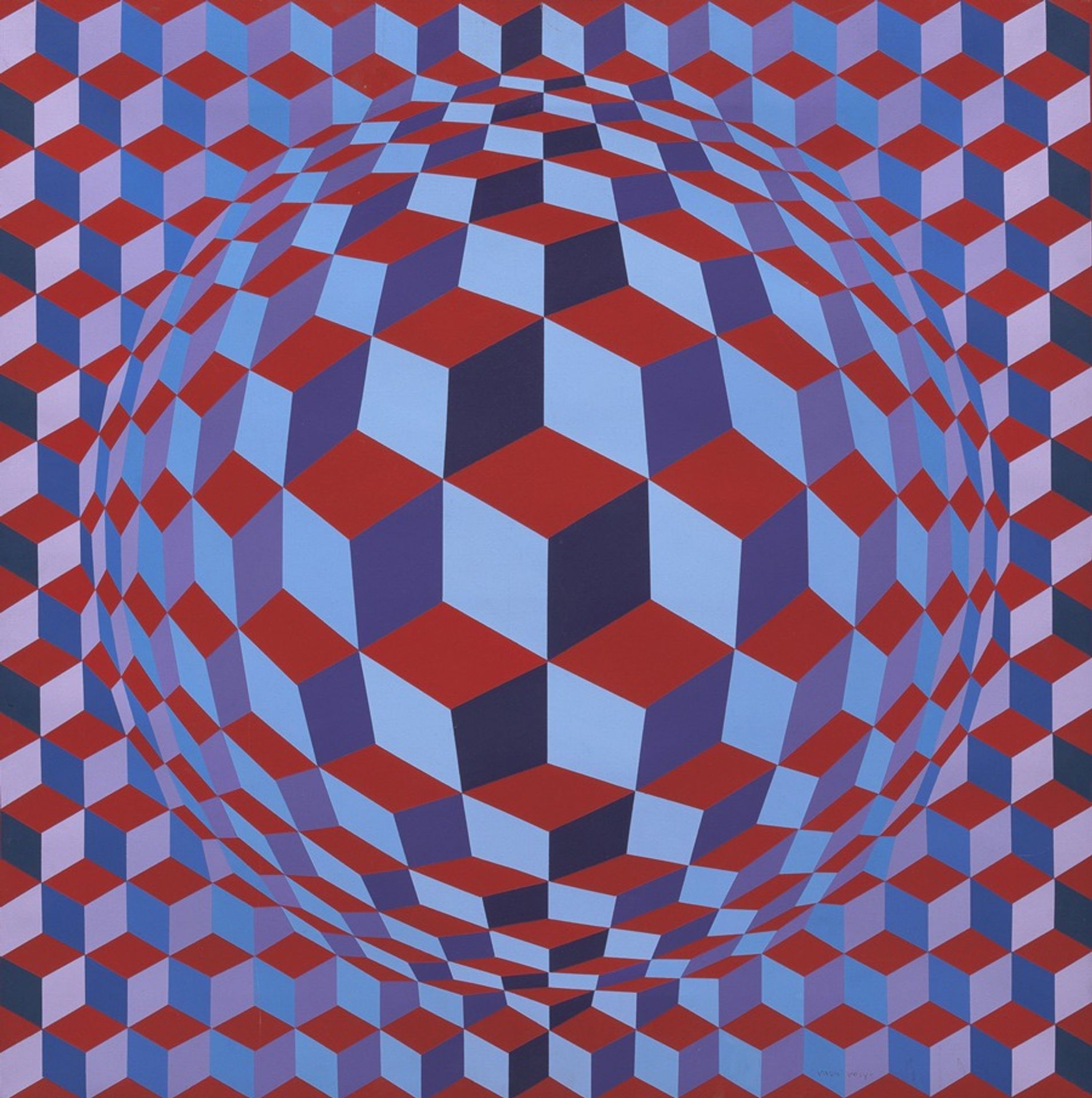
Curator: Victor Vasarely’s "CHEYT-N," crafted in 1981 using acrylic paint, presents a captivating optical illusion. Editor: It's quite striking! My immediate sense is one of dynamism—almost like a sphere bulging out, defying the two-dimensional canvas. The red, blue, and lavender palette is playful, yet carefully structured. Curator: Absolutely. Vasarely, a key figure in Op Art, aimed to challenge our perception. His work reflects a post-war fascination with science and technology and a utopian desire to integrate art into everyday life. "CHEYT-N" is emblematic of this vision, disrupting conventional viewing habits. Editor: The repetition of the cube-like shapes is almost hypnotic, wouldn't you say? I'm intrigued by how he creates depth and movement using just color and geometric form. It reminds me a bit of early computer graphics, with its rigid yet strangely organic feel. Curator: Consider, too, that Vasarely believed art should be accessible, even democratic. He intentionally designed works that could be easily reproduced and distributed, reaching a wider audience beyond the elite art world. There is something revolutionary in this gesture towards a broader viewership that must be understood, a way of deconstructing established elitist institutions and creating new, perhaps even egalitarian, viewing conditions. Editor: It certainly makes you think about the power of simple geometric elements to create such a complex, shifting image. I mean, if you just isolate each one it would just be a color block without much intrinsic value... Curator: I agree, and what's crucial here is the political message underneath. Vasarely used his art as an argument for visual communication as a form of knowledge production, suggesting an alternative framework from established linguistic models of knowledge. Editor: Indeed, viewing "CHEYT-N" is almost like performing a visual experiment, proving that less can be more. A bold statement on materiality! Curator: And on shifting perspectives on how we perceive space. It offers a lens through which to question the systems that govern our everyday reality, from the built environments to social power dynamics. Editor: I have to say I appreciate how our exchange really brought forth fresh elements, particularly considering materiality. Curator: Agreed! It shows that even within the seemingly sterile realm of abstract geometry, there is room to unveil deeper layers of social commentary and human agency.