About this artwork
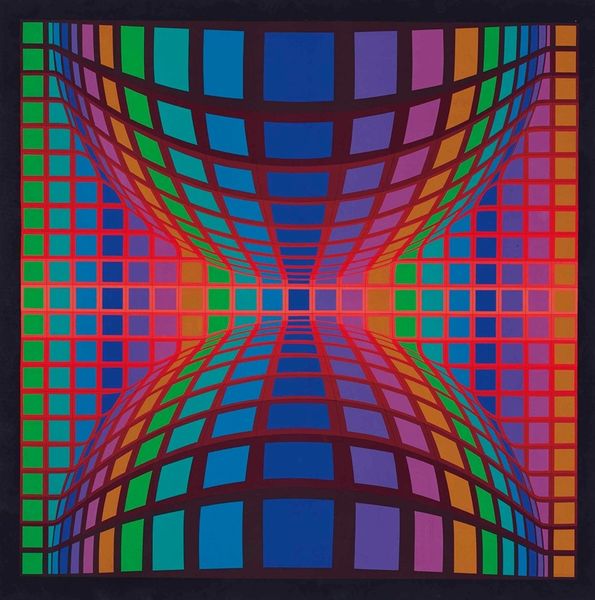
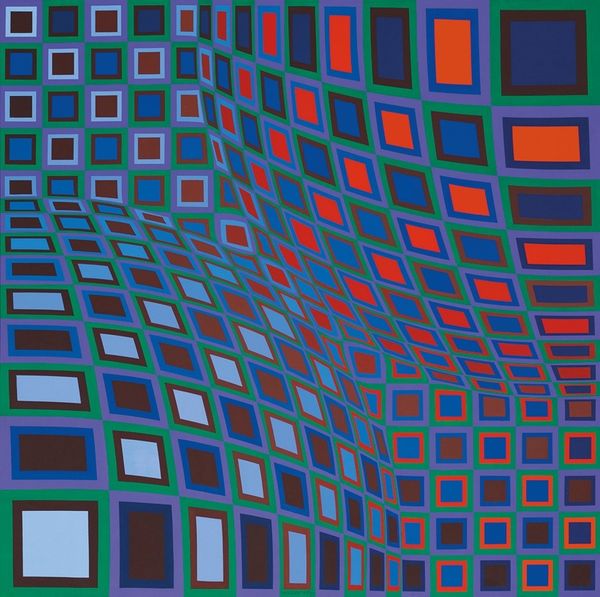
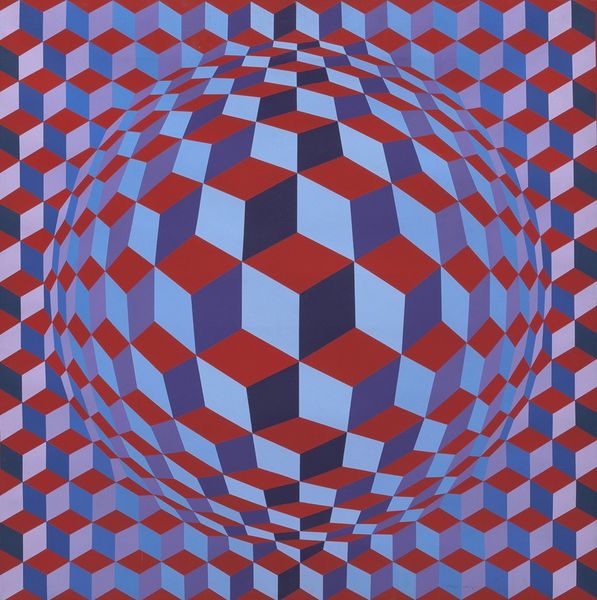
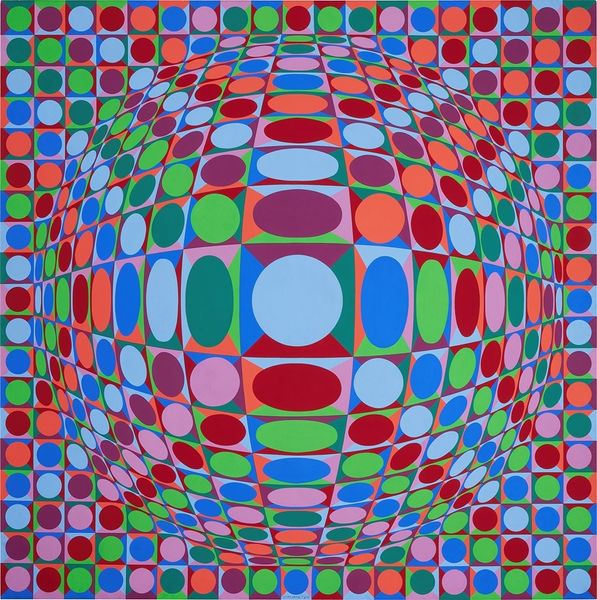
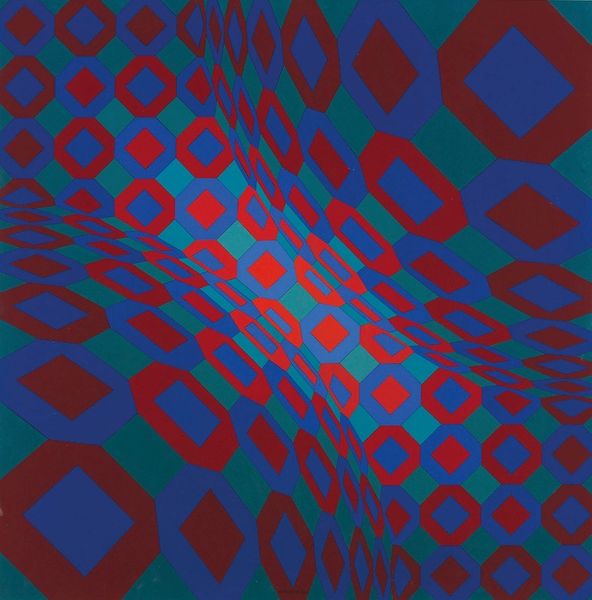
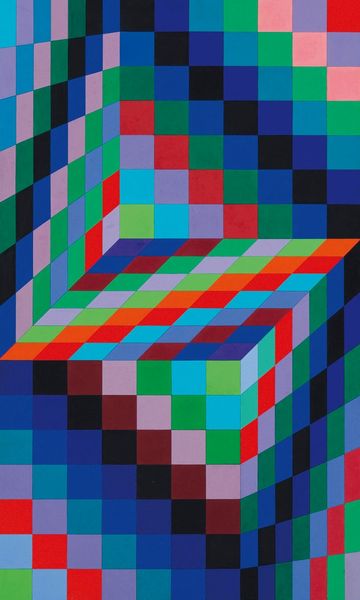
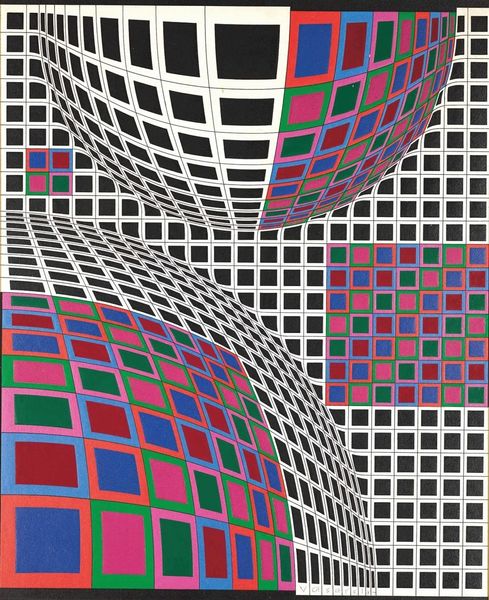
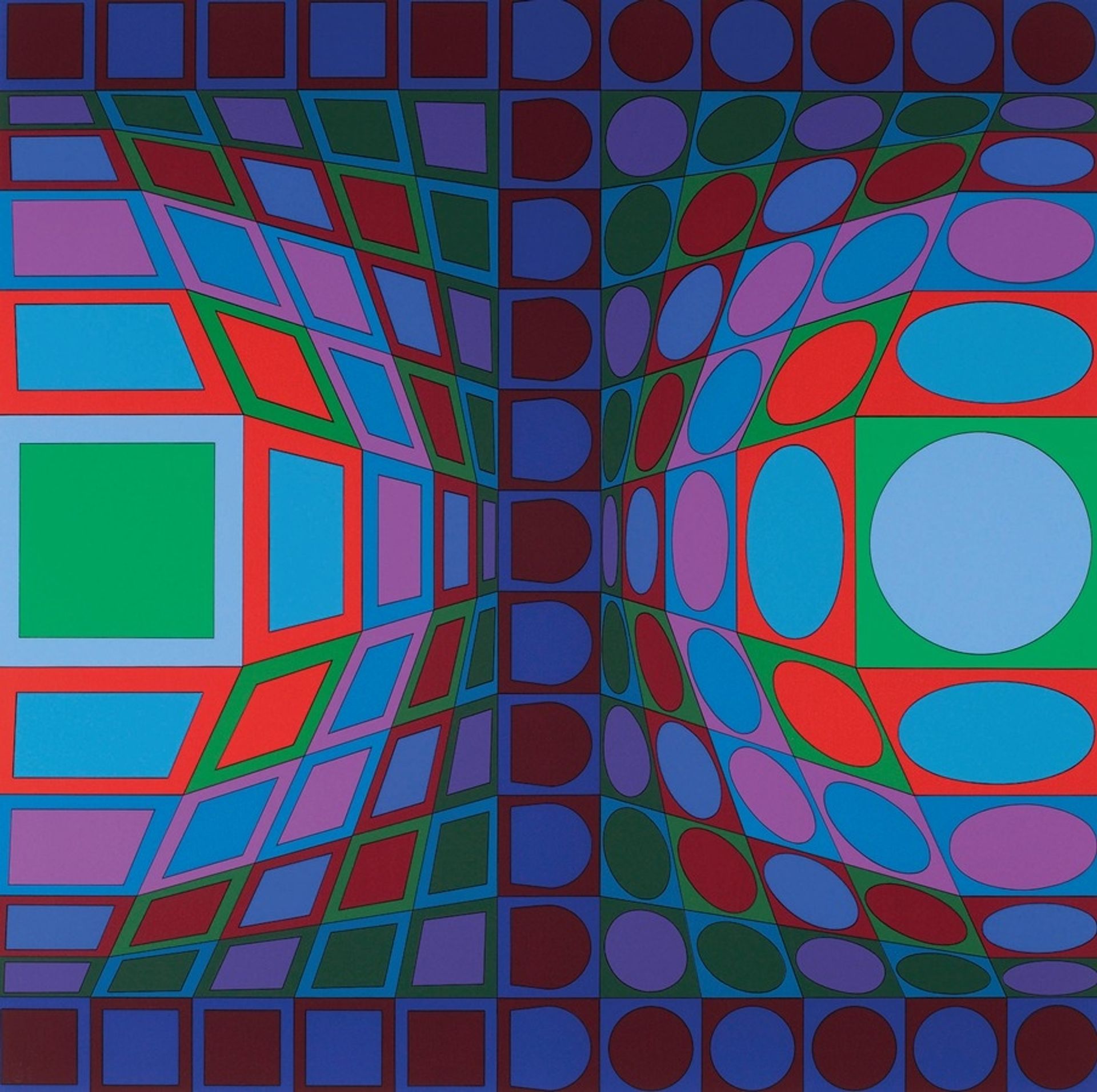
Victor Vasarely made this, "Vi-Va", date unknown, with pure, flat, unmodulated colours: reds, greens, blues, purples. The precision of this is almost hard to fathom. Up close, the shapes seem to warp and swim. Vasarely doesn't hide the mechanics of his process. We can clearly see the structure of the grid he's using, even as he bends and distorts it. Look at the bottom left-hand corner, and how the colour is consistent across the different shapes, squares, parallelograms, diamonds. This kind of consistency is important for how the piece feels overall: balanced, formal. Then consider how this area compares to the top right, and the way the shapes have been morphed into ellipses. The relationship between these two zones sets up the idea of the piece as a kind of game. It makes me think of Bridget Riley, another artist interested in these kinds of optical effects. But where Riley can feel quite austere, Vasarely embraces something more playful.

Artwork details
- Medium
- acrylic-paint
- Copyright
- Modern Artists: Artvee
Tags
op-art
acrylic-paint
abstract
geometric pattern
abstract pattern
minimal pattern
geometric
geometric-abstraction
repetition of pattern
vertical pattern
abstraction
pattern repetition
layered pattern
funky pattern
combined pattern
modernism
repetitive pattern
Comments
No comments
About this artwork
Victor Vasarely made this, "Vi-Va", date unknown, with pure, flat, unmodulated colours: reds, greens, blues, purples. The precision of this is almost hard to fathom. Up close, the shapes seem to warp and swim. Vasarely doesn't hide the mechanics of his process. We can clearly see the structure of the grid he's using, even as he bends and distorts it. Look at the bottom left-hand corner, and how the colour is consistent across the different shapes, squares, parallelograms, diamonds. This kind of consistency is important for how the piece feels overall: balanced, formal. Then consider how this area compares to the top right, and the way the shapes have been morphed into ellipses. The relationship between these two zones sets up the idea of the piece as a kind of game. It makes me think of Bridget Riley, another artist interested in these kinds of optical effects. But where Riley can feel quite austere, Vasarely embraces something more playful.
Comments
No comments