About this artwork
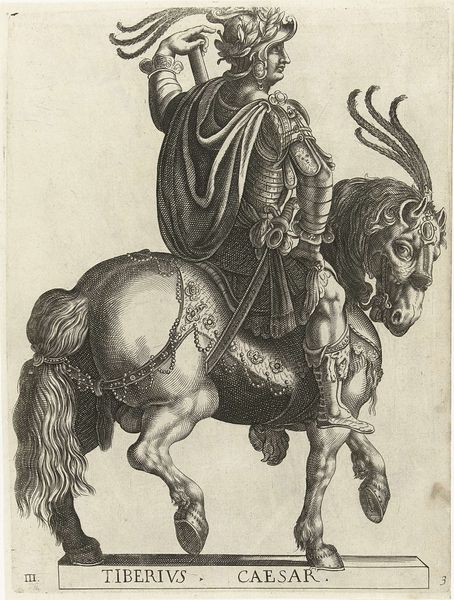
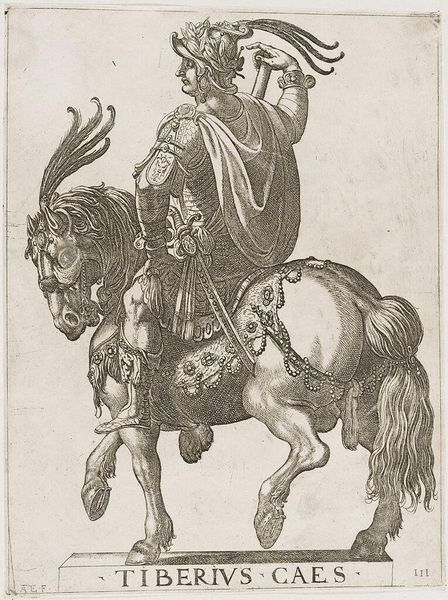
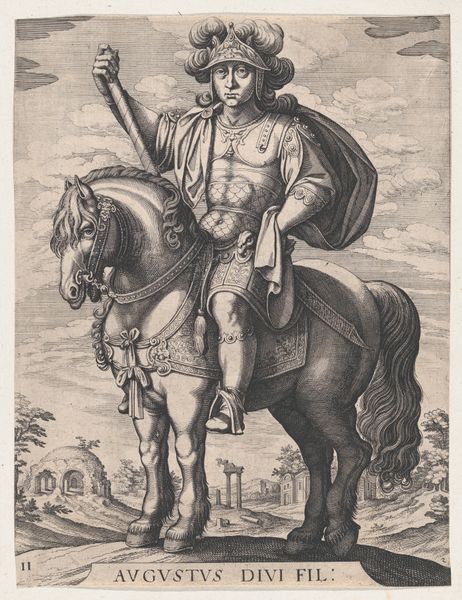
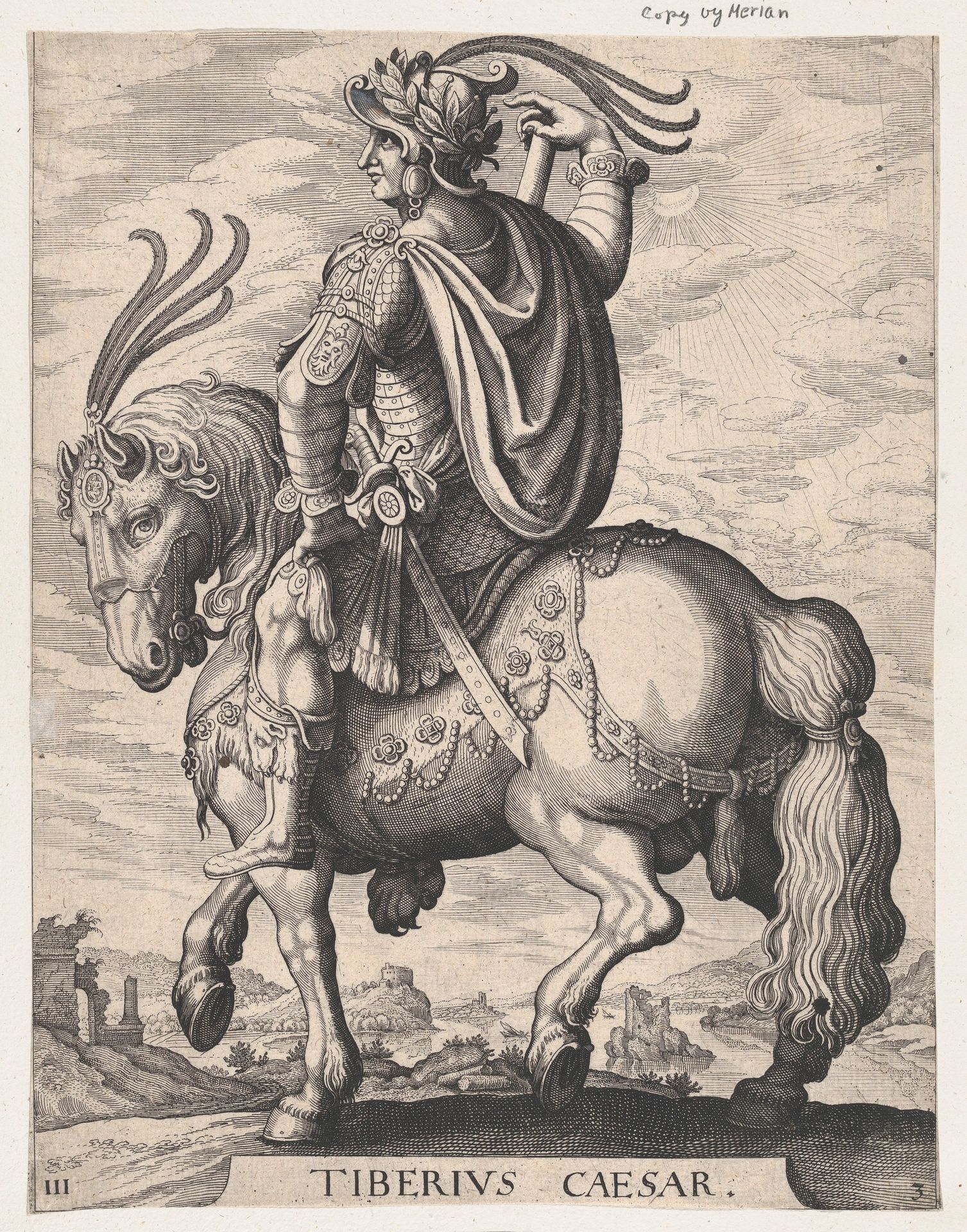
This engraving of Emperor Tiberius on horseback was created by Matthäus Merian the Elder. The dense, intricate lines produce a dramatic interplay of light and shadow, giving the scene a powerful sense of depth and texture. The artist employs line to meticulously detail the Emperor’s armor and the horse’s musculature, creating a rich visual texture. This precision, however, raises questions about the nature of representation itself. Is this a faithful portrait or a symbolic construct? The formal elements suggest the latter. The composition, with Tiberius elevated and set against a vast landscape, reinforces a hierarchical structure of power. The engraving invites a semiotic reading, where each element—the laurel wreath, the armor, the horse—functions as a signifier of imperial authority. The meaning, therefore, is not inherent but constructed through visual language. It is an exercise in power.
Plate 3: Emperor Tiberius on Horseback, from 'The First Twelve Roman Caesars', after Tempesta
1610 - 1650

Matthäus Merian the Elder
1593 - 1650
The Metropolitan Museum of Art
Metropolitan Museum of Art, New York, NYArtwork details
- Medium
- drawing, print, engraving
- Dimensions
- Sheet: 11 11/16 × 9 1/16 in. (29.7 × 23 cm)
- Location
- Metropolitan Museum of Art, New York, NY
- Copyright
- Public Domain
Tags
Comments
Share your thoughts
About this artwork
This engraving of Emperor Tiberius on horseback was created by Matthäus Merian the Elder. The dense, intricate lines produce a dramatic interplay of light and shadow, giving the scene a powerful sense of depth and texture. The artist employs line to meticulously detail the Emperor’s armor and the horse’s musculature, creating a rich visual texture. This precision, however, raises questions about the nature of representation itself. Is this a faithful portrait or a symbolic construct? The formal elements suggest the latter. The composition, with Tiberius elevated and set against a vast landscape, reinforces a hierarchical structure of power. The engraving invites a semiotic reading, where each element—the laurel wreath, the armor, the horse—functions as a signifier of imperial authority. The meaning, therefore, is not inherent but constructed through visual language. It is an exercise in power.
Comments
Share your thoughts